What You Can Do

Being Present

“Rarely are we ever truly present.” – Evy Poumpouras

People have gone to such great lengths to be connected — cell phones, WebEx, Slack, smart watches — yet we have managed to be disconnected. We no longer know how to give someone undivided attention. The irony is we have been sold that these apps and devices increase our productivity. Not only do they not do this, our personal connections falter. Evy Poumpouras writes in Becoming Bulletproof:

“One of the fastest ways to sabotage you rapport with someone is to keep your phone out. I’ve seen people go to great lengths to connect with others, and yet their phone will be in their hand, splayed out on their desks or dinner table, signaling to everyone around them that there is something else of potentially greater importance waiting to take their attention away. This sends the message that whoever you’re with is less deserving of your time and that you’re not fully present.”

You might think this is just about courtesy or respect, but it’s bigger than that. “…it’s about influence…this signals how much you value” someone and “…you’ll be able to observe and read them better if you’re giving them your full focus…”

For some people, their devices have become an addiction. I see people who can’t walk across the hall to another office for a few minutes without their phone. For those who bring it in the bathroom, what are you doing? Does always having your phone make you feel important? Listen, kids have phones. Devices haven’t been a status symbol for decades. What are you going to miss by being away from your phone for a few minutes or — the horror — a few hours?

“Unless you’re expecting an emergency call, such as news about a sick family member, then the statistical probability of your personal Armageddon occurring during thirty minutes of being unavailable, is, well… statistically improbable.”

Maybe being part of the last generation to grow up without cells phones (Gen X, but some of you older Millennials as well) gives us a different perspective. We knew how to be gone all day, or a whole week, and no one knew we were alive until we got back. We used phones at other peoples houses (they existed). We didn’t check in every five minutes. Could you survive if cell service disappeared? Do you panic when you realize you forgot your phone at home?

Technology is a tool, but tools can be misused. Learn to use them, and not used by them. In our quest to communicate and connect more with people, we quite often are doing the complete opposite.
Categories: What You Can Do | Tags: , , , , | Leave a comment

Do You Live in an Artificial World?

The average person now spends 93 percent of their life indoors…This is a catastrophe, the final nail in the coffin for the human soul. You live nearly all your life in a fake world: artificial lighting instead of the warmth of sunlight or the cool of moonlight or the darkness of night itself. Artificial climate rather than the wild beauty of real weather…All the surfaces you touch are things like plastic, nylon, and faux leather instead of meadow, wood, and stream. Fake fireplaces; wax fruit. The atmosphere you inhabit is now asphyxiating with artificial smells — mostly chemicals…instead of cut grass, wood smoke, and salt air…In place of the cry of the hawk, the thunder of a waterfall, and the comfort of crickets, your world spews out artificial sounds…Dear God, even the plants in your little bubble are fake. They give no oxygen; instead the plastic off-gases toxins…This is a life for people in a science fiction novel…Living in an artificial world is like spending your life wrapped in plastic wrap. – John Eldredge writing in Get Your Life Back.

Categories: What You Can Do | Tags: , | Leave a comment

Dangers of Shiny New Things

We are easily distracted by the Next New Thing. That new, shiny gadget, device, or car – we must have it. Fear of Missing Out (FOMO), or is it Fear of Not Fitting In? Marketing exists to convince you that you need everything new or updated. Companies create “ecosystems” that you can’t live without, or is it they can’t live without you handing over your money? Sometimes “new things” come not in the form of products, but as social change. Policy makers and activists implore you to change your lifestyle to preserve the future of humankind.

We’ve been conditioned to not ask simple questions: Do I really need this? What does it really serve? Is its purpose really as advertised, or even the intent of the designer? What is the impact of this product or service on me and others? Sounds rather heavy to be asking such things, but to not do so is not without risk.

We repeatedly fail to ask the Right Questions because we are taught to act on emotion. Companies don’t want us to think before acting. There’s nothing wrong with making money, but let’s not pretend your well-being is always at the forefront of every new product. Nor are all companies concerned to look beyond dollar signs to the impact their plans or devices have on humanity. Here are some examples.

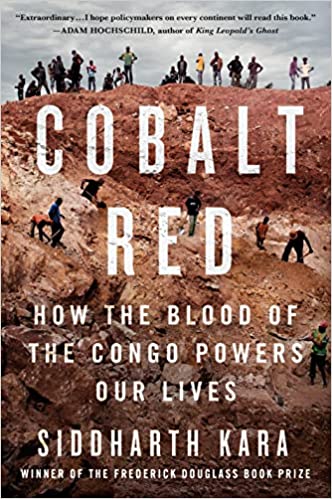
We are told electric vehicles (EVs) will save our world. They are more efficient over their lifetime in energy consumption and produce zero emissions. Neither of these claims are true. The other elephant in the room are the troublesome human and environmental costs of making batteries, including slave labor (see Cobalt Red). Someday EVs may make sense, but the current, best engineerable solution is hybrids.

Policy makers tell us we must move to renewable energy sources. Sounds like a commendable goal, right? It is, but unfortunately, sources like wind and solar are unreliable, intermittent, and low output. Solving these limitations isn’t simply a matter of scaling up: There are the limitations of physics, and environmental concerns with what are idealized as “green” energy sources.

To free up money and attract investors to these renewables, we are told fossil fuels are dirty. Truth is, as fossil fuel usage as increased, pollution has decreased. How? Through technology (see Fossil Future). High output energy sources have raised millions of people out of poverty. Excessively relying on solar or wind could reverse that progress. This is why more nations are revisiting nuclear. Unfairly vilified, nuclear is the only emission-free energy source capable of powering all of our world. It is a proven technology, and fears of it unfounded (see The Case For Nukes).

I recently read a post on the wonders of 3-d printed “meat.” It claimed this fabricated food can save the world, by feeding millions and protecting the environment. Problem is, processed foods are a primary reason for the worst health in human history. The industrial farming that produces these foods is the most environmental destructive process ever created. Why would we just double down and continue down that path? Just because it’s cool, new tech? Turns out, returning to farming the way nature taught us (see Dirt to Soil) fixes our problems. Nor is real meat dangerous to us or the planet (see Sacred Cow).

Ask the Right Questions. Does this wonder product or policy change provide a useful service? Does it solve a real problem or does it perpetuate existing issues, or create new ones?

We’ve been conditioned not to think, but thinking is not hard, nor time-consuming. Sometimes those who mislead do so intentionally, others are themselves misled. Sliding you into an ecosystem, a social cause, or a political cult, is a surefire way to replace reason with emotion in your decision making. And they know it. You ultimately must be responsible for your own health and wealth. Far too many others will never do it for you. They rather not and look only to their own.

Don’t be distracted by shiny new things. Sometimes the old way is better, other times the new. Be careful of jumping on any bandwagon that comes your way.

It may be driving off a cliff.

Categories: Critical Thinking, What You Can Do | Tags: , , , , , , , , , , , , , | Leave a comment

We are at That Critical Moment

I have often wrote about our connections to history, what we can learn from our ancestors, and the ripples into the future our actions create. I wonder if people knew their impact on history, and shed their hubris about the past, what would our world be like? What if we reclaimed our responsibility to mentor the next generations and ensure they remember the legacy of our forebearers?

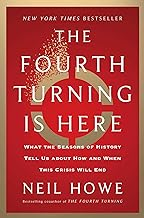
The cycles of history Neil Howe discusses in his book, The Fourth Turning is Here, in large part occur because of our selfishness and shortsightedness. And so, we come to a critical moment in time where must decide to wrestle control from those who control society with no regard to those within it. Or we can keep our eyes shut as crisis after crisis turns into such a disaster than civilization is sent into reverse. Some of those collapses have been obvious and catastrophic, some lesser so, but all send their changes and casualties deep into the future.

“Generations connect us to history because they remind us that ours is not the first or only peer group to encounter this season of history at this phase of life. We know that others have done so before us. Perhaps we can learn from them. We also know that others will do so after us. Perhaps we can help them prepare.

“Generations also connect us to our families because they remind us that we all have forebearers who encountered this season of history at some phase of their lives. We may wonder how their location in history affect what happened to them as children, what happened to the children they raised, or what happened to alter the direction of their lives at a critical moment.

“…we will finally recognize what Ibn Khaldun observed at the very dawn of modernity: ‘The past resembles the future more than one drop of water resembles another.'” – Neil Howe

So as 2024 begins, will you awaken or will you continue to sleep? The past is like a mirror on the future: We face disaster or prosperity. Every generation has a choice, and that choice includes breaking free of the powers who believe it’s up to them to decide your fate, your Story.

They always bring failure because they ignore the past. We don’t have to wait for more failures, more disasters. We can choose a different path.

Categories: History, What You Can Do | Tags: , , | Leave a comment

They Want You Unhealthy. You can Take Control.

“Fiat foods create fiat minds that enslave the human body to a revolving state of addiction, lethargy, and depression. Would the Wright Brothers have had the vision, skill, and initiative to expand their bicycle business to venture boldly and defy all established authority under the belief man could fly while on a steady diet of SnackWell cookies and Cheese Puffs?” – Matthew Lysiak

Think the nutritional advice you’ve been taught for decades is based on science? Well, take a good dose of corporate influence, government financial manipulation, fake or unscientific studies, and throw in some eugenics and a cult for good measure, and what do you get?

The worst health of humans in modern history.

Make Fiat Food number one on your to-read list for 2024. Matthew Lysiak takes you on a tour of the disturbing history of where our health “standards” came from, and why we have more chronic medical problems than ever in our history.

This new year can be the one where you take responsibility for your own health. Stop letting others make money off you by keeping you sick and miserable.

Categories: Books, health, What You Can Do | Tags: , , , , | Leave a comment

Happy With Your Health?

In my previous article, on planning for your best year ever in 2024, your health is a critical part of your future. Getting healthy, or adopting a healthy lifestyle, is always one of the top New Year’s “resolutions.”

Want some help in making that investment in your health in 2024? Check out Dr. Ovadia’s, Stay Off My Operating Table. This short book could be one of the most valuable reads in taking control of your own health. Check out an interview with Ovadia here and start your journey to a better life.

“We’ve normalized being unhealthy. Some of the statistics are just truly frightening…88%…of adults in the United States today are not healthy…60% of the adults over 50…are on multiple prescription medications. Poor health has actually become the normal…We don’t even expect to be healthy anymore. We spend all of our efforts, all of our energy, trying to manage our illness, instead of trying to remain healthy in the first place…Each individual, everyone has to realize they have the power…to keep themselves healthy…and not need the healthcare system.” – Dr. Phillip Ovadia

Categories: health, What You Can Do | Tags: , , , | Leave a comment

Dump the Resolutions, and Define Your Purpose and Impact for 2024

We are approaching the time when millions make resolutions and goals for the new year. That arbitrary turning of the calendar marks a time of new beginnings. What follows is often failure.

If you set goals – getting healthy, finding a new career, learning your purpose – without a plan, your probability of failure is quite high. It’s not enough for most people to say, “I’m going to do it” and poof, your goal manifests amazing success. You need a plan.

Your plan should start with a Past Year Review. You can’t move forward without first looking back. Tim Ferriss describes one approach to accomplish this:

  1. Grab a notepad and create two columns: POSITIVE and NEGATIVE.
  2. Go through your calendar from the last year, looking at every week.
  3. For each week, jot down on the pad any people or activities or commitments that triggered peak positive or negative emotions for that month. Put them in their respective columns.
  4. Once you’ve gone through the past year, look at your notepad list and ask, “What 20% of each column produced the most reliable or powerful peaks?”
  5. Based on the answers, take your “positive” leaders and schedule more of them in the new year. Get them on the calendar now! [Or as Neah of Neah’s Way speaks to, what activities will let you experience awe again like when you were a child?] Book things with friends and prepay for activities/events/commitments that you know work. It’s not real until it’s in the calendar. That’s step one. Step two is to take your “negative” leaders, put “NOT-TO-DO LIST” at the top, and put them somewhere you can see them each morning for the first few weeks of 2024. These are the people and things you know make you miserable, so don’t put them on your calendar out of obligation, guilt, FOMO, or other nonsense.

Next, use the findings of your Past Year Review of 2023 and set your Objectives for 2024. Most of this is a summary of of Ryan Michler’s plan in Sovereignty, which goes into much more detail.

  1. Pick a timescale. Here we will use 12 week Objectives.
  2. Employ Specificity, that is, don’t say “I want to be healthy.” Rather, describe what exactly healthy means for you, and what metrics you will use to get there. Don’t think small. Neah says ask yourself, “Who do I want to become? What do I want to become? What motivates me?” Then, “What happens if I don’t do this?”
  3. Use the Four Quadrants to define your Objectives:
  • Calibration: Take care of your well-being first, particularly things that are getting in the way of your Objectives, including mindset, and mental and emotional health.
  • Connection: How do your Objectives improve relationships with all the people you interact with?
  • Condition: This is focus on your physical health. Your health can no longer be an afterthought. Being sick or dead will interfere with your Objectives.
  • Contribution: How do your Objectives make an impact on other people?

Defining your Objectives with this level of Specificity is half the battle. This isn’t set it and forget it. You need Tactics that help you stay on the correct route to achieving your Objectives.

  1. Set thirty and sixty day checkpoints.
  2. Review your objectives at these times and make necessary adjustments.
  3. Define two additional Tactics for each Objective. For example, if you want to read six books in ninety days:
    Primary Tactic: Read for thirty minutes every day.
    Secondary Tactic: Read for two hours every weekend.

One of your most important Tactics is the After Action Review. This doesn’t just come at the end of the Objective period. Use this after a project, after difficult conversations, and especially at the end of every day. It only takes a few minutes to ask these questions:

  • What did I accomplish?
  • What did I not accomplish?
  • What did I do well?
  • What did I not do well?
  • What will I do moving forward?

Get yourself an old-fashioned notebook or journal, or a device if you must, and skip mindless New Year’s resolutions. Take control of your life. No more letting others push and pull you along. Don’t wait until December 31st. Use the whole month.

Make 2024 the year you Find Your Purpose, Find Your Story.

Categories: What You Can Do | Tags: , , , , , , , | 1 Comment

Ready to Leave the Brave New World?

Everyone makes a choice:

  1. Commit to continuous learning to better themselves and the world.
  2. Make little or no effort to learn and trust the world to tell you what to think and know.
  3. Pretend you know everything and have nothing else to learn.

Option one comes with the realization that learning doesn’t stop when you graduate for high school or college. You’ve only scratched the surface. Also, as an adult you realize learning is a whole different experience outside of the structure of schools. Exploration, discovery, enlightenment. The kind of things that brought you wonder as a child, then snuffed out by the system, return in full force.

Option two comes when you succumb to an industrial education system that often teaches you not to question. Or if they do, someday they will say they didn’t mean it. They also want you to figure out your path by graduation. Then, they tell you, you’re stuck there forever. Don’t keep searching for your purpose. Trust us.

Option three is when you allow yourself to be drawn into a cult-like mindset. Often this is an extension of option two where you were encouraged not to question and test what you are told. When one falls into this abyss, they are used by others for their own purposes. Politicians love people like this.

This is all a long way of stating the best way to learn is to read. Commit to learning, studying, exploring. This isn’t the dull learning you may have experienced in school. However, you will face many far more important tests in life. You must be prepared. You will also learn you have an innate, critical responsibility to mentoring the younger generations.

I feel sorry for people who say “I don’t read.” “I don’t have time” they say as they binge-tv watch. They think the carefully crafted and controlled headlines and news constitute learning. They know their life feels unfulfilled, but make no effort to change. Or they look at the world and its problems and just hope for the best.

Don’t be that person.

Here’s a selection of some of the books I read in 2023. A wide array of topics sure to challenge, inform, and inspire.

Will you commit in 2024 to leaving the Matrix? Will you choose to exit The Brave New World?

Start your own path to learning. It will be exciting and disturbing. One thing it won’t be is regrettable.

Categories: Books, What You Can Do | Tags: , , , , , , , , , , , , , , | Leave a comment

Your Story, Your Purpose

“And we shouldn’t be here at all, if we’d known more about it before we started. But I suppose it’s often that way. The brave things in the old tales and songs…But that’s not the way of it with the tales that really mattered, or the ones that stay in the mind. Folk seem to have been just landed in them, usually – their paths were laid that way, as you put it. But I expect they had lots of chances, like us, of turning back, only they didn’t. And if they had, we shouldn’t know, because they’d have been forgotten. We hear about those as just went on – and not all to a good end, mind you; at least not to what folk inside a story and not outside it call a good end…But those aren’t always the best tales to hear, though they may be the best tales to get landed in! I wonder what sort of a tale we’ve fallen into?” – Samwise Gamgee, The Two Towers

This is perhaps J.R.R.Tolkien’s most famous passage about finding one’s Story, their Purpose. Often people don’t realize they are missing their purpose until thrust into a dire situation. That’s when one learns the true “measure of a man” (or woman), or one becomes Theodore Roosevelt’s Man in the Arena:

“It is not the critic who counts; not the man who points out how the strong man stumbles, or where the doer of deeds could have done them better. The credit belongs to the man who is actually in the arena, whose face is marred by dust and sweat and blood; who strives valiantly; who errs, who comes short again and again, because there is no effort without error and shortcoming; but who does actually strive to do the deeds; who knows great enthusiasms, the great devotions; who spends himself in a worthy cause; who at the best knows in the end the triumph of high achievement, and who at the worst, if he fails, at least fails while daring greatly, so that his place shall never be with those cold and timid souls who neither know victory nor defeat.”

For most people, they know they are meant for something bigger. They know they have settled for what the world told them they should be doing, not what they were meant to be. Like when Captain Pike dares Kirk to be better:

“You can settle for less than an ordinary life, or do you feel like your meant for something better, something special?…I dare you to do better.”

Why do so many stories in our books and films feature the longing for something more? For something missing? Because this speaks to the longing in all of us. We are part of a greater Story, but we feel like we keep arriving forty minutes too late. John Eldredge writes in Epic:

“Notice every good story has the same ingredients. Love. Adventure. Danger. Heroism. Romance. Sacrifice. The Battle of Good and Evil. Unlikely heroes. Insurmountable odds…Things were once good, then something awful happened, and now a great battle must be fought or a journey taken…It’s true of every fairy tale, every myth, every Western, every epic…Have you ever wondered why?”

You are the answer. This is in everyone. For every vapid exhortation to “find one’s truth,” most let others define their truth. Never stop fighting until you achieve what you were gifted to be. Don’t let the world tell you what to be, or what to do. They want you compliant and ordinary. C.S. Lewis wrote, “There are no ordinary people. You have never talked to a mere mortal.” Indeed. Too often we give up, give in. This is a war against you. Many forces want you to fail.

Still, the choice is yours.

I’d rather go down fighting in the arena.

One of the themes of the Watchers of the Light series is exactly this: Find your Story. Find your Purpose.

This is the tale we all find ourselves in. The one storytellers write about. The daily war of finding our purpose, our place in the Story, and what we were gifted to do.

You only fail if you do not fight for that purpose and your place in the Story.

Categories: What You Can Do | Tags: , , , , | Leave a comment

Slavery is Alive and Very Profitable

We all claim to support human rights and social justice, yet our materialistic lifestyles enable the abuse of people worldwide. Perhaps many do not know where their gadgets and stuff comes from, living with the false belief horrible things don’t happen in our enlightened world.

Siddharth Kara’s new book, Cobalt Red, shatters those cognitive lies by detailing the slave labor and horrific conditions powering our devices and “green” electric cars. Listen to his interview with Joe Rogan.

Do we care about Africa and other “third world’ regions and the totalitarian nations that violate human rights to feed our wants?

We talk about the slavery of the past, but do we care about slavery in the 21st Century? It’s alive and worse than ever.

Categories: What You Can Do | Tags: , , , , | Leave a comment

Blog at WordPress.com.