Are Aliens Among us?

This is part 2 in a series. See part 1, Are we Alone in the Universe?

“But where is the evidence? It’s MIA. Neither [David] Grusch nor anyone else claiming to have knowledge of secret government UAP programs has ever been able to publicly produce convincing photos showing alien hardware splayed across the landscape. And remember, we’re not talking about a Cessna that plowed into a wheat field. We’re talking about, presumably, an alien interstellar rocket, capable of bridging trillions of miles of space, and sporting technology that is obviously alien.” – Astronomer Seth Shostak

I have found the recent UFO (now called UAPs) revelations a bit curious. The media and the ufology community is acting like this is something new. The public is surprised the government is studying UFOs? Ever hear about Project Blue Book? Since the end of World War II, this topic has entered the public mind ever so often. The cyclic nature of UFO interest makes this all seem orchestrated. Why, at certain times, are the flames of UFO encounters fanned?

I’ve already explained the unlikelihood of aliens visiting Earth, but getting past that, we need to first address a problem in ufology. Many researchers, though not all, seem to start with the assumption that UFOs are extraterrestrial life from other planets. The problem with this assumption is it colors these studies. For example, we often hear UFO sightings increased after WWII due to humans acquiring nuclear weapons. The aliens are supposedly here to monitor us and stop us from destroying civilization.

Why would aliens, so much more advanced then us, care if we had nuclear weapons? If they did, why didn’t rid our world of the warheads? Why are these advanced beings crashing all of the time? Why are they mutilating cattle?

None of it adds up. The exponential increase in technological research during the Cold War, much of it secret, is a much more rational explanation. Many UFO accounts, when looked at a little deeper, appear rather terrestrial from a technological aspect. Even events like the iconic Roswell crash, with its alleged alien bodies, has a terrestrial explanation, one that’s more diabolical than aliens harassing us (see the work of Annie Jacobsen and Joseph P. Farrell). What then of the whistleblowers who claim they have access to secret sources about UFOs?

In the 1980s, Bob Lazar revealed he had worked at a site associated with Area 51 where they were reverse engineering alien spacecraft. He also claims to have glimpsed strange bodies that may have been alien. I undertook a meta study of Lazar, and looked at a number of Lazar’s interviews, documentaries and writings. His story has stayed remarkably consistent over the decades, and he doesn’t come across as a deceiver, nor has he benefited financially in a significant manner. As a whistleblower, though, the government has largely left him alone — which would be odd if he was truly releasing sensitive information. Here are what I think are the potential interpretations concerning Lazar:

  1. What Lazar is saying about aliens is true, and the government had recovered spacecraft.
  2. Lazar misidentified and misunderstood what he saw and worked with.
  3. The government wanted Lazar to believe there were aliens, when they weren’t, so he would spread misinformation to cover up classified projects.
  4. The government and Lazar, together, spread misinformation and there aren’t any aliens.

All things considered, I suspect it is #2 or #3. What about others in this UFO space like David Grusch, Luis Elizondo, or Steven Greer? Even when people have solid credentials, as many of these people do, it still comes down to “a guy says he knows a guy who knows another guy who heard from a guy that the government has alien spaceships” as astrophysicist Adam Frank wrote. We see a lot of secret sources, things that were seen but cannot be revealed, etc. Are these people being unknowingly used to spread disinformation? Are the efforts of some, like Greer, influenced by their own personal beliefs? Is the government about to use the alien scare as way to control us, as Werner Von Braun warned many decades ago? Whatever the case, over the past seventy years, no whistleblower or person with access to secret knowledge has brought us closer to evidence of aliens visiting Earth.

I also warn people the intel community has perfected disinformation and pysops operations. They have been doing this for decades with unlimited resources. If they want to fool a whistleblower into thinking they are telling the truth, or fool the public with a leaker on their payroll, you would never know. Do you think they would let leakers run around freely when they have imprisoned others for much less?

What of the small percentage of UFOs that can’t be explained away as misidentifications, frauds, or terrestrial technology? Astronomer Hugh Ross calls these RUFOs: Residual Unidentified Flying objects. These, as professor Diana Pasulka discovered in her research, are “UFO contact events [that] include supernatural and paranormal elements that influence people’s lives” much like similar events throughout history she had found in ancient archives, though those weren’t described as UFOs.

In part 3, we will take a look at what these encounters may be. Is there a part of this world our ancestors intimately knew, which we have relegated to myth?

Categories: Mysteries | Tags: , , , , , , , , , , , , , | Leave a comment

Are we Alone in the Universe?

[This was originally published as part one of three in a series. Because of the interest in this topic, I will be reposting them with minor updates.]

“It’s impossible for [this] to be the only world…There are other intelligent entities out there, probably since life is so ardent…[do] you think that’s [life] only on this little rocky planet?” – William Shatner

The legendary Captain Kirk said these words after his flight on the Blue Origin NS-18 spaceflight. Is he right? Are the many people who have looked at the heavens and concluded, “There must be more life out there,” correct?

Probably not. What Shatner and others are saying is not a scientific argument. What must be, and what actually is, are not the same things. What we may think is true, or wish to be, must always give way to physics.

Life is very complex and requires very specific conditions, controlled tightly by very narrow constraints. We aren’t just talking about the obvious like temperature or air composition. There are a vast number of interconnected systems, large and small, terrestrial and cosmic, that allow us to be here at this time, in this place, on Earth.

For decades, astronomer Hugh Ross has been documenting the constraints that must be met, and cannot change, for life to exist. This is true of primitive life, to say nothing of complex life such as animals or humans. Among the hundreds of parameters he has identified from scientific studies:

  • A planet’s distance from a star, cannot be too far or too close (temperature and gravity).
  • A star’s size, age, luminosity, and type, among other things, must be in the right range for life to exist.
  • Tectonic activity (earthquakes) must not be too great (destructive), or too little (they recycle soil nutrient runoff from rivers).
  • Speed of a planet’s rotation (too fast creates hurricane speed winds, or too slow makes it too hot), its size (too much, or too little gravity), and a precise amount of oxygen (too much causes uncontrollable fires, too little, and large life can’t live), and even the size and distance of any satellites (like the Moon, which affects Earth’s rotation) impact the existence of life.

There are hundreds of such constraints, from the quantum level to the galactic. Even the Big Bang at the origin of time and space, had to be so fine-tuned for Earth to exist here and now as it does. Mathematically, there is zero chance of this occurring on its own from random processes. What does this mean? Two things: One, these constraints eliminate millions and billions of star systems from contention of harboring life. Two, only design can explain what science has discovered.

Naturalists don’t like the implication of design behind the universe’s origin, and call these constraints anthropic coincidences, and try to sweep this all away with one or another version of the anthropic principle. The popular “weak” version states, “We ought not to be surprised at the order and fine-tuning we see in the universe around us, since if it did not exist…we would not be here to observe the fine-tuning.” This was from Oxford mathematician, John C. Lennox, who further explains why this argument doesn’t work:

“All the anthropic principle says is that for life to exist, certain necessary conditions must be fulfilled. But what it does not tell us is why those necessary conditions are fulfilled, nor how, granted they are fulfilled, life arose.”

Evangelists of chance-based, naturalistic explanations like Carl Sagan struggled with the true nature of the universe. He would make grandiose statements like, “The Cosmos is all that is or was or ever will be,” which isn’t a scientific claim, but rather one of his naturalistic philosophy. He filtered his science through that lens. Even though he marveled at the complexity and beauty of the universe, he asserted Earth was just a “pale blue dot” and our place among the stars was “demoted” due to the discoveries of Copernicus and Galileo. It didn’t dawn on Sagan and his successors that scientists like Copernicus and Galileo studied the heavens to learn more about Creation and its Creator. Never did they think they were demoting humanity. As astronomer Guillermo Gonzalez has documented, not only have we not been demoted, the evidence points to Earth as being a “privileged planet” that could not be the result of chance, but was created in such a way to make the fine-tuning of the universe evident.

So while we cannot eliminate completely the possibility of life elsewhere among the stars, the physics of the universe guarantees it is exceptionally rare, at the very least. Should we feel despondent and depressed that we could, in fact, be on our own? Not at all. If, as the evidence points, everything from the moment of the Big Bang onward, conspired to allow Earth exist here in this place and here at this time, with its humans, we should feel quite special.

We aren’t a pale blue dot, but rather, a bright blue star in the cosmos. Rare and special, designed on purpose.

What does this mean for the current, how should I say, obsession, with UFOs/UAPs? We’ll examine that in part two and explore what is going on in our skies.

Until then, ponder on what it means for little Earth, perhaps not at the center of the universe, but nonetheless being the central purpose of the universe’s existence.

Categories: Nature, Origins of Man | Tags: , , , , , , , , , , , , , , | Leave a comment

Beware of Dragons

After WWI, it was as if humanity gave up on itself.

Materialism, scientism, collectivism, eugenics, and totalitarianism were promoted as the new foundations of civilization, and they flourished.

Then this alleged new enlightenment collapsed into a war far worse than the one that started it.

During the interwar years, and WWII, two veterans of WWI pushed back on the “widespread assault” against the classical “ideals that had nourished Western civilization for centuries.” They also opposed the “ideological hijacking” of the stories and history of the ancient world by the Third Reich.

These two men were Oxford scholars, J.R.R. Tolkien and C. S. Lewis.

It was in the shadow of these conflicts that they wrote The Hobbit, The Lord of the Rings, The Screwtape Letters, Mere Christianity, The Space Trilogy, and The Chronicles of Narnia.

Through their writings, both fact and fiction, we see why our ancestors should be listened to, because they had spent centuries proving what worked, and what did not. Most importantly, how the true spirit of men could overcome Darkness, and that humans, in spite of their flaws, are exceptional creations.

As many try to return us to the failed movements of the mid-20th Century, driven by the equally failed belief humans are nothing more than unexceptional, random life, Joseph Loconte’s latest book, The War for Middle Earth, reminds us of that distant era.

And what happens if we let dragons roam the Earth.

Categories: History, Writing | Tags: , , , , , | Leave a comment

Forget the New Year’s Resolutions, and Define Your Purpose and Impact for 2026

We are approaching the time when millions make resolutions and goals for the new year. That arbitrary turning of the calendar marks a time of new beginnings. What follows is often failure. Perhaps goals shouldn’t be our focus? Ryan Michler writes:

“Goals are emotionally dependent, standards are identity-based. Standards keep you anchored in the present, goals keep you trapped in the future…Your life changes when your identity upgrades, not when your goals get bigger.”

Ryan discusses how setting standards — that is who you want to be, or who you refuse to be — make you resilient and create an unmovable foundation to build you goals upon. This personal code is non-negotiable and should be founded in truth.

Then you are ready to set goals – getting healthy, finding a new career, achieving your purpose. You can’t do this on a whim. Without a plan, your probability of failure is quite high. It’s not enough for most people to say, “I’m going to do it” and poof, your goal manifests amazing success.

Your plan should start with a Past Year Review. You can’t move forward without first looking back. Here is a simple approach from Sienna Colonese:

1️⃣ Perform a 2025 audit

What were your goals at the beginning of the year? How far did you get? Which were not achieved, and why? How did your goals align with your deeper passions and vision?

2️⃣ Analyze your emotions

What emotions did you experience the most this year? Were you regularly experiencing stress, frustration, or low motivation? How much gratitude, abundance, and fulfillment did you feel?

3️⃣ Outline your optimal life

What does your “optimal life” look like? The vision that makes you excited, and the one where you experience all the emotions you desire. Get clear on this picture.

4️⃣ Align goals

Align your goals for the next 12 months with your optimal life vision. Set meaningful, detailed, and measurable goals. Keep them within your vision field EVERY day.

Want to get more detailed? Use the findings of your Past Year Review of 2025 and set your Objectives (goals) for 2026. Most of this is a summary of of Ryan Michler’s plan in Sovereignty, which goes into much more detail.

  1. Pick a timescale. Here we will use 12 week Objectives.
  2. Employ Specificity, that is, don’t say “I want to be healthy.” Rather, describe what exactly healthy means for you, and what metrics you will use to get there.
  3. Use the Four Quadrants to define your Objectives:
  • Calibration: Take care of your well-being first, particularly things that are getting in the way of your Objectives, including mindset, and mental and emotional health.
  • Connection: How do your Objectives improve relationships with all the people you interact with?
  • Condition: This is focus on your physical health. Your health can no longer be an afterthought. Being sick or dead will interfere with your Objectives.
  • Contribution: How do your Objectives make an impact on other people?

Defining your Objectives with this level of Specificity is half the battle. This isn’t set it and forget it. You need Tactics that help you stay on the correct route to achieving your Objectives.

  1. Set thirty and sixty day checkpoints.
  2. Review your objectives at these times and make necessary adjustments.
  3. Define two additional Tactics for each Objective. For example, if you want to read six books in ninety days:
    Primary Tactic: Read for thirty minutes every day.
    Secondary Tactic: Read for two hours every weekend.

One of your most important Tactics is the After Action Review. This doesn’t just come at the end of the Objective period. Use this after a project, after difficult conversations, and especially at the end of every day. It only takes a few minutes to ask these questions:

  • What did I accomplish?
  • What did I not accomplish?
  • What did I do well?
  • What did I not do well?
  • What will I do moving forward?

Take two minutes, every morning and every night, to review.

Get yourself an old-fashioned notebook or journal, or a device if you must, and skip mindless New Year’s resolutions. Take control of your life. No more letting others push and pull you along. Don’t wait until December 31st. Use the whole month.

Make 2026 the year you Find Your Purpose, Find Your Story.

Categories: What You Can Do | Tags: , , , , , , , , , , , , , | Leave a comment

Dark Snowfall

The following is a Lost Tale set in the world of the Watchers of the Light that was first revealed in Among the Shadows. Readers of AtS and Awakening will have met Milena before. Those who have not crossed paths with this Arc Maiden are about to learn why the Darkness fears her. 

Continue reading

Categories: fantasy, Fiction, Writing | Tags: , , , , , , , , , , , , | Leave a comment

Rediscovering the Proper Human Diet

[This is a repost from a few months ago. Since I have been updating it with new information, and this is the time of year many people evaluate their health with the intent to improve it in the next, this is a good time to revisit this critical subject.]

Many people get frustrated when comes to figuring out how to achieve better health. How often have you heard, or yourself have said, “Who am I supposed to listen to? Everyone has different information. Health advice is always changing. I give up!”

Does it have to be that hard, or are we making it harder than it really is? Perhaps, if we step back and apply some logic, history, basic science, and some common sense, we will find the answers. There are two basic maxims for optimal health:

Eat what your body is designed to use.

We are not designed to be couch potatoes.

These two maxims, derived from science and common sense, quickly cut away any confusion about proper human health and the proper human diet. We will dive deeper into the supporting details, and examine the insights and revelations supporting these maxims.

Are you tired of suboptimal health? Do you want to avoid chronic disease and degeneration in your future? Do you want the “secrets” to the Proper Human Diet? Read on.

Continue reading
Categories: health | Tags: , , , , , , , , , , , , , , , , | Leave a comment

Sorry, Christmas and Christmas Trees Still Not Pagan

Every Christmas we hear people proclaiming Christmas and its traditions were once pagan or still are pagan (“pagan” in this context meaning a non-Christian religion). My first instinct is to laugh at those who think they discovered some long-lost, secret knowledge. My second thought is to turn to history for the truth.

Christianity has a long history of subverting — or appropriating — items, thoughts, days, and locations from other cultures if they agree with Christian teachings. Sometimes these things are given new meanings if they don’t agree Christian beliefs. This method of opening the door to Christianity for people was initiated by the Apostle Paul.

In the Areopagus Sermon, recorded in Acts 17:22–34, Paul argues to the Greeks at their high court on the reality of God by using the words of their own thinkers such as Epimenides, Aratus, and Cleanthes. He starts by pointing to one of their monuments: “I even found an altar with this inscription: TO AN UNKNOWN GOD. So you are ignorant of the very thing you worship — and this is what I am going to proclaim to you.” Paul is subverting parts of their own beliefs that can, or do, point to God, to open their mind to the discussion by highlighting what is already in agreement.

If we go further back, we find more examples of subversion. The Ark of the Covenant is very similar to Egyptian ark designs, and Israel’s temple also has likenesses to Egyptian temples. Why would God give the Israelites instructions to build these using Egyptian archetypes? Probably due their familiarity after living among the Egyptians for so long. However, the Israelites also let other things they had learned corrupt them. The Golden Calf could have been inspired by the Egyptian veneration of the Apis Bull. These are among many Egyptian details recorded in Exodus — including the name Moses which was borrowed from the Egyptian language — which lend credibility to the accounts. Skeptics who doubt the events in Exodus have to explain away all the subtle, and not so subtle, Egyptian references.

There are other examples, but here we have seen God, Paul, and later Christians appropriate objects and writings from other religions and give them new meaning. People who claim these things are bad because they once were pagan, are committing the genetic fallacy. In other words, as I like to say, Who cares what they once meant, what do they mean now? Sure, not everything can be easily appropriated. Some things not at all.

A popular rebranding method was when Christian denominations would take pagan festival dates and rename them and given them new meaning. Does Christmas Day and some of its associated traditions fall under this category as we are often told?

Actually, they do not.

Biblical and ancient documents scholar Wes Huff explains in this video why “All the traditional ‘pagan’ associations and connections with Christmas, when truly put under the microscope, turn out to be themselves more fiction than fact.”

Historian William Tighe concluded after his research, “The ‘pagan origins of Christmas’ is a myth without historical substance.” Wes also provides these two infographics summarizing his research: Christmas is not a Pagan Holiday and So Where does Dec 25 Come from if it’s Not Pagan?

Check out those links for all the research. Most people don’t bother to test what they hear, especially if it fits a preconceived bias of one sort or another. Ultimately, the methodology of opening the door to discussing Christianity by finding points of agreement is a logical and sensical approach.

We can’t really say the same about all the drive-by scholars and their yearly attempts to rewrite history.

Categories: Ancient Documents, Bible, Critical Thinking, History, Traditions | Tags: , , , , , , , | Leave a comment

What Choice Will You Make in 2026?

Learning is a lifetime pursuit. You will, if you choose to, learn far more after school (no matter how many years you go or don’t go) than you will in the classroom. Every adult, I think, should make a choice:

Commit to a lifetime of exploration and discovery, or let others control your mind.

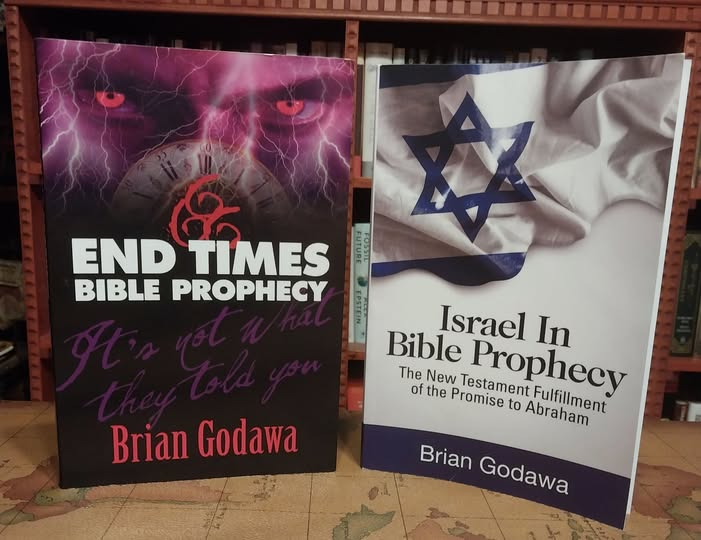
Here are some books I read in 2025. What choice will you make in 2026?

Categories: Books | Tags: , , , , , , , , , , , , , | Leave a comment

Learning From Thanksgiving

To our detriment, history is often distilled down to a few sentences in our schools. As writer Nathaniel Philbrick writes in Mayflower, “there is a surprising amount of truth” in our “threadbare story of the First Thanksgiving.” It is what happened before and after that people know so little about.

It is a vivid tale of “courage, community and war,” and out of this little told story, a country was shaped. Philbrick writes:

There are two possible responses to a world suddenly gripped by terror and contention…[one way is] to get mad and get even. But…unbridled arrogance and fear only feed the flames of violence. Then there is the [Benjamin] Church [a frontiersman born in Plymouth] way. Instead of loathing the enemy, try to learn as much as possible form him… try to bring him around to your way of thinking. First and foremost, treat him like a human being…and in this he anticipated the welcoming, transformative beast that eventually became — once the Declaration of Independence and the Constitution were in place — the Untied States.

In an age where politicians and their followers knowingly try to divide people only to hold on to power, where some believe violence is acceptable, where people think harassing people is a way to effect change, and others think its nothing to fabricate fake fears and crisis to scare people onto their side, perhaps we should for once look to our own history.

We could learn from their trials and tribulations, far worse than our own. Then with crystal clarity, those who seek to undo what was born out of the good and the bad, will be unmasked and exposed.

Categories: History | Tags: , , , , , | Leave a comment

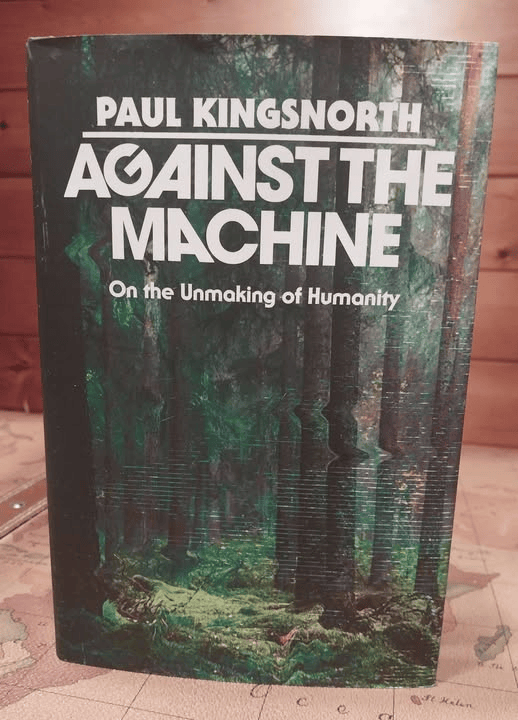
The Dark Side of AI

Artificial Intelligence can be a valuable tool, but like any piece of technology it can be misused unintentionally and intentionally. With so many jumping into AI without thinking, much like they did with the internet and then social media, we need to take a breath and perform some critical thinking.

Software engineer Vanessa Wingårdh has produced a number of discussions on the dark side of this rapidly expanding technology. She explores how insurance companies are using AI to deny healthcare. We also see people relying so much on generative AI programs, they are experiencing brain rot. Some have managed to turn AI into a disturbing cult, AI leading people into disturbing actions, and others think AI is a conscious being and try to have real relationships with it.

Clearly, many of these people had problems before encountering AI. We need to return to a time where people are allowed to recognize these issues in others. For all the talk of mental health, we still seem to brush these things under the rug or act like its okay for someone else. No, it’s time to reclaim objective truth before we lose more people to mental health issues and cult like thinking.

Robbi Jan has examined the dangers of AI blurring reality and the use of tech in transhumanism agendas. Transhumanism can very easily become a new 21st Century eugenics movement. She also takes a look at these trackable health devices everyone is embracing. Are they safe and private? How many hacked databases do we need before we take security more seriously?

Listen, you can ignore AI, or blindly jump into using it. Either case is the wrong choice. We’ve learned the hard way about social media, both information and people manipulation and tech addiction.

How about learning our lesson for once?

Categories: Critical Thinking | Tags: , , , , , | Leave a comment

Create a free website or blog at WordPress.com.