Modern History

No War is Inevitable, No War is “Good”

“No war is inevitable until it has begun.” – Patrick J. Buchanan, Churchill, Hitler, and the Unnecessary War

The debates about the war with Iran can be quite curious in that those who pretend to be experts seem to lack the context of history. Every war seems imminent or unavoidable to them. They are appalled at the idea the United States can be pulled into war by other countries or interests. The world’s superpower cannot be convinced to do something not in its best interest, they claim.

In fact, this has occurred more times than we care to admit.

The U.S. had managed to stay out of the tragically avoidable World War I for its first couple years. It wasn’t her fight. A war rooted in antiquated alliances and ideas of empire which turned Europeans against each other in a horrific disaster. America had long held to George Washington’s plea for the nation to avoid entangling alliances (also known as the Washington Doctrine of Unstable Alliances). In his farewell address, he said:

The great rule of conduct for us, in regard to foreign nations, is in extending our commercial relations, to have with them as little political connection as possible. Europe has a set of primary interests, which to us have none, or a very remote relation. Hence she must be engaged in frequent controversies the causes of which are essentially foreign to our concerns. Hence, therefore, it must be unwise in us to implicate ourselves, by artificial ties, in the ordinary vicissitudes of her politics, or the ordinary combinations and collisions of her friendships or enmities… it is our true policy to steer clear of permanent alliances with any portion of the foreign world; so far, I mean, as we are now at liberty to do it; for let me not be understood as capable of patronizing infidelity to existing engagements.

Britain and France’s war had become costly in lives and material, and they needed help. As Buchanan writes, “British propaganda had convinced us the Germans were beasts and we must join the good war for a new world where Prussian militarism would never menace mankind again.” But there was more. Lies about German atrocities. The sinking of the ocean liner Lusitania by a German submarine had caused outrage, yet it had been carrying munitions. The Brits also cut transatlantic cables, impeding communication with Germany. It is true, German subs had targeted some American ships, and at one point tried to bribe Mexico into attacking the U.S., but was it worth sending millions of soldiers to Europe?

At the end of the war, with over 100,000 dead, and 200,000 injured, Americans wondered what was the point of the sacrifice. They believed they had been “hoodwinked and swindled…And the next time Britain rang for help, America would take her time in answering the call…until France had been overrun and Britain thrown off the continent at Dunkirk.”

Flash forward a few decades to Vietnam. The militant anti-communist wing of the U.S. government pushed the “falling dominoes” narrative: If Vietnam fell to the communists, than so so would all of Southeast Asia. Initially, President Kennedy seemed to support this, but as time went on, his position began to shift. In October 1963, with U.S. troop presence still relatively small, he said, “We need a way to get out of Vietnam. This is a way of doing it. And to leave forces there when they’re not needed, I think, is wasteful, and it complicates both their problems and ours.”

Less than a month later, he was murdered and the warhawks continued to ratchet up the war, and stumbled face-first into an escalation trap. The communists would eventually take over Vietnam and rule to this day. Did Southeast Asia become a communist empire and unite to become some menace to the world?

No, Vietnam now is an important trade partner with the U.S., exporting tens of billions of dollars of goods to us.

There are just wars, but there are no good wars. Every war has consequences, unintended and otherwise. We must take great care to not allow ourselves to be convinced to enter a war that hasn’t first been brought to us. Not every threat is existential. Not every world leader we don’t like is a Hitler. Diplomacy is not a sign of weakness, but one of strength and respect for life.

Peace through strength means show we can act when we must, and defend ourselves when required. However, more often than not, when we are told we must go war, the exact opposite is true.

Categories: government, Modern History | Tags: , , , , , , , , | Leave a comment

Hearts and Minds Don’t Change With Bombs

It is disturbing the war champions are in tears now the war with Iran may be over. They are so obsessed with war, they ignore the history of how these conflicts play out, or why wars should be avoided to begin with.

Regime change was always a complete fantasy. Brute force never brings about the uprising of the people. It only hardens the people as their country is destroyed. How did “bombing Vietnam back to stone age” work out? Did Iraqis welcome Americans like the French did in the 1940s? Did twenty years of war empower the Afghans to resist the Taliban? Have decades of sanctions helped the Cuban people, or made them suffer?

The other typical outcome is complete chaos; a death spiral into dystopian destruction. See Libya, Somalia, and Syria.

The thinking person is forced to ask this: Do the Iranian people want to be “liberated?” That question is hard for some to fathom, but must be asked. In spite of their repressive government, and propaganda they are told, do Iranians see us as liberators?

Here’s some history the commentators leave out:

The U.S. toppled the Iranian government in the 1950s, installing a leader not known for his stellar human rights record — like torture and executions — which led to the Islamic Revolution. We supported Iraq (yeah, we helped create Saddam) in their war with Iran that caused hundreds of thousands of casualties. Add to that decades of economic sanctions.

Think Iranians might have tough time seeing the U.S. as a friend, regardless of how bad their rulers may be?

This reminds us of how Germany was oppressed, starved, and economically gutted by the Allies after World War I. Did Germany become a submissive, third world state? No, the perfect environment was created for the Third Reich to rise. People wonder how the Germans let the Nazis take control, but if you understand what happened after World War I, it is no surprise at all. Oppression and violence from the outside unites people, even if their leaders are disreputable.

Maybe, someday, change will come to Iran. No doubt there are people in Iran who dream of revolution. Most organic, true revolutions happen from within. One might say the Iranian government prevents this from happening. Or the Iranians are unarmed and scared. These arguments only take us so far. The American colonials were exponentially outmatched by the British Empire. Yet they won.

Also consider we left many other Middle East countries alone, not telling them how to live or govern, and they shifted westward in their society. Our closest allies — economically and strategically — in the region are not democracies. Even though we may want to, it’s not up to us to tell others how to live.

Forcing change from the outside is doomed to fail. From within, hearts and minds will change. Maybe slowly, but they will change.

Categories: government, Modern History | Tags: , , , , , , | Leave a comment

Our History, and Future, Defined by the Land

“The Europeans used ink to draw lines on maps: they were lines that did not exist in reality and created some of the most artificial borders the world has seen.” – Tim Marshall, Prisoners of Geography

Unfortunately, geography is often taught as an exercise in memorizing places on map. In reality, what is on those maps have defined and constrained nations, wars, and civilizations.

As Marshall details in his book, Prisoners of Geography, the success and failure of nations is directly affected by the physical characteristics (weather, rivers, seas, mountains and deserts) of their location. Decisions by leaders, and their nation’s “strength and vulnerabilities,” must yield to geography.

Sometimes, it is artificial geography, as the quote at the beginning alludes to, that is impacting our world. Many of the problems in Africa and the Middle East are caused by borders not drawn along cultural or natural lines, but rather are arbitrary ones imagined by empire builders. The downstream affects of these fabricated boundaries have saddled world history with a legacy of war and chaos.

Even in our modern world where technology can overcome these obstacles to an extent, geography still can be an immovable force.

Just look at what is going on in the Straits of Hormuz.

Categories: government, History, Modern History | Tags: , | Leave a comment

Freedom, Your Rights, are Fragile

“Every time this nation goes to war, Americans…become less free.” – Saagar Enjeti

This is true, and quite often involves violations of the Constitution:

Newspaper editors arrested during the Civil War. War opponents arrested during WWI. Japanese Americans sent to internment camps in WWII. Patriot Act warrantless spying on citizens. Institutionalizing torture. Jailing whistleblowers.

The are unfortunately many more examples we could list. These aren’t actions of a democracy. They are abuses of power.

Times of crisis and war are when our rights need protected the most. The Constitution does not make exceptions.

These violations only occurred because the people looked the other way and allowed it to happen. Every time they did, it emboldened the ruling class to do it again and again. If you support them, sooner or later, it will come back to haunt you. You will find yourself a target of their illegal power.

Every time this nation goes to war, we quickly learn who doesn’t care about rights or the Constitution. They reveal themselves. Keep those people in mind. There will come a time when they endanger your freedom. They are not your friends.

Rights are not partisan. You either believe in them, or you do not.

“Freedom is a fragile thing and is never more than one generation away from extinction. It is not ours by inheritance; it must be fought for and defended constantly by each generation, for it comes only once to a people. Those who have known freedom, and then lost it, have never known it again.” – Ronald Reagan

Categories: History, Modern History | Tags: , , | Leave a comment

Is the Fall of the West Unavoidable?

The best historians don’t try to rewrite history or even engage in much interpretation. Instead, they create a time machine by going to the original sources and writing the story of actual people. Sometimes the past seems so distant that it seems unreal. It was real, and the people were real.

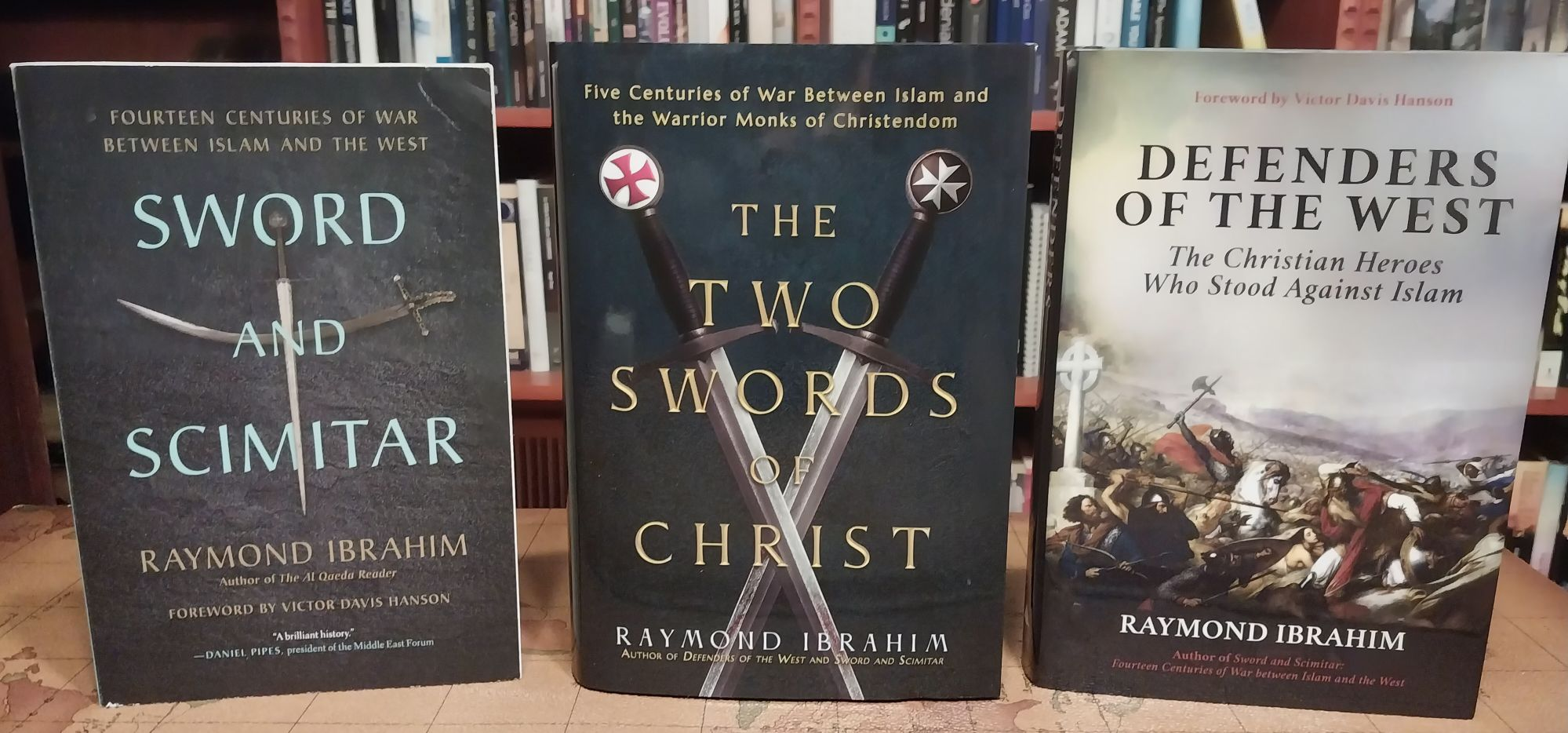
Raymond Ibrahim is one of these historians and has written the definitive series on the Crusades (though, strictly speaking, many of the wars with Muslim armies and kingdoms aren’t classified as part of the Crusades). This is an era much misunderstood and maligned in our time, but also a time that directly shaped the world we now live in.

While reading these books, I couldn’t help but notice a curious irony. Europe spent centuries resisting Muslim invasions threatening to overrun Europe. Flash forward to the Twenty First Century: Wars the West has fought in the Middle East have produced millions of refugees flooding into Europe. In spite of the best efforts of European press and governments to hide the effects, the clash of civilizations has produced many problems no longer ignorable. People in the United States, seemingly unaware of what really goes on the world, opened their border to similar issues, with still many not understanding what uncontrolled immigrations does to societies.

The Western Roman Empire, among other reasons, came to an inglorious end from endless wars and the massive cultural changes resulting from the influx of thousands of immigrants. Modern Europe arose out of those ruins, while defending themselves from invaders. Now Europe and the West face similar problems that brought down the Romans.

Is the same fate inevitable? If it is, what will rise in their place?

Categories: Books, History, Modern History | Tags: , , | Leave a comment

Are You Paying Attention?

Some highly recommended documentaries attempting to pull back the curtain on the government and social media. Are you ready for what will be revealed?

Categories: Critical Thinking, government, Modern History, Mysteries | Tags: , , , , , , , | Leave a comment

Dark and Light of Democracy

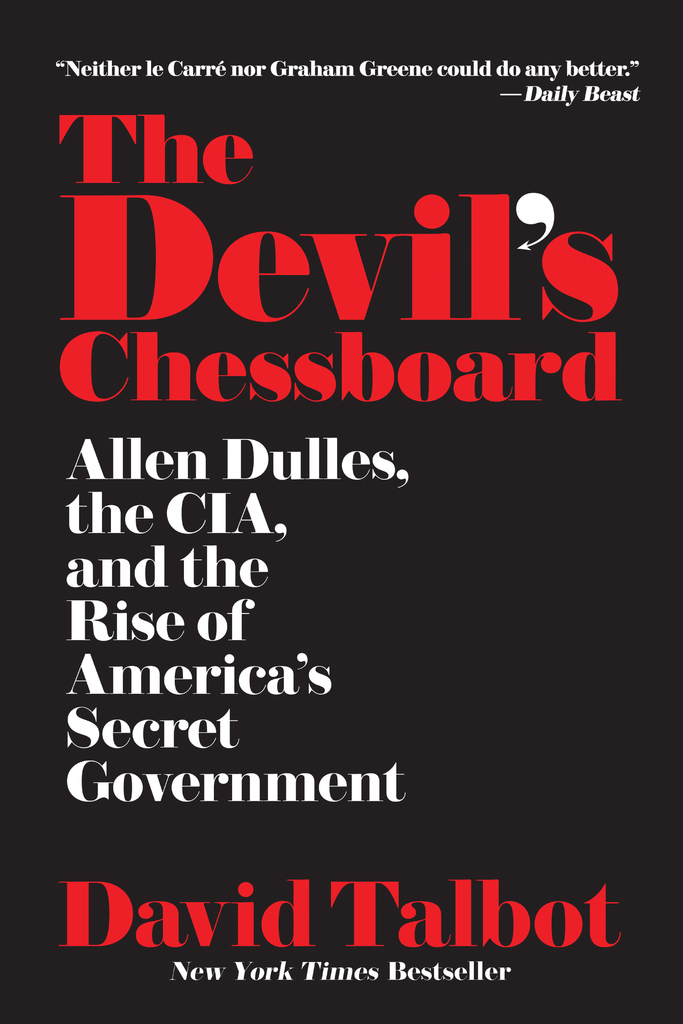
“We often forget how fragile a creation democracy is – a delicate eggshell in the rough-and-tumble of history. Even in the cradle of democracy, ancient Athens, rule by the people could barely survive for a couple of centuries. And throughout its brief history, Athenian democracy was besieged from within by the forces of oligarchy and tyranny. There were plots led by generals to impose military rule. There were secret clubs of aristocrat who hired squads of assassins to kill popular leaders. Terror reigned during these convulsions…

“Our country’s cheerleaders are wedded to the notion of American exceptionalism. But when it comes to the machinations of power, we are all too similar to other societies and ones that have come before us…no matter where power rules, there is the same determination by those in high places to keep their activities hidden.” – David Talbot

Allen Dulles was the father of the deep state. Anyone who thinks the problems of the national security state, undermining the Constitution, and abuse of power are something new, you’re in for a surprise. Talbot details how it all began. Like Dulles’ daughter said:

“It’s very important to understand it all – the dark and the light.”

Categories: government, History, Modern History | Tags: , , , , , | Leave a comment

Will You Abandon Humanity?

“The greatest cataclysm in human history.” – Ken Burns


The War is perhaps the best documentary on WWII ever filmed. I am currently watching through the series for the second time, which seems very appropriate considering some things I’ve heard recently.

Certain groups of people in the younger generations are speaking about how depressing and terrible the world seems to them. They see no hope for the future, and many have decided not to have children. I feel bad for those who apparently have no knowledge of their ancestor’s history; for the loss of resilience among these people; for their suppressed human spirit; for the close-minded manner of thinking they have indoctrinated with.

Is anything now so bad – real or imagined – compared to the most horrific conflict our species endured? One that occurred not early in our history, but recently while we were supposedly at the height of civilization.

When the veterans returned from this war, did they give up on life? Did they, after seeing such unprecedented death and evil, shut themselves from society and promise never to have children? Did they abandon the responsibility of ever generation to move forward?

No, they did the exact opposite.

Every time has its challenges, its problems, its obstacles.

Every era also has its people who embody the spirit of thousands of generations before them as they rise to overcome everything thrown at them.

For those who see no hope, let me apologize on behalf of those older than you that abandoned their responsibility to teach you our past. Now do yourself a favor and watch what your ancestors, only a few short decades ago, faced, endured, and conquered.

Categories: History, Modern History | Tags: , , , , | Leave a comment

Human Civilization Could End in Minutes

When you realize the leaders of the world spent decades planning for the genocide of humanity – and still have such plans in place – if you had any iota of trust in government left, it will certainly leave the rational mind.

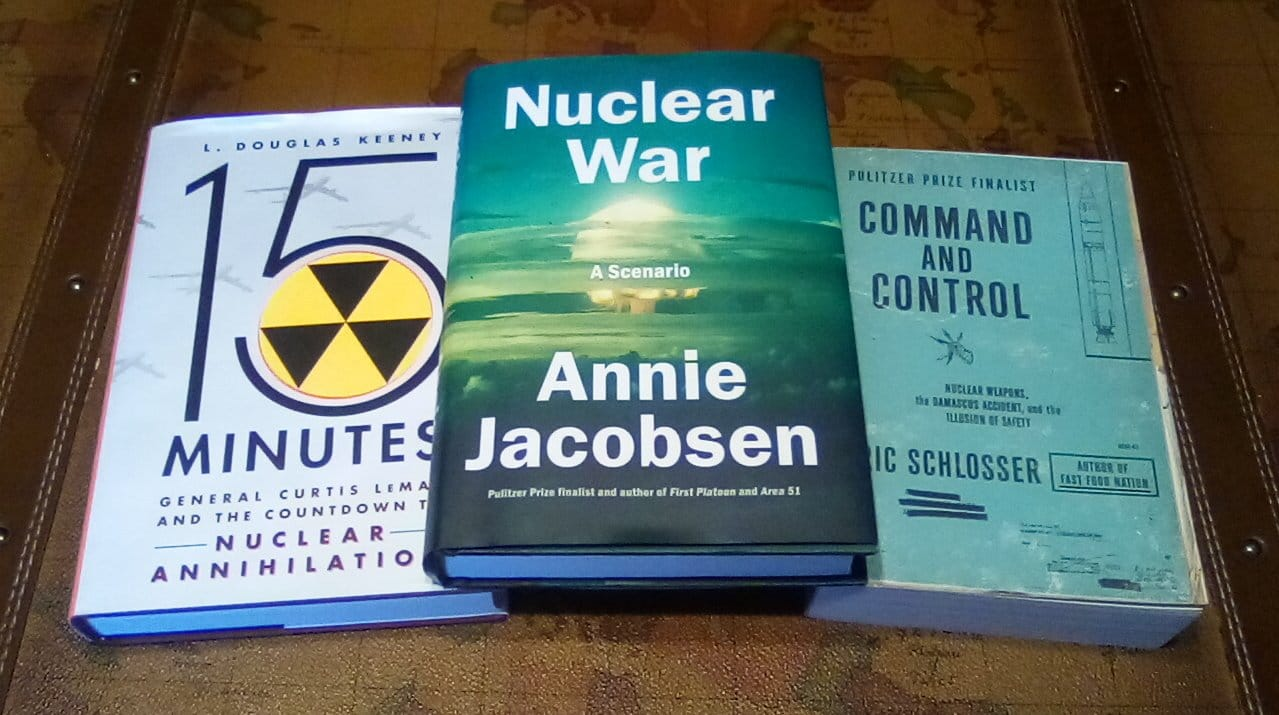
This is what makes Annie Jacobsen’s new book, Nuclear War, so disturbing. In it she details a scenario, based on declassified documents and interviews with government officials, in which a nuclear war unfolds. For decades, government leaders around the world knowingly and willingly made plans for the genocide of the human race. As Jacobsen has stated, “No matter how a nuclear war starts, it ends with everyone dead.”

Ronald Reagan had said, “A nuclear war cannot be won and must never be fought.” This is why he initiated the missile defense program, a technologically difficult program to shoot down nuclear ballistic missiles. It would be well into to the 21st Century before a limited, and problematic, system was deployed. Many of the same politicians casual in their planning for Armageddon, don’t seem to care about protecting their people from attack. Had missile defense had been taken seriously, had trillions not been spent on endless wars, could we have a robust missile defense system? Would Reagan’s dream of rendering nuclear ballistic missiles obsolete be a reality?

Throughout the Cold War, as described in 15 Minutes, close calls were abundant. Nuclear weapons were used carelessly and fielded in every way the military could imagine. Any weapon system could be made nuclear was made nuclear. Military planners advocated for preemptive nuclear war against enemies, as if nuclear attacks are self-contained and don’t impact the entire world. Now, in our own time, politicians once again toss around using nuclear weapons as if it comes with zero consequence. A world where war has been turned into another social program, the potential of nuclear conflict is quickly reaching Cold War levels.

As Jacobsen wrote, “Nuclear war is insane…The whole premise of using nuclear weapons is madness. It is irrational. And yet here we are.”

Perhaps people should put down their phones, shut off their televisions, and take control of their governments, and pay attention for once.

Once the missiles are launched, there will be no second chances.

Categories: Modern History | Tags: , , , | 1 Comment

A Little Late the Future has Arrived

If you have read any of the histories of Project Apollo, you know it was epic. In a few short years they created technologies that didn’t exist, and strapped men to dangerous machines. No fancy computers to aid them, every part was designed on paper, guided by math and physics.

Then it ended.

Mission accomplished, the government no longer saw the value of continuing at the pace established. Politicians only worry about the next election, not the future of humanity. Had the innovation continued, and Saturn 5s still rolled off the production line, we the people of the year 2023 A.D., wouldn’t be talking about “returning to the Moon,” or planning to go to Mars.

We would have never left the magnificent lunar dunes, and we’d have outposts in the red seas of Mars.

Now we are going back to the future. The Long Delay is Nearly Over.

For decades after Apollo, we suffered what Alex Dubin dubbed, “space policy whiplash.” Every administration and Congress unveiled a new plan, while terminating the previous one. Long term goals and dates were sometimes set, but they were so far out, they quickly faded into deep space. Programs floundered in the space industrial complex. There is no motivation for innovation and efficiency in a system that hands out government checks, only to change the plan every few years. Politicians saw NASA as just another jobs program to tout on the campaign trail.

NASA’s Artemis rocket is a wonder to be sure. Powerful and capable, it’s also immensely expensive and non-reusable. Designed to build off decades old shuttle technology simply to preserve the old system for just a few more years, it will be NASA’s last legacy project. Soon it will be supplanted by SpaceX‘s Super Heavy.

I remember back in the ’90s, as a member of the National Space Society, trying to convince the government space travel was important. One time, after one campaign, the International Space Station survived cancelation by one vote. Trying to get NASA to change was hard. We saw progress in interplanetary exploration, launching armadas of probes. Efforts to build next-generation, reusable spacecraft failed. Human Mars mission efforts came and went, even though perfect plans like Mars Direct were created. In the context of government-funded spaceflight, the future was delayed and never appeared on the horizon.

Or perhaps there was a glimmer of sunlight as we called for new legislation laying the groundwork for expanded privatization and commercialization of space. This was done and commercial satellites had already made billions, but sending people into space was dangerous and expensive, and only the government could accomplish such feats. Of course, as with most things the government claimed only it could do, there was much skepticism to be had.

The only truth to their claims is it was expensive to fly into space. Yet little effort had been made to bring rocketry into the 21st Century.

Then Elon Musk came along. He had money. He had a vision. More importantly, he had grit.

The aerospace industrial complex wouldn’t go quietly into the night. They thought their gravy train would never end. As Ashlee Vance, writes, “…Musk obviously rammed a new philosophy of doing business right down their throats.” The philosophy of free markets. SpaceX would fly more rockets in a few months, than had been shot off in previous decades combined.

Lori Garver, former executive director of the National Space Society, tried to change hearts and minds from the inside as NASA Deputy Administrator. It was a rough go, but NASA went from scoffing at the likes of SpaceX, to talking as if they were for change all along. Perhaps they don’t truly see what is coming. NASA of Space 2.0 won’t be the same NASA of Apollo, the shuttle, or the ISS. It will be forced — I mean transformed — back into what it was designed to do: Foster innovation and seed new technologies, and continue to explore the Solar System. For now, at least.

Once the door was kicked open, or rather broken off, there was no turning back. Vance’s new book details the upstarts at Planet Labs, Firefly, Astra, and Rocket Labs who followed SpaceX. Much like the First Space Age, the Second is full of drama, colorful characters, explosions, and grand victories. This time, though, unburdened by government bureaucracy and thoughtless politicians, the only thing in the way of these rocket engineers is gravity.

It has been a long wait. Apollo is almost mythical now. Young generations think their phones are the pinnacle of technology. Yet, while they look at TikTok videos, their grandparents, or great-grandparents, sent men to the Moon with slide-rules.

Now we are at the doorstep of the entire Terran Solar System. Its mineral wealth. Helium-3 that could power humanity for centuries. Protecting and understanding Earth. Spaceflight isn’t a luxury, it’s a necessity. We can’t pretend otherwise anymore.

We have permission to think grand thoughts again. Not just think about them, but make them our reality.

Categories: Modern History | Tags: , , , , , , , , , , , | Leave a comment

Create a free website or blog at WordPress.com.