
Ironically, or perhaps inevitably, the conservation movement kicked off at the same time as the 2nd Industrial Revolution in the late 1800s. Railroads, steel, scientific progress, communication (telegraph), early electrification and combustion engines converged to create a giant leap from a society that was still largely rural and centered around agriculture, to one of rapid urban and industrial growth. With that, however, came an immense demand for natural resources. In the Americas, the land had been seen as endless in what it could provide. Even before industry kicked into high gear, the fallacy of infinite resources was already being felt. A number of voices in the 1800s began to speak to the need to conserve and manage natural resources. Two would forever be remembered for making conservation a way of life, rather than some fringe movement.
Continue readingPosts Tagged With: environment
Muir and Roosevelt: Titans of Nature
Starvation or Prosperity?
“Starvation will result if we continue to farm the way we have for the last 80 years.” – Will Harris
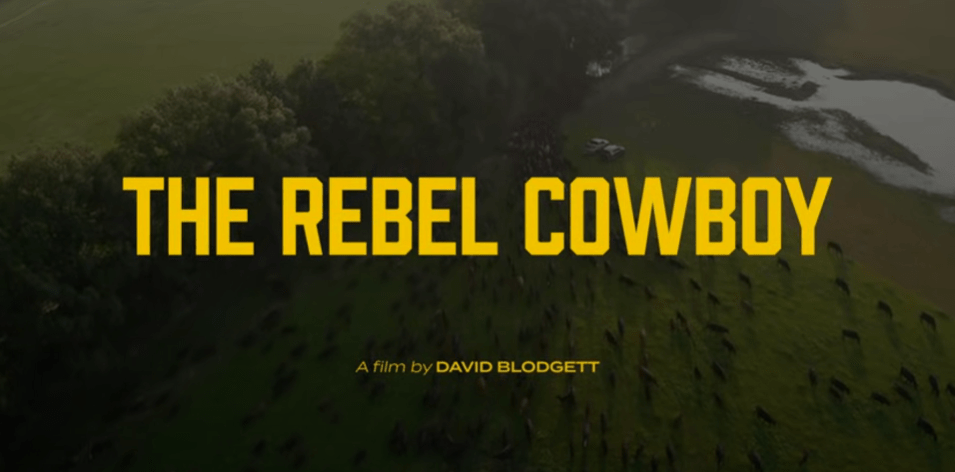
As industrial farming continues to endanger our food supply, environment, and health, for over 20 years, Will Harris has led the movement to correct course. Check out The Rebel Cowboy and help save humanity from itself.
Dangers of Shiny New Things
We are easily distracted by the Next New Thing. That new, shiny gadget, device, or car – we must have it. Fear of Missing Out (FOMO), or is it Fear of Not Fitting In? Marketing exists to convince you that you need everything new or updated. Companies create “ecosystems” that you can’t live without, or is it they can’t live without you handing over your money? Sometimes “new things” come not in the form of products, but as social change. Policy makers and activists implore you to change your lifestyle to preserve the future of humankind.
We’ve been conditioned to not ask simple questions: Do I really need this? What does it really serve? Is its purpose really as advertised, or even the intent of the designer? What is the impact of this product or service on me and others? Sounds rather heavy to be asking such things, but to not do so is not without risk.
We repeatedly fail to ask the Right Questions because we are taught to act on emotion. Companies don’t want us to think before acting. There’s nothing wrong with making money, but let’s not pretend your well-being is always at the forefront of every new product. Nor are all companies concerned to look beyond dollar signs to the impact their plans or devices have on humanity. Here are some examples.
We are told electric vehicles (EVs) will save our world. They are more efficient over their lifetime in energy consumption and produce zero emissions. Neither of these claims are true. The other elephant in the room are the troublesome human and environmental costs of making batteries, including slave labor (see Cobalt Red). Someday EVs may make sense, but the current, best engineerable solution is hybrids.
Policy makers tell us we must move to renewable energy sources. Sounds like a commendable goal, right? It is, but unfortunately, sources like wind and solar are unreliable, intermittent, and low output. Solving these limitations isn’t simply a matter of scaling up: There are the limitations of physics, and environmental concerns with what are idealized as “green” energy sources.
To free up money and attract investors to these renewables, we are told fossil fuels are dirty. Truth is, as fossil fuel usage as increased, pollution has decreased. How? Through technology (see Fossil Future). High output energy sources have raised millions of people out of poverty. Excessively relying on solar or wind could reverse that progress. This is why more nations are revisiting nuclear. Unfairly vilified, nuclear is the only emission-free energy source capable of powering all of our world. It is a proven technology, and fears of it unfounded (see The Case For Nukes).
I recently read a post on the wonders of 3-d printed “meat.” It claimed this fabricated food can save the world, by feeding millions and protecting the environment. Problem is, processed foods are a primary reason for the worst health in human history. The industrial farming that produces these foods is the most environmental destructive process ever created. Why would we just double down and continue down that path? Just because it’s cool, new tech? Turns out, returning to farming the way nature taught us (see Dirt to Soil) fixes our problems. Nor is real meat dangerous to us or the planet (see Sacred Cow).
Ask the Right Questions. Does this wonder product or policy change provide a useful service? Does it solve a real problem or does it perpetuate existing issues, or create new ones?
We’ve been conditioned not to think, but thinking is not hard, nor time-consuming. Sometimes those who mislead do so intentionally, others are themselves misled. Sliding you into an ecosystem, a social cause, or a political cult, is a surefire way to replace reason with emotion in your decision making. And they know it. You ultimately must be responsible for your own health and wealth. Far too many others will never do it for you. They rather not and look only to their own.
Don’t be distracted by shiny new things. Sometimes the old way is better, other times the new. Be careful of jumping on any bandwagon that comes your way.
It may be driving off a cliff.
Is Humanity Doomed?
If you have ever read about our ancestors, you were probably taught that, at the end of the last Ice Age, the citizens of North America hunted the many species of megafauna (giant mammals) to extinction. After all, why not assume terrible humans are responsible for all that death?
As it turns out, evidence has been growing of a planet-altering catastrophe as the cause. Most likely an impact event centered over North America (which endured most of the extinctions), with indications of impact craters littered across the East Coast.
Why is this so fascinating? Because it reminded me of the tendency of some people to immediately blame humans for every terrible event to befall the planet. These are the same people, with their dour and glum outlook, whom have been predicting for decades, that we only have a decade or two before we destroy the planet, run out of energy, and starve to death.
Then the decades pass, and the apocalyptic scenarios do not. Continue reading


 Darrick Dean