Posts Tagged With: J.R.R. Tolkien

“Escaping” Into Fantasy? Be Wary…

Since 1977, Terry Brooks has been writing his Shannara fantasy series. Once the first trilogy was complete, he gave up his day job as a lawyer and never looked back. In spite of his success, he has often been asked why he writes fantasy. Not so much now, with fantasy’s mainstream success, but some still equate fantasy with escapism.

True, any book, television show, hobby has that element — and there’s nothing wrong with that, so long as most people know how not let one overcome the other. Good fiction, whether or not it is fantasy, ultimately rests on how much it draws on real life. From the outside, that may be hard to grasp when talking about stories with fantastic creatures. Yet we have detailed here in past posts that it was the depth and themes of fictional worlds of Middle Earth and Narnia that was in large measure the reason for their enduring success. Continue reading

Categories: Fiction | Tags: , , , , , , , , | 3 Comments

How the Father of Fantasy Told His Story

The influence of 19th Century novelist George MacDonald can still be seen in the fantasy genre today. C.S. Lewis referred to MacDonald as his “master.” Tolkien called his fairy tales “stories of power and beauty.” MacDonald encouraged his friend C. L. Dodgson to publish his children stories — later known to the world as Alice in Wonderland under the pen name Lewis Carroll. MacDonald unintentionally became the father of modern fantasy.

Biographer Michael R. Phillips writes he was “deeply challenged with the magnitude and complexity” of telling MacDonald’s life:

…[MacDonald had a] tremendous variety of…literary genres — he was [also] a theologian, a spiritual mystic, a poet, a novelist, a preacher, a scientist, an essayist, a highly successful lecturer, a teacher, an actor, an editor and a fantasy writer — his ideas defy categorization and pigeon-hole analysis.

That MacDonald was a writer can be seen in his comments on potential biographies on himself. He maintained “that no biography should be written, stating that his books contained all he had to say to the world…” Phillips continues:

But it is my hope to convey George MacDonald’s thoughts and emotions…[which are] most strongly reflected through his literary works…his fictional characters were a means of communicating his own ideas and view of the world…The words he wrote…illuminate what he thought about, how he approached his quandaries, what kinds of questions he asked, and what answers he found…His books are the fullest means we have to get under the surface of his thought-skin to discover what really made him tick.

Therein lies a truth for all writers. Their fiction is art, entertainment and conveyor of ideas and messages. Ultimately, though, no matter how they try not to (if they try not to), parts of their story is also in the tales they tell.

I have written often here that everyone has a story to tell. That doesn’t just mean in the sense of sci-fi, fantasy, thriller or romance. It means the stories that reveal who you are, regardless of what background you tell it against.

Categories: Writing | Tags: , , , , , | 2 Comments

Heroes and Legends

Famed J.R.R. Tolkien biographer, Professor Thomas A. Shippey, in his course Heroes and Legends, writes on the “universal human art form” of storytelling:

…Over the millennia of human history, millions of tales, novels, romances and epics have been written, published, and many more must have been told in the far longer millennia of prehistory. The vast majority vanished without a trace once their immediate purpose had been served – forgotten, discarded, out of print.

A small number survive and become classics. Of that small number, an even smaller number does more than survive: They inspire imitations, sequels, remakes and responses. It is the heroes and heroines – and sometimes the villains – of these super-survivors who have created and continue to create our imaginative world. “Don’t the great tales never end?” asks the hobbit Sam Gamgee…Sam has good reason to see that the answer is: No, they don’t.

…Most of all, the “great tales” offer an insight into the human heart, in all its variety and complexity, that nothing else can provide.

Categories: Books, Fiction, Writing | Tags: , , | Leave a comment

Would Tolkien and Lewis Make the Cut?

There’s been much debate among Christian writers on what writing “Christian Fiction” means. The artificial rules of Corporate Christian Publishing would eliminate many of the well-known writers who were Christians. These would include J.R.R. Tolkien and C.S. Lewis, as Donovan M. Neal writes. Many Christian writers – like writers of all beliefs – just want to write their story. A story informed by their beliefs (again, like all writers), but where their beliefs come through organically – not forced or contrived by some sort of formula. I’ve read books from all sorts of authors who want to lecture or preach to their readers. Really, it’s the difference between good and bad writing.

That’s not to say there isn’t anything good on the Christian Fiction shelf. There’s good and bad in all fiction markets and genres. Part of the debate also concerns the pros and cons of having your fiction labeled by your religion. If you are writing for a specific audience, then I suppose it’s fine, though religion is still bit of an unique way to classify fiction. Yes, there are other examples of targeting this or that demographic.

In the end, regardless of a writer’s beliefs, they shouldn’t spend their time figuring out how to be successful in getting certain people to read their books. They should write their story.

Readers should demand it.

Categories: Books, Fiction, Writing | Tags: , , | Leave a comment

Will Readers “Misunderstand” Your Book?

I wonder how much authors worry about how readers misunderstanding what their book is about. Its meanings, themes and intentions. Some authors might overcompensate by entering the story and explaining too much. This “author intrusion” often makes a character sound out of character or exposition sound like a lecture. Authors should realize not every reader is going to get, or like, everything you have written and that’s okay. A mature reader isn’t going throw down your book if he or she doesn’t agree with every sentence you write. They might do so if your book isn’t entertaining or is unreadable.

I mentioned in an earlier post on how modern readers like to reinterpret older books (in that case Dracula) through modern eyes. When an author is still living, or wrote about their books, it’s always best to default to their explanations. After all, they wrote the book. J.R.R. Tolkien’s The Lord of the Rings is brimming with themes and meaning, but it was no allegory. The author wrote:

There is no ‘symbolism’ or conscious allegory in my story…To ask if the Orcs ‘are’ communists is to me as sensible as asking if Communists are Orcs.

Devin Brown continues by asking, “Don’t they share a number of similarities? [along with Sauron/Hitler, etc.] Of course they do.” But he adds what Tolkien explained, “I think many confuse ‘applicability’ with ‘allegory.'”

Of course, “everyone knows” C.S. Lewis’ The Lion, the Witch and the Wardrobe was an allegory. Everyone forgot to tell C.S. Lewis. He said he never intended to write an allegory, the story unfolded as it did. He also wrote:

As we know, almost anything can be read into any book if you are determined enough…[the author] will find reviewers, both favorable and hostile, reading into his stories all manner of allegories which he never intended. (Some of the allegories thus imposed on my own books have been so ingenious and interesting that I often wish I has thought of them myself.)

So focus on writing your story. Understand not everyone will like it or get all the wonderful things you are trying to get across. Nor should you attempt to appease everyone or your story will most likely end up not being very interesting. Make your tale organic and entertaining. Use the tools you have to improve your craft.

Because ultimately the mythos you create is yours and someone out there wants to enter it.

Categories: Books, Writing | Tags: , , , , , , , | 2 Comments

Need for Adventure

“Adventures?  Nasty disturbing uncomfortable things!” said Bilbo to Gandalf.  If he only knew. The scenes that follow — the arrival of the dwarves who take over his home — did not seem to be a favorite in the films, but was an essential part of the book.  In it we see much of ourselves.

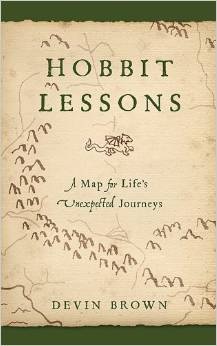
Bilbo was set in his ways, in his little world. Didn’t want to be bothered, nor wanted any deviations from the norm. So imagine the disruption of this rowdy band taking up residence, uninvited. Think about about how people handle disruptions in their life. Poorly. Even good, life-changing ones. We don’t see what goes on around us. Neighbors in need. Corrupt governments.  If the snack bag is full, and the batteries are good in the remote, we’re a-okay.  Devin Brown writes in Hobbit Lessons, “We might also think of someone who can’t bear to be away from their laptop for more than a few minutes. Or someone for whom being out of cell phone range counts as a real hardship.”  Sad.

We see Bilbo’s change in his dwarf encounter. Brown writes that the hobbit senses “he is missing something” and decides to go on a “quest to live more fully” and ultimately becomes a critical part in the history of his world.

Are you going to challenge your status quo? How are you going to handle the next disruption?

Perhaps we all need a quest. An adventure.

hb2

Categories: Books, Fiction | Tags: , , , , , , , | Leave a comment

To Middle-Earth One More Time

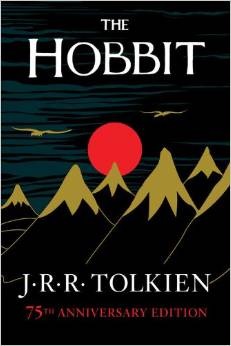
Part three of The Hobbit trilogy has come and, in all likelihood, is the last of Middle-Earth’s time on the big screen. Fans never thought they would have to wait nine years from the original trilogy to revisit this world that became a bit of a December tradition. And so that now ends, but Middle-Earth will never leave us.

It has been over seventy-five years since The Hobbit was first published. How many books endure that long? Few. Fewer still inspire films that don’t quickly fade from history. Fans argued which film trilogy was better. Such arguments usually ignored the fact that you couldn’t expect to compare the two. The books themselves were quite different, Tolkien never changing the style of his first to match the latter volumes. He didn’t feel the need to change it, other than a few details. So the filmmakers had to find a careful balance: Make The Hobbit more in line with the look and feel of the first films without losing its unique, and lighter, traits.

Keeping that in mind, the films largely succeeded. By the end of the latest, you are shown a Middle-Earth that is changing and the future holds darkness. Not the finality of The Return of the King, because it isn’t the end. It is a prologue to what is to come (or what has already passed, depending how you look at it).

Why has Middle-Earth captured readers (and now film lovers) for so long? Why has it inspired so much in the fantasy and other genres?

Because behind all the creatures, the fantastic battles, wizards and elves, it’s about people. People who stand against evil, who never abandon each other even in the darkest times, and risk it all in the process.

It’s the Story about who we all want to be. What we were meant to be.

hb

Categories: Fiction | Tags: , , , , | Leave a comment

Immerse Yourself into Middle-Earth

A few months ago in my post More Than Just a Fantasy we looked at how the fantasy genre — in particular J.R.R. Tolkien’s vision — is relevant to us in its stories and themes. In particular, Matthew Dickerson’s book A Hobbit Journey: Discovering the Enchantment of J.R.R. Tolkien’s Middle-Earth, showed us how Tolkien’s worldview was populated with many deep ideas to ponder and learn from.

With the release of the second Hobbit film, it’s a good time for Tolkien fans to once again dig deep into his mythos and what formed what has become a classic part of 20th Century literature. There is no shortage of books to peruse, but a couple stand out.

There is the before-mentioned by Dickerson, which focuses on how Tolkien’s Christian beliefs were the foundation to his writings. Tom Shippey’s The Road to Middle Earth: How J.R.R. Tolkien Created a New Mythology is the go to biography of Tolkien and exploration of his many inspirations. John Garth expands on one aspect of Tolkien’s past, his serving in World War I, in Tolkien and the Great War. The War of the Ring had some very real life parallels.

For those just looking for guides through the incredibly realized Middle-Earth, The Atlas of Middle Earth and Tolkien’s World from A to Z are indispensable guides.

If you wish Tolkien himself had written more of his creation, he did in The Children of Hurin and The Silmarillion (both completed by his son after Tolkien’s death).

To top all this off, Christopher Snyder’s new The Making of Middle-Earth covers a little bit of everything of Tolkien’s world and legacy. It’s a great place to start for all Tolkien students and fans.

Do you need these books to enjoy Tolkien’s fiction? No. Do they make you want to go back and re-read and become immersed — deeply so — into Middle-Earth like it was the first time? Yes, they certainly do.

Categories: Books, Fiction | Tags: , , , , , , , , , , , | 3 Comments

More Than “Just a Fantasy”

It’s not often that popular fiction stays in print for decades. Even less often does it have the depth that allows it to transcend the imaginary barrier from pop to literature or even to the status of classics. Even most of what is today referred to as literary fiction, well, won’t stand the test of time. Every so often there are books that do the impossible. J.R.R. Tolkien’s Middle-Earth, as embodied in The Hobbit, The Lord of the Rings and The Silmarillion, have done just that and have endured for over a half a century.

Many have only been exposed to Tolkien’s world through the recent movie versions. Or perhaps you think fantasy is just that, fantasy. Elves, trolls and big battles. Doesn’t sound very relevant to the real world, does it? There must be a reason why Middle-Earth is still the inspiration for an entire genre and still attacts millions of readers decades after its publication.

Because it is relevant.

Like any great book, the author has the primary responsibility for its success. Tolkien was a scholar, not a fiction writer. His mastery of history, language and culture allowed him to create an alternate history of Earth. This wasn’t his most important strength, however. Like any writer, his beliefs and convictions inform and influence his words on paper. As a great writer, he didn’t strive to lecture or teach as much as meant to entertain.

And so there have been endless books critically analyzing every aspect of Tolkien’s world. Most of today’s “literature” never warrants such study. One of the best such scholarly, yet accessible, endeavors is Matthew Dickerson’s A Hobbit Journey: Discovering the Enchantment of J.R.R. Tolkien’s Middle-Earth.

Dickerson explores Tolkien’s many themes such as the free will of men, moral responsibility and war. This last may be apparent from the film versions and people may think it the overwhelming part. Indeed it is in many ways, but Tolkien wove many subtleties in his stories.

War is at time necessary, but takes a terrible toll on all, even the victors. That is clear in the books, as is that the forces of good should never use evil to conquer evil. The means don’t always justify the end. The Ring could be used to destroy Sauron, but at what cost? What did it do to all that did use or want it, often with the best of intentions? Even the way the “good guys” treated captured enemies was diametrically opposed to how the Enemy treated their prisoners. Moral and military victories aren’t always the same thing. Discussions like these in Dickerson’s book reveal some very deep issues embedded in Tolkien’s books.

Thoughtful people will begin to realize that all the screaming “experts” on television who pretend to be intellectuals, never approach the mind of someone like Tolkien. Unlike them, he doesn’t preach, browbeat or lecture his readers. His beliefs are so well-thought out, they naturally flow within the story. They make his book an endless treasure chest to be searched.

The films captured Tolkien’s world better than any other book-to-screen adaptation, but there is much more. If you are someone who likes books that can reveal new depth at every reading, or you have never delved into a book for a literary study, Dickerson’s book will surprise and challenge you to do just that with Tolkien.

And no doubt you will pick up Tolkien’s books again and read them like it was the first time.

Categories: Books, Fiction, Writing | Tags: , , , , | 2 Comments

The Hobbit and Evil

Fans of the Lord of the Rings trilogy didn’t think they would have to wait nine years for The Hobbit. It was worth the wait. Peter Jackson’s team has once again put the time (and money) into bringing this classic mythos to life.

It’s also one of those films that reminds you the power of the medium. Most films don’t gain anything from the big screen format. You might as well watch them on television. Films like The Hobbit remind you of why people still go to the theater in the age of high-def television.

I had been wondering how they would make The Hobbit into three parts (this seemed a bit excessive). Seeing how part one only makes it through the first six of nineteen chapters, it’s easy to figure out now. This should make Tolkien purists happy because this means the movie makers are following the book closer, they have the time. There were a number of things in the film I forgot were in the book making it nearly as epic as the others. They also draw on Tolkien’s background history to fill in the details, as the book isn’t as detail-heavy as the sequels. I haven’t had any issue with what deviations were made in the films. They all were done in a way that kept with Tolkien’s vision. In my analysis, I still think they are perhaps the best book-to-film translations ever attempted.

Some may see the films or books as just entertainment, but Tolkien spent a lifetime creating a mythos with far more detail than most writers ever imagine. An Oxford professor, he approached his writing as if it were a scholarly pursuit. Yet it was still entertaining and captivating, full of themes and message (though he never intentionally preached, so to speak, his beliefs informed his work). That’s why it has endured for so long (The Hobbit was originally published in 1937, mainly directed at children. Don’t see many children books like this anymore, do we?).

Tolkien drew on many influences in creating Middle-Earth. Most notably his Christian worldview, from which one of his most important themes came:

Evil exists.

Not only that, he witnessed the worst men could do while serving in World War I, which undoubtedly colored his writing. In fact, he began creating his world while in the trenches. Throughout his books, he made it clear that evil was always there, even when not obvious, waiting for a time to explode or conquer. When it did, it must be stopped.

It’s funny how Lord of the Rings, in many ways a war novel, saw a resurgence during the 1960s. Though I doubt, because of his own experiences, Tolkien would ever promote rushing into war. He also knew we can’t pretend evil doesn’t exist or that it may just go away.

It always comes back.

In time of tragedy, people always ask why? That is the normal reaction and indeed there are many causes for terrible events, like the recent shootings. It was disturbing that political groups and politicians immediately starting talking about guns, as if they whispered into these people’s ears and turned them insane. That’s the easy way out. Addressing actual causes is difficult. Admitting evil exists makes us scared and helpless.

Given that one of the cornerstones of most religions is that evil exists, one wonders why so many pretend it doesn’t. We want to be safe, secure and happy, but we don’t want to be vigilant. We’ve been told evil isn’t real and we, through law and government, can stamp it all out. We downplay talk of evil in our religions, so not to scare people away. We have made religion into another helpful fad to get us through life. Then something horrible happens. We are forced back into reality.

Sadly, most who are not directly effected by the tragedy, soon forget and go back to their lives. Evil grows and prospers and is ignored.

Tolkien believed in it. He saw it in war and never forgot it.

I hope all will pray and do whatever they can to help the people effected by the recent unimaginable violence in Connecticut and elsewhere. I also hope these things: People will realize what they have here in this country. The opportunities for them and their family and that there are some places in this world were this violence is a regular event. Remember what it took to create and defend this country and don’t use crisis as an excuse to act too quick and not address the real issues. Times of disaster and tragedy are the times we need to protect our rights the most, because in the end, if we don’t, far greater calamities will occur. Just look to history.

Some think “doing something about guns” will solve these problems. Timothy McVeigh didn’t use guns to massacre people. Nor did the terrorists on 9/11. Evil wants us to think it is just that simple, ban this or that. They want us to look the wrong way.

Ask the right questions. If we don’t, evil will continue to win.

Update: Others are also talking about evil and not pretending it doesn’t exist. See posts by John Eldridge and Mike Duran.

Categories: Books, Critical Thinking, Fiction | Tags: , , , , , , | 1 Comment

Create a free website or blog at WordPress.com.