Author Archives: Darrick Dean

Time Is Running Out

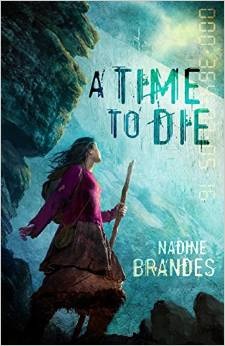
“People are allowing themselves to place time above life.” Parvin Blackwater should know, her Clock is counting down to her last day. She’s always known when the end would be, but she won’t let it define her. “I want…to be remembered.” This is the core of Nadine Brandes‘ novel A Time to Die, a refreshingly original entry into the crowded dystopian genre.

The world has been shattered by a global disaster and the nation is divided. A wall divides the East and the West. There are cities outside the wall, but desolate areas where people have regressed to primitive cultures. Parvin and her family are at the bottom of society inside the Wall. The elites who rule the society that rose from the ashes control the population through Clocks. Each person knows when the end will be as their Clock counts down (somewhat reminiscent of the film In Time). Eighteen-year-old Parvin is only months away from the end and her life hasn’t amounted to much. She is determined to change that in what time she has left.

We have a typical dystopian background, but instead of that overwhelming the story, Nadine Brandes focuses in on Parvin’s journey. It’s not an easy one, with some moments that will take you aback. There’s more depth in this character’s pilgrimage than in similar books. Not the simple “rise against the oppressors” story, Parvin must learn who she is and what she believes if she is to learn her place in the world. Told perfectly in the first person, we get to see her struggle with belief, with God, doubt and with what she encounters outside the Wall. Yes, like the female protagonists in those other books, Parvin is challenged beyond anything a normal person would face. Here, though, it isn’t all that obvious where this will lead. Maybe she will challenge the oppressors, indirectly or directly, but she’s certainly not taken the well-worn route of her contemporaries (in other novels, that is).

By approaching the dystopian tale from a different path, and themes of time, finding one’s place in the Story and of belief, Brandes has begun a captivating epic.
attd

Categories: Books, Fiction | Tags: , , , | 1 Comment

Rescuing History

The truth is that the white men and savage Indians could never live in peace in the same land. The Indians wanted the land for hunting grounds; the white people wanted it for farms and ranches. The white men, being stronger, were able to win.

So it was written in the elementary school history text, The Growth of the American People and Nation, published in 1937. Boy, times have changed. A perfect example of history being revised, perhaps unintentional or based on the intentional agendas of others. Some more:

The government at last decided it was cheaper to feed the Indians than to keep on fighting them…moved [them] to…Indian reservation[s]…Government Indian schools were opened…The Indian problem was no longer one of our chief problems.

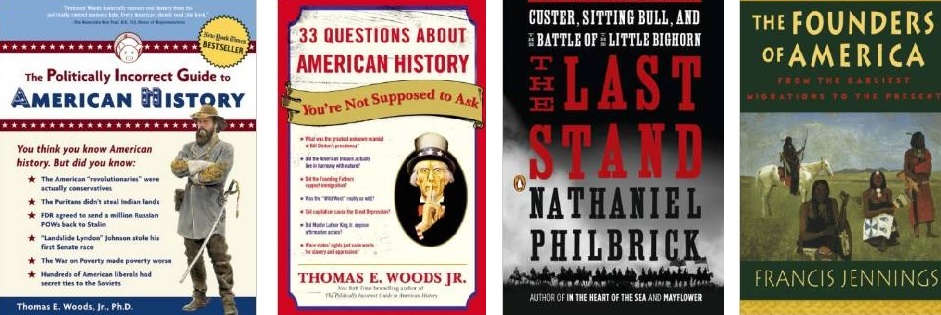
History has since, for the most part, corrected its recording of what transpired to the natives in the Americas. They didn’t just want the land for hunting, it was their home where they had lived for generations. Nor were they particularly more “savage” then any other humans. The text even notes that, “…the Indians had no food supply [buffaloes killed], [their] lands were taken from them…[they] were put on reservations.” Sobering to those who think such things cannot happen in a democracy. Historian Francis Jennings wrote in The Founders of America:

From 1812 until the end of the century, official policy, no matter what euphemistic terms expressed, was simple conquest. Its purpose was to reduce Indian persons to dependence and to seize tribal lands. It is common scandal that the United Sates has violated every single one of its treaties with Indians.

We cannot engage in revisionism of history, the good or bad, what we like or dislike, or else we cannot learn from it. One wonders, though, how many genocides and oppressions we must witness, or allow happen, before we get it. Unfortunately, historical revisionism is alive and well and is a favorite of those with political and other agendas.

There seems to have been a craze of trying to dig up dirt on the Founding Fathers in order to justify support for our less than stellar elected class. No one ever claimed the founders were perfect, unblemished humans. Comparative to many of our own, they did have a higher respect for their office. In the zealous attempts to dethrone them, facts have often been flushed away. For instance, take the cottage industry of attacking Thomas Jefferson.

One of those attacks is the claim that DNA proved he was fathering children with slave Sally Hemings. The problem with this is that the DNA didn’t have Jefferson’s name on it, only that someone in his family was implicated. Turns out that his brother could have been the father of the children. There is nothing that can be used to state that Thomas Jefferson absolutely was fathering these children, as so often has been implied or stated.

Often the old history books do get it right and can be used to ferret out agendas in our own. It is always a fun exercise to compare the two. The points to remember are these: Dig a little deeper, don’t think everything you are told or read is without error. Look for bias and agendas, especially when attached to politicians and those that fund them. Ask why some detail of history has changed and where’s the evidence. Yes, it can take time and may seem unnecessary to some people. Ultimately, however, we have a responsibility to pass on accurate and truthful history.

We must start thinking about those who will follow us instead of just tomorrow and the next day. We do this in the hope that our ancestors won’t repeat our tragedies and mistakes and will remember our triumphs.

hsbks

Categories: History | Tags: , , , , , , | Leave a comment

Roughing It

We do not go to the green woods and crystal waters to rough it, we go to smooth it.  We get it rough enough at home; in towns and cities; in shops, offices, stores, banks – anywhere that we may be placed – with the necessity always present of being on time and up to our work; of providing for the dependent ones; of keeping up, catching up, or getting left.

So wrote George W. Sears – better known as Nessmuk – in his 1884 book Woodcraft. It has been in print ever since.

His words apply today just as they did over hundred years ago. We like to think we are better off than our ancestors in all ways, but clearly we are not. We still immerse ourselves in busyness and then complain we are exhausted and have no time. Nessmuk’s book was directed to such average folks – not the “man of millions” – in hopes they would find “at least once a year…a season of rest and relaxation” that they “well deserve.” He mentions those who succumbed to the “temptation to buy this or that bit of indispensable camp-kit.” If only he could see the outdoor industry now. He recommended we “go light; the lighter the better, so that the simplest material for health, comfort and enjoyment.” That’s something, I suppose, we can all consider in all parts of our lives.

The wild still calls to people as it has for generations. We’re almost aliens on this world, yet are uniquely designed to enjoy what John Eldredge calls the “extravagant beauty” that is all around us. We can’t raise nature to be a god and put it over the lives of humankind, but it is certainly there for those who wish to find it. Nessmuk ends his book with these words:

Wherefore, let us be thankful that there are still thousands of cool, green nooks besides crystal springs, where the weary soul may hide for a time, away from debts, duns and deviltries…

Free yourself from being busy. Eden awaits.

nes

Categories: Books, Nature | Tags: , , , , , | 1 Comment

Publishing Numbers “Wildly Wrong”

Didn’t have a chance to post this weekend, so I’ll send you over to Robert Bidinotto’s article, “New Data Demolish Key Claims by Big Publishers.” Therein he discusses the data released by author Hugh Howey which reveals some interesting insights on the state of publishing.

Categories: Writing | Tags: , , , | Leave a comment

Improving Your Craft

The other day I discussed some tips on writing dialogue.  Roz Morris gives some more insight in keeping your dialogue from being awkward or stilted.  Hayley Knighten reveals the 5 Worst Ways to Start Your Novel.  Lastly, Lynette Noni explains how to create a real fantasy world.

Categories: Books, Fiction, Writing | Tags: , , | 3 Comments

Heir of Hope Cover Reveal

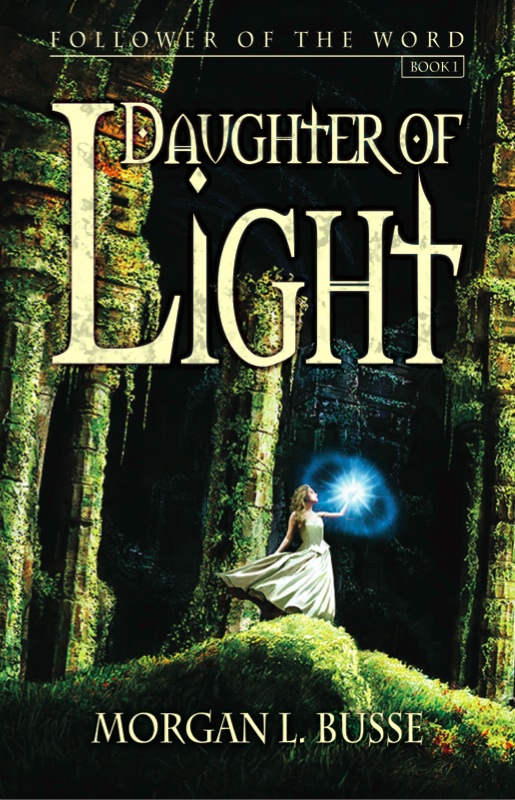
If you are looking for a new fantasy world to disappear into, check out Morgan Busse’s Follower of the Word series. Book 3 out soon…

Morgan L. Busse's avatarMorgan L. Busse

As you may have noticed, things have changed around my website. I am excited to reveal not only the new cover for Heir of Hope, but for all three books in the Follower of the Word series.

Why the new covers? My publisher decided to update Daughter of Light and Son of Truth so they matched Heir of Hope. Now the titles of each book are easier to see in thumbnail form and are definitely eye-catching. So without further ado, here they are:

Daughter of Light coverSon of Truth coverHeir of Hope coverPre-order is now available for the paperback version of Heir of Hope. If you are interested, here is the link: http://www.amazon.com/Heir-Hope-Follower-Morgan-Busse

There was a glitch on the ebook pre-order, but as soon as it is available, I will let you all know. Thank you, everyone, for your patience as you waited for the last book in the Follower of the Word series. This book is…

View original post 4 more words

Categories: Uncategorized | Leave a comment

Losing History

President Obama has caused quite the controversy by making comparisons of ISIS’s campaign of terror to the Crusades. I will let others debate what, how and why he said everything that he did. Since this site does touch on history time to time, I will discuss his comparison. How do I put this nicely?

It’s absolutely ridiculous.

The Crusades are often brought up primarily by those looking to attack Christians or knock them down a bit. They have fed the perception that the Crusades were all about expanding empires and destroying Islam. The problem is that this perception isn’t history.

It’s revisionist history.

During the early history of Christianity, its population was centered in what we typically refer to as part of the Middle East (technically the Near East and Asia Minor). It’s hard for some to imagine that a country like Egypt was once predominately Christian. What is left out of drive-by comments about the Crusades is the part about the Muslim Conquests that swept through the region, conquering nearly all of it. Princeton scholar Bernard Lewis wrote:

At the present time, the Crusades are often depicted as an early expansionist imperialism — a prefigurement of the modern European countries. To people of the time, both Muslim and Christian, they were no such thing. The Crusade was a delayed response to the jihad, the holy war for Islam, and its purpose was to recover by war what had been lost by war — to free the holy places of Christendom and open them once again, without impediment, to Christian pilgrimage.

Were the Crusades full of tragedies, horrible events and misguided people on both sides? Yes, because all war is a horrible tragedy. That doesn’t mean we rewrite history for our agendas. We let history, the good and the bad, speak for itself. We learn from it, so we don’t repeat it. Or, as George Orwell said, “The most effective way to destroy people is to deny and obliterate their own understanding of their history.”

The revisionism of the Crusades is such an obvious one, it’s sad to see world leaders repeat it. We’ve lost respect for the importance of history. Instead, we have replaced it with superficial study, politics and the tendency of too easily believing everything we hear. We are in danger of losing the messages our ancestors have left for us.

The very messages that can preserve humanity’s future.

crbks

Categories: Critical Thinking, History | Tags: , , , , , , | 2 Comments

How Do Your Characters Speak?

Dialogue seems awfully easy in English class, yet many writers get it wrong. You see, dialogue in novels isn’t supposed to be realistic.

“Huh?” you say.

If you wrote dialogue with all the little extras – the pauses, the unecessary words (um, like…), every variation from accent or region – it would be very tedious. In everyday speech, the brain processes out these things. When a writer tries to include all of them in the name of “realism,” they only annoy the reader. One has to be very selective in where such items are included, a specific purpose for each.

It’s also easy to drift too far into unrealistic speech.  Characters (rarely anyway) launch into paragraphs long commentary. People don’t talk this way and this is usually a sign of author intrusion. That is, the author wants to teach the reader something , lecture them or impart some wonderful piece of knowledge to them. These “info dumps” are just telling instead of showing. Find a more organic way to include the information in your story. Very often you’ll find that the delete button is in order. Make sure it sounds like your character is talking and not you.

Many writers abhor short sentences, believing if it’s short that it must be grammatically incorrect. This is not true. Shortened dialogue can signify tempo, or change of it, of the scene. This is very popular in television scripts. Do people really talk like this? Rarely, but in writing it imparts necessary information to the reader (or viewer).

How should people talk in your books? There’s a great line in the film National Treasure that gives us insight. Nicholas Cage’s character says something profound to his female friend. She replies that people really don’t talk like that, to which he says, “No, but they think like that.”  People’s thoughts are usually clearer, more reasoned and more detailed than what comes out of their mouths. So dialogue, out of necessity, must project a bit more than normal speech, but not too much more.

Who said writing was easy?

Categories: Writing | Tags: , , | 2 Comments

Allure of Islands

Islands.

Something about them has always drawn people to them, in real life and in fiction, for a variety of reasons. They are disconnected from the world and hideaways from life. Some are marooned on them. Pirates love them. They harbor lost worlds and indecipherable mysteries. Film and television has a constant stream of island adventure, but many of those tales, and our fascination with them, originated in books. Treasure Island, Robinson Crusoe, The Island of Doctor Moreau, The Land That Time Forgot and others set the precedent.

Perhaps it takes going to the island to learn more about ourselves. Or, at times, just to have fun.

bkspir

Categories: Books, Fiction, Forgotten Places, History | Tags: , , , , , | Leave a comment

How Did People Survive Before the Internet?

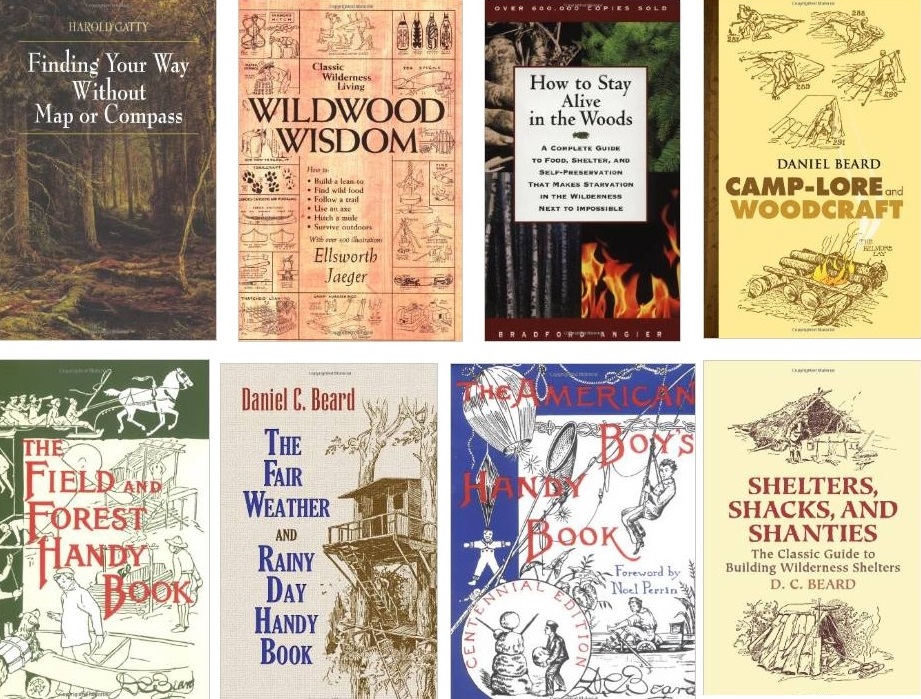
Unfortunately, they weren’t reading this website. They were, however, just as capable of us of finding something to do. Kids weren’t wondering aimlessly without their tablets and phones. In fact, we aren’t all that far removed from the days when kids played outside all day and had to practically be forced back home for meals and bedtime. Nor did folks pull up the internet every time they needed to learn how to make, fix or craft something.  Someone at sometime taught them in person.

The books below embody some of that old time knowledge and know-how for outdoor projects, skills and survival. Many of these books have been in print, in one form another, for decades. They are for collectors of nostalgia, those who would like to get their hands dirty or people who want to learn their way through the woods without a GPS and survive without a grocery store.

Someday we may all wish we had taken the time to preserve the wisdom of those who came before us.

udl

Categories: Books, Nature | Tags: , , , , , , , , | Leave a comment

Create a free website or blog at WordPress.com.