Books

What Choice Will You Make in 2026?

Learning is a lifetime pursuit. You will, if you choose to, learn far more after school (no matter how many years you go or don’t go) than you will in the classroom. Every adult, I think, should make a choice:

Commit to a lifetime of exploration and discovery, or let others control your mind.

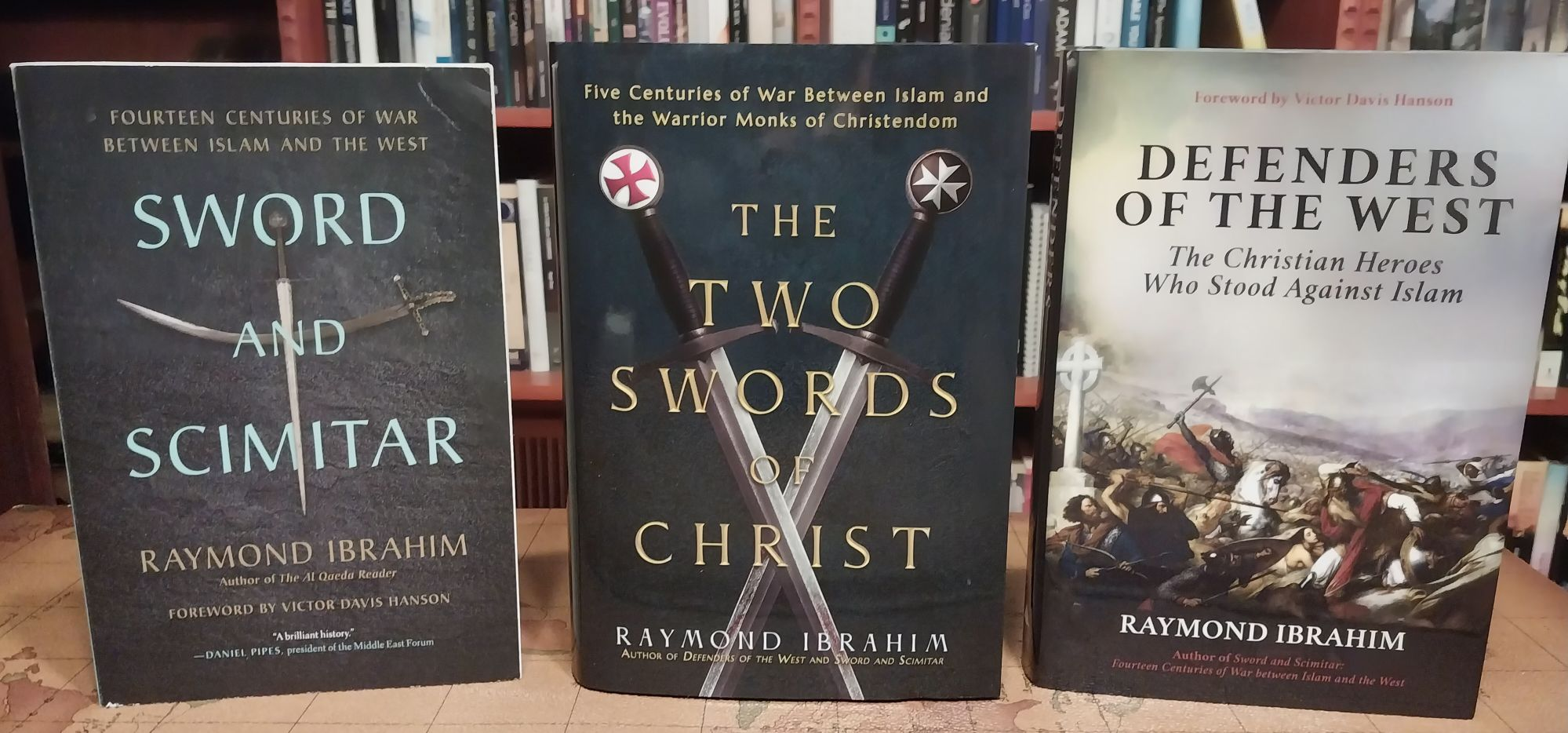
Here are some books I read in 2025. What choice will you make in 2026?

Categories: Books | Tags: , , , , , , , , , , , , , | Leave a comment

The Rise (and Eventual Fall) of Darwinism

“What if Charles Darwin got it wrong? What if all the crises, alienations, and losses of faith we associate with the aftermath of the publication of The Origin of Species had been triggered by a false prospectus?” – Neil Thomas, Taking Leave of Darwin

Like many people, Neil Thomas, a scholar of logic and literature, accepted the Darwinian “narrative without demur” and he “deferred to what [he] imagined must be the properly peer-reviewed orthodoxy.” Yet when he began to study what was behind the curtain he found the “grand story of evolution by natural selection was little more than a creation myth to satisfy the modern age.”

In Taking Leave of Darwin, Thomas details this journey as he explores the evolution of a myth, the counter-theories and criticisms that allegedly don’t exist, and finds Darwin’s model of origins supported by materialistic philosophy, not by empirical science.

He writes Darwinism is a throwback to the “pre-scientific mind [which] imputed agency to Nature by way of personification of Nature’s various aspects as individual divinities…Darwin appears, wittingly or not, to have channeled the spirit of the older, polytheistic world by crediting Nature with an infinite number of transformative powers.” The mechanism of speciation, driven by chance, “…falls at every hurdle. It lacks explanatory force, empirical foundation, and logical coherence…nothing can ‘magically emerge’ or ‘naturally evolve’ without a supporting agency.”

Thomas’ second book, False Messiah, focuses in on Charles Darwin, his development of his origins theory, and the age in which this all unfolded. He found Darwin struggled to put his theory on solid ground, questioning some of its tenants, and its lack of data. His critics were aplenty, questioning the logic of the proposed mechanisms of speciation, or the feasibility of life spontaneously forming in a “warm little pond.” Even in Darwin’s day, his model appeared as a “just-so story” of “fog piled on fog” that ignored the reality of the impossibilities it claimed to explain. Some of Darwin’s own supporters wrestled with the claims in his books, so how did the model rise about all these obstacles?

It rode the zeitgeist of the Victorian culture wars, not empirical science. Thomas writes, “Many Victorians very much wished Darwinism to be true. On the slightly dubious principle that empirical facts should never be allowed to get in the way of a good story, many turned a blind eye to the scientific inadequacies [of Darwinism].”

The 1860s were a counter-culture era, where the intelligentsia was revolting against traditional thought and religion. Clearly not all were onboard with Darwin’s claims, many realizing “materialism could not account for the totality of human experience.” Nor could Darwinism explain the “sheer exceptionalism of our terrestrial biosphere.” Sometimes facts get overwhelmed by louder voices. Unfortunately, Darwinism would be used as the basis for a horrifying new zeitgeist, eugenics, for much of the Twentieth Century. This would be quickly memory-holed in subsequent decades.

In the end, to this day, Darwinism has been a theory “much modified, festooned with revisionary patches akin to the epicycles employed to prop up geocentricism.” Even as evangelists of neo-Darwinism claim it is unchallenged and solid, in the journals and research labs, there are frantic searches for replacements. In spite of over a century of work, Darwinism still cannot explain ultimate origins, complexity, information in DNA, consciousness or much else other than minor adaptations. In frustration, more supporters have gone back to panspermia or multiple-universe speculations. In other words, they are just moving the problems of Darwinism out of sight, out of mind.

Thomas’ two books are together a very readable, and non-technical history of Darwin’s theory of biological origins. For those unfamiliar with the subject, or those who have been taught not to question the reigning narrative, these short volumes are packed with well-documented history.

Ultimately, Darwin’s model would have died long ago, had it not been hijacked by materialistic and naturalistic philosophies. It’s a shame really, because Darwin appeared to be trying to practice science, even if was ultimately a strained attempt by piecing together various existing claims. His doubts grew over the years, but he was so invested by then, he never gave it up (though some of his supporters did).

Science has always been beset by personalities, influenced by movements and causes. Much of this can be exposed and avoided if, as Thomas asks of us, we commit to being truth-seekers.

Seek truth, wherever it leads you.

Categories: Books, Critical Thinking | Tags: , , , , , | Leave a comment

What Would They Have you Believe?

“Why you fool, it’s the educated reader who can be gulled…When did you meet a workman who believes the papers? He takes for granted that they’re all propaganda and skips the leading articles. He buys the papers for the football results and the little paragraphs about girls falling out of windows…He is our problem. We have to recondition him. But the educated public, the people who read the high-brow weeklies, don’t need reconditioning. They’re all right already. They’ll believe anything.” – That Hideous Strength (C.S. Lewis, 1945)


That Hideous Strength is part three of C.S. Lewis’ Space Trilogy, yet is so different from the first volumes, it stands as an independent tale – a dystopian one on par with its contemporary, 1984 by George Orwell. As with 1984, That Hideous Strength is just as relevant now, as it was decades ago.

A lesser author couldn’t pull off switching from a space setting to a terrestrial one, or changing the narration to that of the author, in this final volume. Nor could many authors successfully weave higher themes into a story, but Lewis was an intellectual – when that still meant something – with a penchant for converting high ideas into accessible stories.

Themes of manipulation and control by hidden powers, abuse of science, eugenics (now returning as transhumanism) all are very relevant in our day. Especially applicable are the dangers of turning science into a form of fundamentalism that reduces humans to nothing more than an accident. An accident with no real foundation of truth or reality. This fatal flaw was apparent in the materialist thinking of Lewis’ day, even more so now, with its modern evangelists like Richard Dawkins, Carl Sagan, Sam Harris, et al, masterfully camouflaging their beliefs with science, intermixing the two.

Lewis would also discuss these issues in his classic, The Abolition of Man, and even in the Narnian tale, The Magician’s Nephew. As postmodernism, secularism, transhumanism and other isms return – and the history of their past failures and terrors forgotten – Lewis’ works on the nature of man, science, scientism and society are more important than ever for those not content to be told by the oligarchies what to believe and how to live.

Lewis was a “prophetic critic” in his time, and apparently for our own.

Categories: Books | Tags: , , , , , , , | Leave a comment

What Middle Earth Taught us about Evil

“The Shadow that bred them can only mock, it cannot make: not real new things of its own. I don’t think it gave life to the orcs, it only ruined them and twisted them; and if they are to live at all, they have to live like other living creatures.” – J.R.R. Tolkien 

J.R.R. Tolkien spent a lifetime creating a mythos with far more detail than most writers ever imagine. An Oxford professor, he approached his writing as if it were a scholarly pursuit. Yet it was still entertaining and captivating, full of themes and message (though he never intentionally preached, his beliefs informed his work). That’s why it has endured for so long (The Hobbit was originally published in 1937).

Tolkien drew on many influences in creating Middle-Earth. Most notably his Christian worldview, from which one of his most important themes came:

Evil exists.

Not only that, he witnessed the worst men could do while serving in World War I, which undoubtedly colored his writing. In fact, he began creating his world while in the trenches. Throughout his books, he made it clear evil was always there, even when not obvious, waiting for a time to explode or conquer. When it did, it must be stopped.

It’s funny how Lord of the Rings, in many ways a war novel, saw a resurgence during the 1960s. Though I doubt, because of his own experiences, Tolkien would ever promote rushing into war. He also knew we can’t pretend evil doesn’t exist or that it may just go away.

It always comes back.

In time of tragedy, people always ask why? That is the normal reaction and indeed there are many causes for terrible events. People look for targets to blame. That’s the easy way out. Thinking deeply about actual causes is difficult. Admitting evil exists scares us.

Given one of the cornerstones of most religions is evil exists, one wonders why so many pretend it doesn’t. We want to be safe, secure and happy, but we don’t want to be vigilant. We’ve been told evil isn’t real and we, through law and government, can stamp it all out. We downplay talk of evil in our religions, so not to scare people away. We have made religion into another helpful fad to get us through life. Then something horrible happens. We are forced back into reality.

Sadly, most who are not directly effected by the tragedy, soon forget and go back to their lives. Evil grows and prospers and is ignored.

Tolkien believed in it. He saw it in war and never forgot it.

Times of disaster and tragedy are the times we need to protect our rights the most, because in the end, if we don’t, far greater calamities will occur. Just look to history.

Some think “doing something about guns” will solve these problems. Timothy McVeigh didn’t use guns to massacre people. Nor did the terrorists on 9/11. Evil wants us to think it is just that simple, ban this or that. It wants us to look the wrong way.

Ask the right questions. If we don’t, evil will continue to win.

“Evil labours with vast power and perpetual success – in vain: preparing always only the soil for unexpected good to sprout in.” – J.R.R. Tolkien 

Categories: Books, Critical Thinking, Fiction | Tags: , , , , , , , , , , | Leave a comment

Where are our Sages?

Being a “mentor” or “life coach” appears to be a popular career choice. I don’t know if it’s a generational trend, or a sign of some underlying needs.  I tend to think it’s the latter, but I do know our fiction is full of these mentors, or Sages, that seek to pass on their guidance. The role of the Sage is not a new one, it’s part of the ancient tradition of one generation passing on to the next their wisdom.

Perhaps a lack of that transfer of wisdom is the cause of the growing trends. Fiction, though, has been reminding us all along of this lost responsibility of each generation. John Eldredge, on writing on the stages of a man’s life in The Way of the Wild Heart, explores the Sages of fiction:

Continue reading

Categories: Books, Fiction | Tags: , , | Leave a comment

The Awakening has Begun

A war has raged for millennia as most have been unaware. Hidden has this war been, yet it drives the chaos that often spills into the world. This war hasn’t always been unknown. What we now know as myth was once history. Those times have returned.

The Awakening has begun and it is far from over.

Become part of the epic battle between Light and Darkness. Order Among the Shadows and Awakening and join the fight!

Categories: Books, fantasy, Fiction | Tags: , , , | Leave a comment

The Rise of AI

“All computer code is the result of human creativity — the written code itself can never be a source of creativity itself…AI will never be creative or have understanding. Machines may mimic certain other human traits but will never duplicate them…AI does not understand; and, more profoundly, AI will never understand understanding.” – Robert J. Marks

AI has certainly come of age in the past two years. Still, there is much hype, ignorance, and misunderstanding about this “new,” not-so-new tech. Robert J. Marks, who has spent over three decades in the field, wrote Non-Computable You, which is the best book on AI that I have come across.

From AI’s history, to what it can and cannot do — and never do — and what it means for all of us, this is one entertaining and informative volume. A perfect guide to this AI-infused world we live in.

Categories: Books | Tags: , , , | Leave a comment

The Birth of a Legend

“[stories grow] like a seed in the dark out of the leaf-mould of the mind: out of all that has been seen or thought or read, that has long ago been forgotten, descending into the depths.” – J.R.R. Tolkien

Today, on Tolkien’s birthday, read more about his experiences that made Middle-Earth.

Categories: Books, fantasy, Fiction | Tags: , | Leave a comment

Ready to Open Your Mind?

Here’s a small selection of books I’ve read in 2024, some new, some not, but all important.

What did you read in 2024 and what will you read in 2025 to expand your mind?

Categories: Books, health, History | Tags: , , , , , , , , , , | Leave a comment

The Eternal Struggle Between Light and Darkness

Among the Shadows: Watchers of the Light Book 1 by Darrick Dean is a fascinating and epic fantasy adventure that will captivate readers who crave stories of heroism, self-discovery, and the eternal struggle between light and darkness, making it a perfect fit for fans of fantasy and historical fiction who enjoy tales of courage, friendship, and the battle between good and evil.” – StoryGraph

Categories: Books, fantasy, Fiction, Writing | Leave a comment

Create a free website or blog at WordPress.com.