Here’s a small selection of books I’ve read in 2024, some new, some not, but all important.
What did you read in 2024 and what will you read in 2025 to expand your mind?


Here’s a small selection of books I’ve read in 2024, some new, some not, but all important.
What did you read in 2024 and what will you read in 2025 to expand your mind?
“There is no certainty as scientific progress accelerates and leisure increases…[that] there is any corresponding advance in wisdom or morality, much less radical improvement in innate human nature.” – Victor Davis Hanson
In this absorbing book by historian Victor Davis Hanson, he looks to our past to remind us of the long-term consequences of war. We are also reminded of how power in the wrong hands can lead to the genocide of entire peoples. In an era where many world leaders have forgotten the ripple effects of war which endure for centuries, and treat it like another government program, perhaps we should look to our ancestors and the fates that befell them.

“We often forget how fragile a creation democracy is – a delicate eggshell in the rough-and-tumble of history. Even in the cradle of democracy, ancient Athens, rule by the people could barely survive for a couple of centuries. And throughout its brief history, Athenian democracy was besieged from within by the forces of oligarchy and tyranny. There were plots led by generals to impose military rule. There were secret clubs of aristocrat who hired squads of assassins to kill popular leaders. Terror reigned during these convulsions…
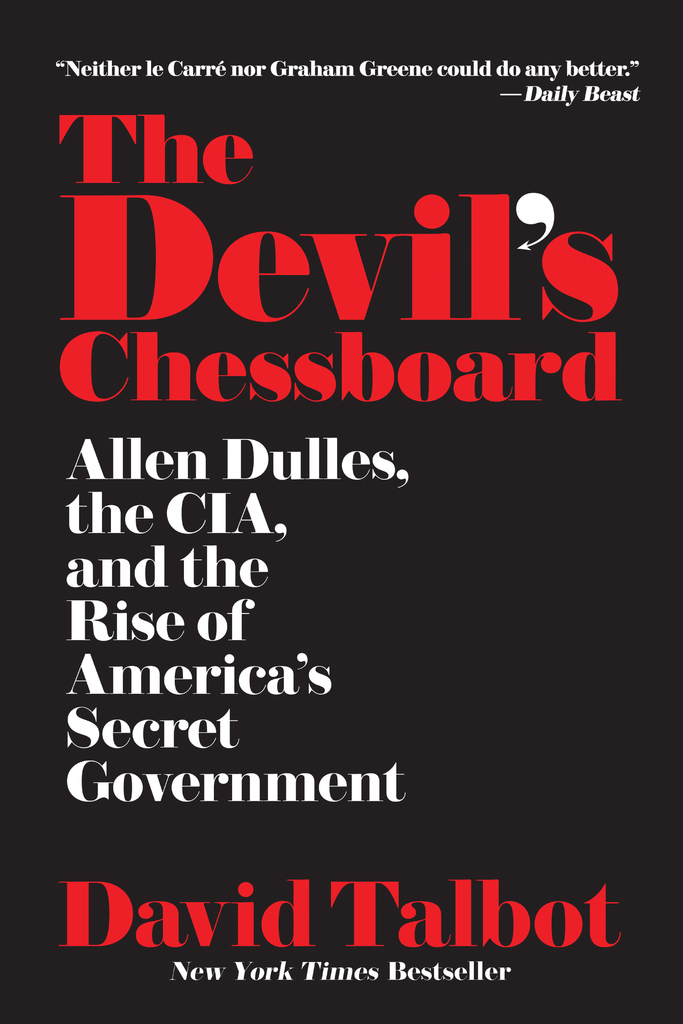
“Our country’s cheerleaders are wedded to the notion of American exceptionalism. But when it comes to the machinations of power, we are all too similar to other societies and ones that have come before us…no matter where power rules, there is the same determination by those in high places to keep their activities hidden.” – David Talbot
Allen Dulles was the father of the deep state. Anyone who thinks the problems of the national security state, undermining the Constitution, and abuse of power are something new, you’re in for a surprise. Talbot details how it all began. Like Dulles’ daughter said:
“It’s very important to understand it all – the dark and the light.”
“The greatest cataclysm in human history.” – Ken Burns
The War is perhaps the best documentary on WWII ever filmed. I am currently watching through the series for the second time, which seems very appropriate considering some things I’ve heard recently.
Certain groups of people in the younger generations are speaking about how depressing and terrible the world seems to them. They see no hope for the future, and many have decided not to have children. I feel bad for those who apparently have no knowledge of their ancestor’s history; for the loss of resilience among these people; for their suppressed human spirit; for the close-minded manner of thinking they have indoctrinated with.
Is anything now so bad – real or imagined – compared to the most horrific conflict our species endured? One that occurred not early in our history, but recently while we were supposedly at the height of civilization.
When the veterans returned from this war, did they give up on life? Did they, after seeing such unprecedented death and evil, shut themselves from society and promise never to have children? Did they abandon the responsibility of ever generation to move forward?
No, they did the exact opposite.
Every time has its challenges, its problems, its obstacles.
Every era also has its people who embody the spirit of thousands of generations before them as they rise to overcome everything thrown at them.
For those who see no hope, let me apologize on behalf of those older than you that abandoned their responsibility to teach you our past. Now do yourself a favor and watch what your ancestors, only a few short decades ago, faced, endured, and conquered.
“We tend to assume that our American legacy promises us liberty and the pursuit of happiness—no questions asked. But I learned from my reading of the founders’ work that just as you aren’t promised freedom in the American contract without the reciprocal expectation that you will risk yourself to defend freedom, so you aren’t promised happiness or even the purely self-regarding right to pursue happiness. That’s a myth.” – Naomi Wolf, Give Me Liberty
Many people think democracy is some sort of self-propagating institution. Once set in motion, it needs little guidance or attention. This couldn’t be further from the truth. As soon as people stop paying attention, those in power abuse their power. A small amount of bureaucrats can shape, influence, undermine and destroy the people’s rights. Once it starts, it slowly gets worse, a little at a time. In modern times, this has been referred to as moving the Overton Window. The Founders of the United States understood this well. It’s embedded in the Declaration of Independence.
As Naomi Wolf writes, the Declaration’s language:
“…is quite difficult; it is the formal language of a very formal time far removed from our own…We tend to think that the Declaration intends something pleasant and benign…but it turns out the Declaration of Independence is about our continual duty as Americans to rebel…[its] first long sentence asserts the ‘right to revolution.'”
In fact, the Declaration “…charges us categorically and always as Americans to rise up in person against threats to liberty.”
Democracy is not a natural state. It requires attention, participation, protest — and when necessary — restoration.
Paying attention only on election day is to not pay attention at all. If you are too busy to understand and protect democracy, you will lose your freedom. Many in history have awoken to an oppressive government, only to ask, “How did it come to this?”
I have often wrote about our connections to history, what we can learn from our ancestors, and the ripples into the future our actions create. I wonder if people knew their impact on history, and shed their hubris about the past, what would our world be like? What if we reclaimed our responsibility to mentor the next generations and ensure they remember the legacy of our forebearers?
The cycles of history Neil Howe discusses in his book, The Fourth Turning is Here, in large part occur because of our selfishness and shortsightedness. And so, we come to a critical moment in time where must decide to wrestle control from those who control society with no regard to those within it. Or we can keep our eyes shut as crisis after crisis turns into such a disaster than civilization is sent into reverse. Some of those collapses have been obvious and catastrophic, some lesser so, but all send their changes and casualties deep into the future.
“Generations connect us to history because they remind us that ours is not the first or only peer group to encounter this season of history at this phase of life. We know that others have done so before us. Perhaps we can learn from them. We also know that others will do so after us. Perhaps we can help them prepare.
“Generations also connect us to our families because they remind us that we all have forebearers who encountered this season of history at some phase of their lives. We may wonder how their location in history affect what happened to them as children, what happened to the children they raised, or what happened to alter the direction of their lives at a critical moment.
“…we will finally recognize what Ibn Khaldun observed at the very dawn of modernity: ‘The past resembles the future more than one drop of water resembles another.'” – Neil Howe
So as 2024 begins, will you awaken or will you continue to sleep? The past is like a mirror on the future: We face disaster or prosperity. Every generation has a choice, and that choice includes breaking free of the powers who believe it’s up to them to decide your fate, your Story.
They always bring failure because they ignore the past. We don’t have to wait for more failures, more disasters. We can choose a different path.
Many claim J.R.R. Tolkien was creating “a mythology for England” when creating Middle Earth. Certainly there was some inspiration from his homeland, but he drew more from the mythos of Northern Europe, among other sources. This is why Tolkien scholars have disputed he was creating a myth for England. Jason Fisher writes in the J.R.R. Tolkien Encyclopedia, “This must surely be the most-often cited quotation that Tolkien never actually said.”
At any rate, Britannia has its own mythos, it always has. It has endured for centuries, since the age when Rome once ruled the island.
This is the story of King Arthur.
Perhaps no figure from Europe, legendary or historical, has been the focus of more writings – and in the modern era – film and television. Each era reinvents him through the culture-glasses of their time. Much like the tales told in The Iliad and The Odyssey, it is hard to unpack was is true, and what is not, in Arthur’s story. Like Homer’s stories, though, there is likely some truth hidden between the lines.
Our modern perception of Arthur, Merlin, and the Knights of the Roundtable, has been framed through medieval eyes, by the likes of Howard Pyle (who we also owe much of Robin Hood’s story to), and Thomas Malory. Many researchers, however, place the origins of Arthur to the end of the Roman era in Britain. Whispers of a king named Arthur during the time of Rome’s retreat and the arrival of new invaders exist in old Welsh tales.
For decades, Geoffrey Ashe documented the ongoing search for the real Arthur in many books such as The Discovery of King Arthur and The Quest for Arthur’s Britain. Many others joined the quest for the historical Camelot, including The Holy Kingdom and The Mystery of King Arthur. The fantasy versions, often centered around Merlin, are undeniably great fun. Some fiction tries a more historical approach – though often with a mix of myth.
A quick search reveals hundreds of books and films still re-imagining this mythos centuries after it began. Will some archaeological discovery finally reveal the man behind the legend? Or will we only ever have entangled stories from across the ages?
Arthur’s story won’t disappear anytime soon. This mythos of England tantalizes us with what may have been. More importantly, it has left us with a legacy of truth often coming to us wrapped in fiction.
This truth is one of a fearless hero who protects his people, oversees a golden age, and has been prophesied to return. He inspires us to undertake the Hero’s Journey, of our own longing for a lost creation, and perhaps, to remember another who is to return.
In every great Mythos, there is great Truth.
Contact and connect with Darrick here. Get your copy of Among the Shadows and choose a side. Will it be on the side of Light? Or Darkness? Book 2, Awakening, is out now.
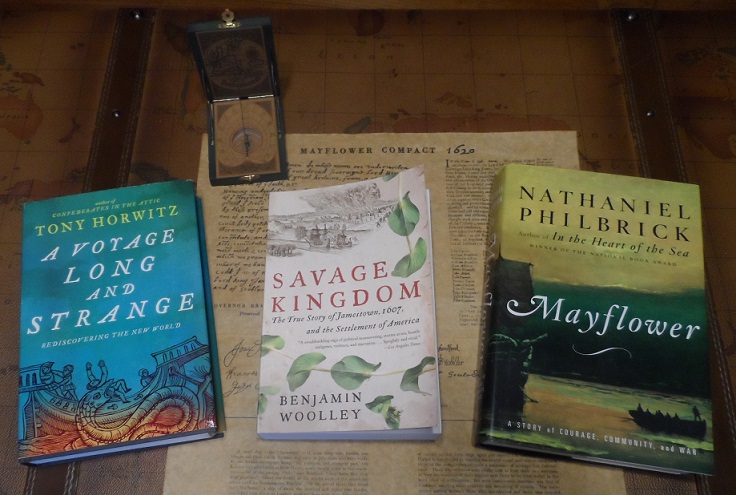
Tony Horwitz wrote in his revealing book, A Voyage Long and Strange, “Expensively educated at a private school and university — a history major, no less! — I’d matriculated to middle age with a third grader’s grasp of early America.” Horwitz would remedy this problem by beginning a cross-country adventure. He would uncover this missing history from first contact with the Vikings, to the forgotten era between Columbus’ landing in 1492, and the founding of Jamestown in 1607. Even those humanity-changing events have been reduced to mere sentences in our history lessons, as Horwitz discovered.
An artifact of our education system, history has long been neglected. Arguably, it’s the most important field once you realize how much our ancestors can teach us. There is little we experience or endure they didn’t experience first. In our hubris, we ignore the answers to the test they have handed us. By reducing our study to names and dates, they seem like myths. Many would be surprised how much we do know about the people who came before us. The best teachers and writers of history re-discover this past and allow us to time travel through the eyes of our ancestors. In Horwitz’s case, he found a “dramatic tale of conquistadors, castaways, French voyageurs, Moorish slaves, and many others who roamed and rampaged across half [of the continent of North America], long before the Mayflower landed.”
In Nathaniel Philbrick’s Mayflower, he finds while there is “a surprising amount of truth in the tired, threadbare story of the First Thanksgiving,” it was only the beginning of the story. That event was followed by “fifty-five years of struggle and compromise — a dynamic, often harrowing process of give an take. As long as both sides recognized that they needed each other, there was peace.” War eventually came, but “there was nothing inevitable about King Phillip’s War” which “caught almost everyone by surprise.” It’s a story with a powerful and relevant message for our time: “When violence and fear grips a society, there is an almost overpowering temptation to demonize the enemy.”
How could the settlement of Jamestown, its tenuous survival through famine and conflict, pushed to the edge of extinction many times, produce a transformative country a century and a half later? Benjamin Woolley’s Savage Kingdom, peels back the mythos often centered on John Smith and Pocahontas, and finds a motley but determined group who were “deposited…in America…ill prepared, badly equipped and poorly financed.” Where Plymouth was founded for religious freedom, Jamestown was a wholly economic enterprise. Yet even that doesn’t tell the whole story. This attempt to colonize America was “…about flawed, dispossessed, desperate people trying to reinvent themselves. It is about being caught in a dirty struggle to survive, haunted by failure, hungering for escape, dreaming of riches an hoping for redemption.”
These, then, are timeless stories of humanity’s struggles. Perhaps we should pause and listen to what our ancestors have to say.
Contact and connect with Darrick here. Get your copy of Among the Shadows and choose a side. Will it be on the side of Light? Or Darkness? Book 2, Awakening, coming soon.
The historical record shows that after the establishment of democracy a booming Athens was suffused with energy and creativity…Love of liberty was a value of cardinal importance, which the democracy fed and watered. It was the foundation for rational inquiry and free artistic expression…Small wonder that this fertile soil produced a flowering of extraordinary personalities, and great art and thought…[it was] a briefly opened window of opportunity…However, for the time that the fates allowed, Athens made the most of her chances. – Anthony Everitt, The Rise of Athens
That era of Greek civilization that produced so much — democratic government, philosophical thoughts of Socrates, Plato, and Aristotle, art and drama, science and spectacular architecture, and much more — was a relativity short period of roughly two centuries. Centered in the city-state of Athens, it isn’t easy to determine how so much in one place, in such a short period, came together and became a pillar of time to civilization. To this day, that one city, that one era, has influenced our world.
In reading Anthony Everitt’s history of Athens, I couldn’t help seeing the parallels to the history of the United States. In nearly the same span of time, the United States has affected the world in much the same way. In all the fields of culture and science, thought and politics, making democracy more robust in the form of a democratic republic, both in its successes and failures, it has been most impactful on the world. Unfortunately, there are signs of the same paths that led to the premature ending of Athens’s golden era.
Endless wars. Neglecting the precepts of democracy and the responsibility of ensuring it endures. Government abuses of power, and they only care — or appear to — for people just enough to maintain that power. The fostering and fanning of division among people. All of which makes a country ripe for collapse either by nature or by man.
We are often arrogant in the viewing our ancestors. We think they could not possibly have anything to teach us. Quite to the contrary, they have been down this road, many, many times. They have given us all the answers to the test. If we fail, it is because we have chosen to fail.
This is why history is so important to study, and why the nefarious rather you did not.
Athens wasn’t the first to crumble, nor the last. We took much of what they created and made it better.
What a shame if, sometime in the future, someone looked around and said words much like this archbishop of Athens did in the late twelfth century:
You cannot look upon Athens without weeping. It is not just that she has lost her ancient glory: that was taken long ago…Everywhere you see walls stripped and demolished, houses razed to the ground, their sites ploughed under.
[It is] a God-forsaken hole.
Contact and connect with Darrick here. Get your copy of Among the Shadows and choose a side. Will it be on the side of Light? Or Darkness? Book 2, Awakening, coming soon.
“The evangelists of freedom did all they could to sound the alarm amidst a fog of competing narratives, confusion, propaganda, and misinformation.” – Robert Lyman
I read Robert Lyman’s Under a Darkening Sky the other day about Americans living in Europe before WWII, who tried to warn all what was coming. Darkening Sky presents two lessons from history:
One, don’t ignore the lone voices in the wilderness just because they are not anointed by the mainstream. Second, when a country’s population and leadership are so completely divided, it doesn’t take much of a disaster (manmade or natural) to initiate their collapse (as France learned).
It’s like the past gave us all the answers to the test, and yet we keep failing.


 Darrick Dean