History

Would we Survive?

c.12,000 B.C.

1177 B.C.

535 A.D.

What do these three years have in common? Events occurring in each changed the course of human history.

A fragmented comet is thought by many to be the source of the first global catastrophe (12,000 B.C.). What caused the upheaval at the end of the Bronze Age is still uncertain (1177 B.C.). During the early years of what would become known as the Middle Ages, a supervolcano in what is ocean between Sumatra and Java sent the world into chaos (535 A.D.).

For eighteen months the Sun was veiled after the eruption in 535 (or 536 according to some sources). Failed crops, flood and drought, and the rise of devastating plagues in the wake of the eruption shaped history by the weakening and collapse of some empires, leading to the rise of others in the shadows of their ruins. It is fascinating to see the ripples spreading through time, from such a distant era, impacting the world even now.

There are many inputs in history, decisions big and small, known and unknown, that nudge or outright push the river of time. As David Keys writes in Catastrophe, this past is both an “explanation of our history, and a chilling warning for the future.”

The natural disasters of recent centuries have been largely localized and temporary in their effects. How long will our luck hold out? Supervolcanoes lay dormant under Yellowstone, Naples, and in Papua New Guinea and California. If one of them explodes, will humanity band together to survive the aftereffects, as they do in all those fictional disaster movies? Or will it be more like Mad Max?

Our hubris, and ignorance of history, puts us in danger of ignoring the natural world and what it can do, and has done, to humanity.

Our ancestors would prevail through the dark times, but as we look back, we realize we are a forgetful race of people. We have forgotten why nations and civilizations rose and fell, and think it won’t happen again.

Every nation or empire that came to an end, thought the same.

Categories: History | Tags: , , , , , | Leave a comment

Unforgettable Lessons

“To those of us who study history not merely as a warning reminder of man’s folies and crimes, but also as an encouraging remembrance of generative souls, the past ceases to be a depressing chamber of horrors; it becomes a celestial city, a spacious country of the mind, wherein [thousands]…still live and speak, teach and carve and sing.” – Will & Ariel Durant, The Lessons of History

I have written often on the importance of studying history, and Will & Ariel Durant’s short The Lessons of History is an attempt to distill such ideas. It also serves as a postlude to their massive, eleven volume, The Story of Civilization. In Lessons, the writers take a broad overview of history, focusing on ten topics, and what history can teach us. Here I will review three of the major themes from The Lessons of History.

Continue reading
Categories: History | Tags: , , , , , | 1 Comment

A Mythology for England?

Many claim J.R.R. Tolkien was creating “a mythology for England” when creating Middle Earth. Certainly there was some inspiration from his homeland, but he drew more from the mythos of Northern Europe, among other sources. This is why Tolkien scholars have disputed he was creating a myth for England. Jason Fisher writes in the J.R.R. Tolkien Encyclopedia, “This must surely be the most-often cited quotation that Tolkien never actually said.”

At any rate, Britannia has its own mythos, it always has. It has endured for centuries, since the age when Rome once ruled the island.

This is the story of King Arthur.

Perhaps no figure from Europe, legendary or historical, has been the focus of more writings – and in the modern era – film and television. Each era reinvents him through the culture-glasses of their time. Much like the tales told in The Iliad and The Odyssey, it is hard to unpack was is true, and what is not, in Arthur’s story. Like Homer’s stories, though, there is likely some truth hidden between the lines.

Our modern perception of Arthur, Merlin, and the Knights of the Roundtable, has been framed through medieval eyes, by the likes of Howard Pyle (who we also owe much of Robin Hood’s story to), and Thomas Malory. Many researchers, however, place the origins of Arthur to the end of the Roman era in Britain. Whispers of a king named Arthur during the time of Rome’s retreat and the arrival of new invaders exist in old Welsh tales.

For decades, Geoffrey Ashe documented the ongoing search for the real Arthur in many books such as The Discovery of King Arthur and The Quest for Arthur’s Britain. Many others joined the quest for the historical Camelot, including The Holy Kingdom and The Mystery of King Arthur. The fantasy versions, often centered around Merlin, are undeniably great fun. Some fiction tries a more historical approach – though often with a mix of myth.

A quick search reveals hundreds of books and films still re-imagining this mythos centuries after it began. Will some archaeological discovery finally reveal the man behind the legend? Or will we only ever have entangled stories from across the ages?

Arthur’s story won’t disappear anytime soon. This mythos of England tantalizes us with what may have been. More importantly, it has left us with a legacy of truth often coming to us wrapped in fiction.

This truth is one of a fearless hero who protects his people, oversees a golden age, and has been prophesied to return. He inspires us to undertake the Hero’s Journey, of our own longing for a lost creation, and perhaps, to remember another who is to return.

In every great Mythos, there is great Truth.

Contact and connect with Darrick here. Get your copy of Among the Shadows and choose a side. Will it be on the side of Light? Or Darkness? Book 2, Awakening, is out now.

Categories: History, Legend, Traditions | Tags: , , , , , , , , , , | Leave a comment

Ready to Open Your Mind?

Here’s a small selection of books I’ve read in 2024, some new, some not, but all important.

What did you read in 2024 and what will you read in 2025 to expand your mind?

Categories: Books, health, History | Tags: , , , , , , , , , , | Leave a comment

Would We See the End Coming?

“There is no certainty as scientific progress accelerates and leisure increases…[that] there is any corresponding advance in wisdom or morality, much less radical improvement in innate human nature.” – Victor Davis Hanson

In this absorbing book by historian Victor Davis Hanson, he looks to our past to remind us of the long-term consequences of war. We are also reminded of how power in the wrong hands can lead to the genocide of entire peoples. In an era where many world leaders have forgotten the ripple effects of war which endure for centuries, and treat it like another government program, perhaps we should look to our ancestors and the fates that befell them.

Categories: Ancient Sites, History | Tags: , , , , , , , , , , | Leave a comment

Dark and Light of Democracy

“We often forget how fragile a creation democracy is – a delicate eggshell in the rough-and-tumble of history. Even in the cradle of democracy, ancient Athens, rule by the people could barely survive for a couple of centuries. And throughout its brief history, Athenian democracy was besieged from within by the forces of oligarchy and tyranny. There were plots led by generals to impose military rule. There were secret clubs of aristocrat who hired squads of assassins to kill popular leaders. Terror reigned during these convulsions…

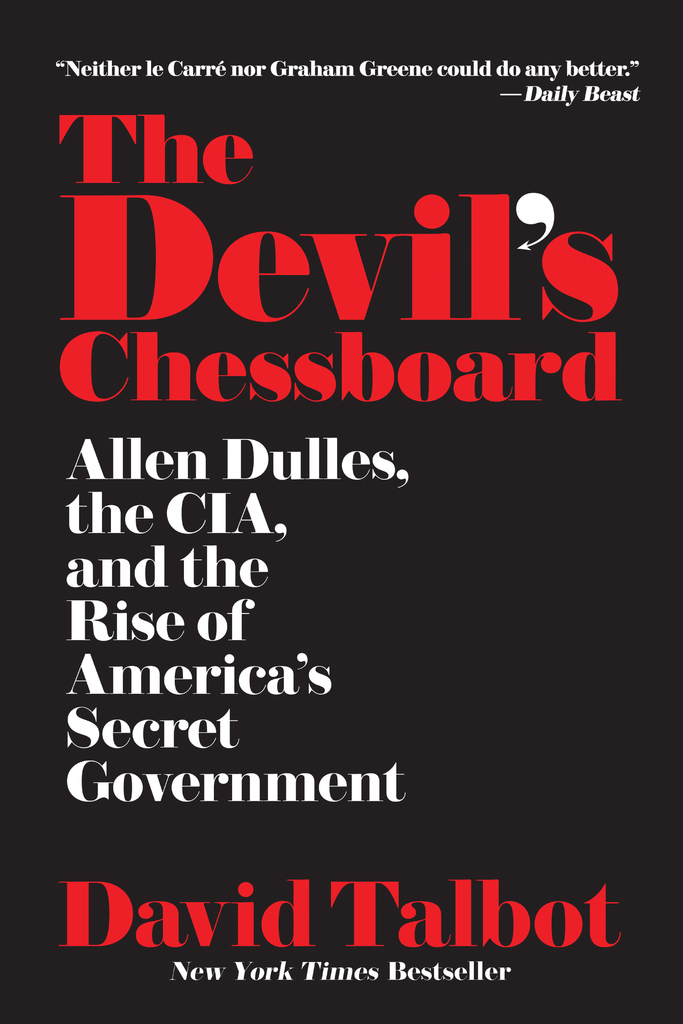
“Our country’s cheerleaders are wedded to the notion of American exceptionalism. But when it comes to the machinations of power, we are all too similar to other societies and ones that have come before us…no matter where power rules, there is the same determination by those in high places to keep their activities hidden.” – David Talbot

Allen Dulles was the father of the deep state. Anyone who thinks the problems of the national security state, undermining the Constitution, and abuse of power are something new, you’re in for a surprise. Talbot details how it all began. Like Dulles’ daughter said:

“It’s very important to understand it all – the dark and the light.”

Categories: government, History, Modern History | Tags: , , , , , | Leave a comment

Will You Abandon Humanity?

“The greatest cataclysm in human history.” – Ken Burns


The War is perhaps the best documentary on WWII ever filmed. I am currently watching through the series for the second time, which seems very appropriate considering some things I’ve heard recently.

Certain groups of people in the younger generations are speaking about how depressing and terrible the world seems to them. They see no hope for the future, and many have decided not to have children. I feel bad for those who apparently have no knowledge of their ancestor’s history; for the loss of resilience among these people; for their suppressed human spirit; for the close-minded manner of thinking they have indoctrinated with.

Is anything now so bad – real or imagined – compared to the most horrific conflict our species endured? One that occurred not early in our history, but recently while we were supposedly at the height of civilization.

When the veterans returned from this war, did they give up on life? Did they, after seeing such unprecedented death and evil, shut themselves from society and promise never to have children? Did they abandon the responsibility of ever generation to move forward?

No, they did the exact opposite.

Every time has its challenges, its problems, its obstacles.

Every era also has its people who embody the spirit of thousands of generations before them as they rise to overcome everything thrown at them.

For those who see no hope, let me apologize on behalf of those older than you that abandoned their responsibility to teach you our past. Now do yourself a favor and watch what your ancestors, only a few short decades ago, faced, endured, and conquered.

Categories: History, Modern History | Tags: , , , , | Leave a comment

Freedom Dies Without You

“We tend to assume that our American legacy promises us liberty and the pursuit of happiness—no questions asked. But I learned from my reading of the founders’ work that just as you aren’t promised freedom in the American contract without the reciprocal expectation that you will risk yourself to defend freedom, so you aren’t promised happiness or even the purely self-regarding right to pursue happiness. That’s a myth.” – Naomi Wolf, Give Me Liberty

Many people think democracy is some sort of self-propagating institution. Once set in motion, it needs little guidance or attention. This couldn’t be further from the truth. As soon as people stop paying attention, those in power abuse their power. A small amount of bureaucrats can shape, influence, undermine and destroy the people’s rights. Once it starts, it slowly gets worse, a little at a time. In modern times, this has been referred to as moving the Overton Window. The Founders of the United States understood this well. It’s embedded in the Declaration of Independence.

As Naomi Wolf writes, the Declaration’s language:

“…is quite difficult; it is the formal language of a very formal time far removed from our own…We tend to think that the Declaration intends something pleasant and benign…but it turns out the Declaration of Independence is about our continual duty as Americans to rebel…[its] first long sentence asserts the ‘right to revolution.'”

In fact, the Declaration “…charges us categorically and always as Americans to rise up in person against threats to liberty.”

Democracy is not a natural state. It requires attention, participation, protest — and when necessary — restoration.

Paying attention only on election day is to not pay attention at all. If you are too busy to understand and protect democracy, you will lose your freedom. Many in history have awoken to an oppressive government, only to ask, “How did it come to this?”

Categories: government, History | Tags: , , , , | Leave a comment

We are at That Critical Moment

I have often wrote about our connections to history, what we can learn from our ancestors, and the ripples into the future our actions create. I wonder if people knew their impact on history, and shed their hubris about the past, what would our world be like? What if we reclaimed our responsibility to mentor the next generations and ensure they remember the legacy of our forebearers?

The cycles of history Neil Howe discusses in his book, The Fourth Turning is Here, in large part occur because of our selfishness and shortsightedness. And so, we come to a critical moment in time where must decide to wrestle control from those who control society with no regard to those within it. Or we can keep our eyes shut as crisis after crisis turns into such a disaster than civilization is sent into reverse. Some of those collapses have been obvious and catastrophic, some lesser so, but all send their changes and casualties deep into the future.

“Generations connect us to history because they remind us that ours is not the first or only peer group to encounter this season of history at this phase of life. We know that others have done so before us. Perhaps we can learn from them. We also know that others will do so after us. Perhaps we can help them prepare.

“Generations also connect us to our families because they remind us that we all have forebearers who encountered this season of history at some phase of their lives. We may wonder how their location in history affect what happened to them as children, what happened to the children they raised, or what happened to alter the direction of their lives at a critical moment.

“…we will finally recognize what Ibn Khaldun observed at the very dawn of modernity: ‘The past resembles the future more than one drop of water resembles another.'” – Neil Howe

So as 2024 begins, will you awaken or will you continue to sleep? The past is like a mirror on the future: We face disaster or prosperity. Every generation has a choice, and that choice includes breaking free of the powers who believe it’s up to them to decide your fate, your Story.

They always bring failure because they ignore the past. We don’t have to wait for more failures, more disasters. We can choose a different path.

Categories: History, What You Can Do | Tags: , , | Leave a comment

A Mythology for England

Many claim J.R.R. Tolkien was creating “a mythology for England” when creating Middle Earth. Certainly there was some inspiration from his homeland, but he drew more from the mythos of Northern Europe, among other sources. This is why Tolkien scholars have disputed he was creating a myth for England. Jason Fisher writes in the J.R.R. Tolkien Encyclopedia, “This must surely be the most-often cited quotation that Tolkien never actually said.”

At any rate, Britannia has its own mythos, it always has. It has endured for centuries, since the age when Rome once ruled the island.

This is the story of King Arthur.

Perhaps no figure from Europe, legendary or historical, has been the focus of more writings – and in the modern era – film and television. Each era reinvents him through the culture-glasses of their time. Much like the tales told in The Iliad and The Odyssey, it is hard to unpack was is true, and what is not, in Arthur’s story. Like Homer’s stories, though, there is likely some truth hidden between the lines.

Our modern perception of Arthur, Merlin, and the Knights of the Roundtable, has been framed through medieval eyes, by the likes of Howard Pyle (who we also owe much of Robin Hood’s story to), and Thomas Malory. Many researchers, however, place the origins of Arthur to the end of the Roman era in Britain. Whispers of a king named Arthur during the time of Rome’s retreat and the arrival of new invaders exist in old Welsh tales.

For decades, Geoffrey Ashe documented the ongoing search for the real Arthur in many books such as The Discovery of King Arthur and The Quest for Arthur’s Britain. Many others joined the quest for the historical Camelot, including The Holy Kingdom and The Mystery of King Arthur. The fantasy versions, often centered around Merlin, are undeniably great fun. Some fiction tries a more historical approach – though often with a mix of myth.

A quick search reveals hundreds of books and films still re-imagining this mythos centuries after it began. Will some archaeological discovery finally reveal the man behind the legend? Or will we only ever have entangled stories from across the ages?

Arthur’s story won’t disappear anytime soon. This mythos of England tantalizes us with what may have been. More importantly, it has left us with a legacy of truth often coming to us wrapped in fiction.

This truth is one of a fearless hero who protects his people, oversees a golden age, and has been prophesied to return. He inspires us to undertake the Hero’s Journey, of our own longing for a lost creation, and perhaps, to remember another who is to return.

In every great Mythos, there is great Truth.

Contact and connect with Darrick here. Get your copy of Among the Shadows and choose a side. Will it be on the side of Light? Or Darkness? Book 2, Awakening, is out now.

Categories: History, Legend, Traditions | Tags: , , , , , , , | Leave a comment

Create a free website or blog at WordPress.com.