Discovering Columbus

Last year I asked, Should Columbus be Celebrated? It is a controversial question, since that day in 1492 meant the eventual end of many cultures in the Western Hemisphere. The other side of the sword is that new cultures arose from those escaping the Old World. In all likelihood, using Columbus as the poster child for all that did go wrong is not fair.

One has to dig deep into many studies of the man to even begin to unravel his mind. He was secretive, put himself in the middle of politics and was the target of his enemies. All of this, and the distance of time, have made any study of the explorer a difficult one.

As Carol Delaney argues in Columbus and the Quest for Jerusalem, acquiring wealth for the Spanish crown was not his primary goal. He sought allies and money for one more Crusade to the Holy Lands. Religious motivation has been suggested before, but by writers couching everything in esoteric conspiracies. It has also been suggested he knew the New World existed. As plausible as that is, most of what we know seems to point elsewhere. Beyond that:

…Delaney depicts her subject as a thoughtful interpreter of the native cultures that he and his men encountered, and tells the tragic story of how his initial attempts to establish good relations with the natives turned badly sour. Showing Columbus in the context of his times rather than through the prism of present-day perspectives on colonial conquests reveals a man who was neither a greedy imperialist nor a quixotic adventurer, but a man driven by an abiding religious passion.

Contrast this to the later Conquistadors who were made up of mercenaries and those looking to set up their own little kingdoms of wealth. In Kim MacQuarrie’s The Last Days of the Incas, we get the distinct impression that most of these men cared little about religion other than some unconvincing attempts to use it to justify their actions.

Columbus’ life didn’t begin and end on his first voyage to the new world. It was his fourth that would unfold like an epic film and perhaps best give insight into his motivations. Martin Dugard’s The Last Voyage chronicles mutiny, shipwreck, storms and war. A far different tale than the simple one told in schools. Only by going beyond the simple tales, do we actually begin to peel away the misconceptions and mystery. That curtain will probably never be completely pulled away and certainly Columbus is imperfect and flawed like us all. And maybe that’s the lesson this Columbus Day.

Anyone can change the world, for better, or for worse.

colum

Categories: Books, History, Native Americans | Tags: , , , | Leave a comment

Biblichor

From Prajakta Athavale:

biblichor1

Categories: Books | 2 Comments

Finding Sexism in Fiction…A Modern Witch Hunt?

There seems to be a trend of searching through books and find reasons to label them sexist. For example, The Lord of the Rings is sexist because there aren’t enough women characters and the ones that are there aren’t doing enough important things. This leads me to ask:

What is the proper woman character quota for novelists? Is the role of someone like Eowyn fighting the Nazgul at a critical moment in the story not important? If a book or film is overwhelming centered on women, is that sexist?

See the overreach of certain critics? We also can suspect that some are looking to push an agenda by convoluting whatever book, film or television show they can. Take a recent criticism of the new show Supergirl in which it was called “sexist” because of her name (girl) and the fact she seem concerned by such things as relationships with men. The show itself smartly ridiculed the problem with the name and shouldn’t the world’s most powerful women be allowed to pick the relationship she wants? When we are oft told to be tolerant and inclusive of everything, only to be told certain relationships are not okay. Is this not a red flag for someone’s agenda? The ultimate irony is that apparently a woman who can do anything is not woman enough.

Continue reading

Categories: Books, Critical Thinking, Fiction | Tags: , , , , , , , , , | Leave a comment

Finding Your Destiny Off Planet

Robert Ellsmore Grandon stifled a yawn…He was tired of life at twenty-four, he decided – tired and disillusioned and trapped…[he] yearned for action, adventure, romance – something that seemed to be gone in this world of the Twentieth Century.

That is how Otis Adelbert Kline’s novel Planet of Peril began.

And it was written in 1930.

We often think that our lives are unique to our time, but in many ways they are not. So were the fantastic adventures of Kline and his contemporary Edgar Rice Burroughs, at their foundation, a reflection of buried desires? In particular the desire not to be suppressed and molded by whichever social and political masterminds are currently in style? To not be drug into endless, mindless repetition? The rebellion against conformity and corruption?

Perhaps some think this is reading too much into the over-the-top adventures from sci-fi’s first Golden Era. On the other hand, those extreme adventures may also be reminders of how far we fall from our potential.

Read to be entertained. Read to get lost. Read to be inspired.

popoak

Categories: Books, Fiction | Tags: , , , , | Leave a comment

Safe Paths or Being Alive

Jack V. Matson writes in his book Innovate or Die that avoiding failure only leads to just that:

The safe paths are available. I can construct plans which avoid risks. But my spirit and soul would be dormant, eventually even die. I wanted to discover my most creative talents and ignite my imagination. I am an innovative human existing in the unknown, and moving in multiple paths which are loaded with peril, dead ends, and hardship. I have sufficiently adjusted to like the dark passageways. It’s the adventure of living, of being a curious, alive human being…Teddy Roosevelt said it best, “It is far better to dare mighty things, to win glorious triumphs, even though checkered by failure, than to rank with those poor spirits who neither enjoy much nor suffer much, because they live in the gray twilight that knows not victory or defeat.”

Finding your place in the Story isn’t always easy, but what is the alternative?

Categories: Uncategorized | Tags: , , , | Leave a comment

Should Books Have Content Ratings?

Nadine Brandes has posted a discussion on rating books in the same vein as films, television shows or albums. Content ratings on all those are voluntary, and involve some level of subjectivity, but what about on books? Check out Nadine’s post and join the debate. Shannon A. Thompson also wrote a good post on this here.

Categories: Books, Writing | Tags: , , | 1 Comment

Heroes and Legends

Famed J.R.R. Tolkien biographer, Professor Thomas A. Shippey, in his course Heroes and Legends, writes on the “universal human art form” of storytelling:

…Over the millennia of human history, millions of tales, novels, romances and epics have been written, published, and many more must have been told in the far longer millennia of prehistory. The vast majority vanished without a trace once their immediate purpose had been served – forgotten, discarded, out of print.

A small number survive and become classics. Of that small number, an even smaller number does more than survive: They inspire imitations, sequels, remakes and responses. It is the heroes and heroines – and sometimes the villains – of these super-survivors who have created and continue to create our imaginative world. “Don’t the great tales never end?” asks the hobbit Sam Gamgee…Sam has good reason to see that the answer is: No, they don’t.

…Most of all, the “great tales” offer an insight into the human heart, in all its variety and complexity, that nothing else can provide.

Categories: Books, Fiction, Writing | Tags: , , | Leave a comment

Decline of Wonder

Brennan Manning will be long remembered for his book A Ragamuffin Gospel. On some of those pages, he wrote on our sad loss of notice of the planet we inhabit:

By and large, our world has lost its sense of wonder. We have grown up. We no longer catch our breath at the sight of a rainbow or the scent of a rose. We have grown bigger and everything else smaller, less impressive…We no longer run our fingers through the water, no longer shout at the stars or make faces at the Moon…We get so preoccupied with ourselves, the words we speak, the plans and projects we conceive that we become immune to the glory of creation. We barely notice the cloud passing over the Moon or the dewdrops clinging to the rose leaves. The ice on the pond comes and goes. The wild blackberries ripen and wither…We avoid the cold and the heat. We refrigerate ourselves in summer and entomb ourselves in plastic in the winter. We rake up every leaf as fast as it falls…We grow complacent and lead practical lives. We miss the experience of awe, reverence and wonder…Rabbi [Abraham Joshua] Heschel concluded, “As civilization advances, the sense of wonder declines.”

Perhaps lives less practical, and less busy, are what we all need.

Categories: Books, Nature | Tags: , , | Leave a comment

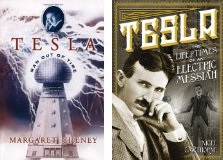
What Tesla Really Taught Us

A mass in movement resists change of direction. So does the world oppose a new idea. It takes time to make up the minds to its value and importance. Ignorance, prejudice and inertia or the old retard its early progress. It is discredited by insincere exponents and selfish exploiters. It is attacked and condemned by its enemies. Eventually, though, all barriers are thrown down, and it spreads like fire.

So wrote Nikola Tesla. He, better than anyone, knew how the entrenched responded to new ideas. Sometimes it is not only old ideas that die hard. New ideas, regardless how flawed they are, can also spread like fire by those who know how to control the microphone: Control the conversation. Cast opponents has doubters or uneducated. Pretend “everyone” agrees and that there “is no debate.” Create a narrative.

These, however, are the red flags of irrationality, extremists, special interests and propagandists. They prey on people’s tendency to trust “authority,” or the appearance of such. Get enough people on the television saying the same thing — even if it’s only really one side and scripted — and soon people start to unconsciously believe it. Sophisticated brainwashing it is, or is it all that sophisticated? It truly is surprising how many are lulled into a state of cognitive dissonance: Believing something that is completely contrary to another thing, one you believe true (or is true).

These are important considerations in our time. Not only because we are entering another political season, but the overload of information encourages people not to think deeply on any and all issues. Funny how too much or too little information can lead to the same state. At least everyone can have a voice, but not every voice is thoughtful and reasoned. So who can lead an awakening against those who wish to stamp out Truth?

You. Detecting nonsense should be a primary skill we all wield. And in the end — perhaps not today or tomorrow — Truth will prevail.

tes

Categories: Books, Critical Thinking | Tags: , | Leave a comment

Stop. Refuel.

Doug Fields writes in his book Refuel:

…a life without margins is a life in or rapidly approaching chaos. A marginless day is crammed with running, driving, chasing, little time to catch your breath, and limited time to think something through or decompress…Why is it, with all these luxuries, technologies and time-saving devices in our lives, that we’re still busy, tired and marginless? I believe it’s because a series of lies has barged in and taken root in our lives.

Those lies are:

  • There’s just not enough time to do everything.
  • I’m just in the busy season right now.
  • But this is really, really important.
  • Success and busyness are synonyms.
  • We create much of our busyness for ourselves and then complain we have no time. This has become such a problem in the modern world that Timothy Ferriss writes, “Being busy is a form of laziness — lazy thinking and indiscriminate action. Being overwhelmed is often as unproductive as doing nothing…Being selective — doing less — is the path of the productive.”

    Much of this is in your control. Don’t wake up someday and wonder where the time has gone. It’s always there with this reminder:

    Don’t waste it.

    Categories: Books, What You Can Do | Tags: , , , | Leave a comment

    Blog at WordPress.com.