Books

Writing and Launching Your Book

Need some book and writing related activities over the long weekend? Try these from author Jaimie Engle who has been busy this year:

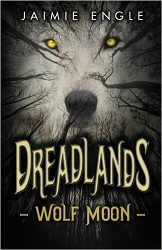
She published the fantasy novel Dreadlands which I reviewed here. You can watch Jaimie discuss How to Launch Your Book where she explains the techniques she used to launch Dreadlands — what worked and what did not.

If that were not enough, she has also released Writing Your Novel: Using the Bible as Your Guide. This how-to takes cues from history’s most read book — and all the drama within — to show how your story can be dramatic, gripping and memorable.

And what writer doesn’t want that?

Categories: Bible, Books, Uncategorized, Writing | Tags: , , | 1 Comment

Daring to Enter the Dreadlands

There are many fantasy stories that try too hard, or don’t try at all, in their storytelling. The best, as I wrote a few months ago, are reflective of the longings — both realized and not — inside us. Jaimie Engle‘s new Dreadlands is one of these stories.

Set in a lost Viking land in North America (you would know why this caught my attention quickly if you read this), we find Arud Bergson very quickly finding his world thrown into disarray. Shape-shifting ferine have begun attacking where none should be. His father is long overdue from a journey East and now his mother wants to send him off to a distant uncle with little explanation.

Leave. Take your sister Lykke. You must go now.

With this begins a journey where these young people learn who they are and about the world that they were shielded from. A classic coming of age tale, but also an engaging one (any book I read in one sitting certainly deserves some notice). Reminiscent of the detail, character development and the pacing of the Shannara stories — with a Middle Earth style epic battle to top it all off. A comparison of the story has been made to Twilight and this is unfair.

Dreadlands is better.

Admittedly, I haven’t read the Twilight books and my analysis is based on the films that focus on stretching out longing looks and angst between the leads at the expense of everything else. Jaimie’s approach to the history of the conflict between hybrids and humans, the creatures themselves, and planting the seeds of a romance is more mature and balanced. This is a fusion of epic and dark fantasy: Shannarra meets Underworld.

This genre is crowded, but put Dreadlands at the top of your list. The only disappointment you will encounter is finding out that part two has yet to be released.

Categories: Books, Fiction | Tags: , , | 1 Comment

401 A.D.: The Year Literature Changed

Thomas Cahill, the author of How the Irish Saved Civilization, called Augustine of Hippo “almost the last great classical man — and very nearly the first medieval man.” Augustine wrote in Confessions:

I carried inside me a cut and bleeding soul, and how to get rid of it I just didn’t know. I sought every pleasure — the countryside, sports, fooling around, the peace of a garden, friends and good company, sex, reading. My soul floundered in the void — and came back upon me. For where could my heart flee from heart? Where could I escape from myself?

Cahill responds to this:

No one had every talked this way before…we realize that with Augustine human consciousness takes a quantum leap forward — and becomes self-consciousness…From this point on, true autobiography becomes possible, and so does its near relative, subjective and autobiographical fiction. Fiction had always been there…But now for the first time there glimmers the possibility of psychological fiction: the subjective story, the story of the soul…[Augustine] is the father of not only of autobiography but of the modern novel.

In Augustine’s words we find someone searching for his true purpose and — shortly before the fall of the classical age — published his 13 part classical work Confessions in 401 A.D. Yet it often sounds like it was written yesterday.

We are no better or worse than those who walked before us centuries ago. Our troubles are rarely unique to us. Those ancient voices left us plenty to ponder, to learn from and to be warned by.

Perhaps we should take the time to listen?

Categories: Books, History, Writing | Tags: , , | Leave a comment

A Nonconformist? So was Tarzan.

We’ve often been told that adventure fiction is dead or not worthy of note other than a quick escape from reality. Apparently authors and film makers have not been made aware of this impending collapse of their world. In fact, they have been told for decades that there is no place for their fiction. Even over a century ago, when Edgar Rice Burroughs came on the scene, author Brian Stableford wrote in an introduction to a recent edition of Tarzan that, “…critics thought the Romantic tradition might be outdated and ripe for replacement.” What they called the “Romantic tradition” was embodied in the high adventures of H. Rider Haggard or Jules Verne. Burroughs added to the mix John Carter of Mars and Lord Greystroke — otherwise known as Tarzan. Stableford continues:

Burroughs demonstrated…that there is something in the Romantic tradition that offers a deep and fundamental appeal to the human imagination…[and] Tarzan does so by appealing to the frustrations of conformity that we all feel in living in a complex society…[but] Tarzan does not merely live an ideal existence in his symbolic jungle, but he also carries the skills learned there into his social intercourse with the damaged products of civilization.

Literary-level thought in Tarzan among the unrelenting action? Perhaps many have had their perception colored by the many bad films that stray from the source material. Even Burroughs considered the movie versions in his day “travesties.” A new film this summer may remedy that and provide a needed respite from superhero overload.

Ironically, Tarzan was one of the first modern superheros that inspired much of what followed. And he taught us a thing or two about society along the way.

Categories: Books, Fiction | Tags: , , , , | Leave a comment

No Ordinary People

“There are no ordinary people. You have never talked to a mere mortal,” wrote C.S. Lewis. Consider that as you consider these:

What if the veil between this world and the next began to break?

What if terrors long thought to be nothing more than myth and legend were not the fiction we thought they were?

What if the worst you saw on the nightly news was not the worst by any measure?

There are those who serve the Darkness, conspiring in the shadows, and those who serve the Light.

None are mere mortals. They are us.

Among the Shadows, Watchers of the Light Book 1, the first in a new fantasy series, coming soon.

Categories: Books, Writing | Tags: , | Leave a comment

3 Whys

Why Does Every Story Have a Villain?

In Waking the Dead, John Eldredge writes:

Little Red Riding Hood is attacked by a wolf. Dorothy must face and bring down the Wicked Witch of the east…Frodo is hunted by the Black Riders…Beowulf kills the monster Grendel…Saint George kills the Dragon. The children who stumbled into Narnia are called upon by Aslan to battle the White Witch and her armies…

So why does every story have a villain?

“…Because yours does.”

What are the villains in your life, your Story? Addictions, vices, work, bad habits, crazy people… As Eldredge writes, we are “born into a world at war.” He is coming from the perspective of Evil that was long ago unleashed in the world and seeks to undermine all that is good.

Our stories have villains because our stories are inspired by life. Fiction is only fact in different clothes.

Why Fantasy Fiction?

Fantasy author R.A. Salvatore answers this in The Guide to Writing Fantasy and Science Fiction:

Perhaps more than any other genre, fantasy is about the hero’s journey. In a world of seven billion people, with wars I can’t stop and legislation I can’t even read, the idea of one person being able to make a difference, the idea of one man or woman grabbing a sword and defeating the dragon and saving the village is quite appealing.

And perhaps it will inspire a hero or two in our own world to rise up.

Why Stories?

Why do people love fictional stories and adventures so much? Because they mirror what is inside us. A desire to do to great things and go beyond the horizon. Do what we were meant to be. There is destiny written on our souls for us to choose or ignore. Jason Clark writes in his book Surrendered and Untamed on this discovery:

I no longer desire to be on the fringe, yet neither will I try to fit the mold. I’ve come to see there’s swimming against the stream just to swim against the stream. And then there’s swimming against the stream like the salmon do — to give others life so others might live — and to get back home. You face predators along the way and the trip is exhausting and you die a thousand deaths, but you do it for the glory and the story.

Categories: Books, Fiction, Writing | Tags: , , , | 1 Comment

“No Desire to Give Up”

There has been consderable discussion on how the Internet and ebooks helped turned self-publishing from a bad word to an industry-changing movement. Authors have started there and moved to traditional publishing; others have done the opposite. Some have gone both routes even as fellow writers have stood firm in one camp or another. It is certain that self-publishing – now often referred to as indie publishing – is not going anywhere. Nor is traditional publishing. Nonetheless, here is author and editor Jaimie Engle‘s self-publishing success story, brought on when everything fell apart:

I self-published my children’s novel, Clifton Chase and the Arrow of Light, in September 2013, after the small press I had been working with breached our contract. Three weeks before my slated release, my publisher bailed and left me stranded. I had no publicist, no idea what to do, and no desire to give up.

Read the rest of her story here.

Categories: Books, Writing | Tags: , , , | 1 Comment

A Story Cliché or the Story we all Want to Tell?

I was reading a discussion concerning a certain fantasy author and someone asked if the author was a cliché writer. This appeared to have been asked as a bit of a put-down. What was meant by cliché writer? Since the writer has authored almost exclusively fantasy, I suspect the critics meant the story line so popular to the genre: Reluctant hero convinced to undertake some sort of quest; Hero joins with others who support the quest; Quest includes finding some object or another and defeating a terrible evil.

Is it fair to call this a cliché? I don’t think so.

In the simplest definition of the word, something becomes a cliché through overuse, not necessarily through any fundamental flaw with item in question. This supposed fantasy trope is a common framework, but it is the details in execution that differ with each story that make it succeed. If the critics were being fair, they would recognize that this cliché isn’t unique to fantasy, but — in one form another — prevalent across much of storytelling.

The reluctant-hero-team-up-battle-evil-save-the-world plot is at the heart of nearly every superhero film or show so popular now. However, it isn’t unique to the fantastic. How many other thrillers, adventures, mysteries or whatever you can think of include one or more of what is supposedly unique to fantasy? Better yet, why is this story line the bedrock of so much human storytelling? John Eldridge explains in his book Epic

Notice that all the great stories pretty much follow the same story line. Things were once good, then something awful happened, and now a great battle must be fought or a journey taken…

It’s true of every fairy tale, every myth, every Western, every epic…Have you ever wondered why?

Every story, great and small, shares the same essential structure because every story we tell borrows its power from a Larger Story, a Story woven in the fabric of our being…

All of these stories borrow from the Story. From Reality. We hear echoes of it through our lives. Some secret written on our hearts. A great battle to fight, and someone to fight for us. An adventure, something that requires everything we have, something to be shared with those we love and need.

There is a Story that we just can’t seem to escape. There is a Story written on the human heart.

Categories: Books, Writing | Tags: , , , | 2 Comments

Martin: “done when it’s done”

Should George R.R. Martin, author of the books that inspired the Game of Thrones HBO series be apologizing for missing the deadline for his latest book?

I don’t think so.

It’s not just because, as an author, he has reached a level success many do not. This is about his work — writings that has made his career and defined him as an author.

Writing, like anything else, doesn’t always go according to plan. Sometimes it goes fast, sometimes it does not. Martin wrote, “Sometimes the writing goes well and sometimes it doesn’t…as spring turned to summer, I was having more bad days than good ones.” A writer who cares about his or her work, doesn’t want to get it done just to get it done.

There are times where the process does go fast and certain books get out quickly. Other times, not so much. The expectation to have a constant flow of books from authors is partly influenced by the apparent relentless parade of television and films. However, even those in the film business can be pressured to rush their work. Peter Jackson said he wasn’t happy with not having as much prep time with The Hobbit as he did with the LOTR. Extending the series to three from two films ultimately gave more time to create another epic trilogy. I get that publishing and filmmaking are businesses, but when you have something that has succeeded, why risk messing with what made it a success?

Like Martin wrote, “It will be done when it’s done. And it will be as good as I can possibly make it.”

Categories: Books, Writing | Tags: , , | Leave a comment

A Time to Speak

Even though some of my favorite books are old-school dystopian — A Brave New World, 1984, Fahrenheit 451 — I haven’t picked up many of the new wave of books in this genre. One exception has been Nadine BrandesOut of Time series. I reviewed book one, A Time to Die here. Book two, A Time to Speak continues chronicling the life of Parvin Blackwater.

Parvin lives in a future where the world was devastated by disaster. All she knows of civilization is walled in from the rest of the world and run by an oppressive government. The rulers control the population through Clocks. Each person knows when their life will end as their Clock counts down. Parvin was only months away from the end and her life hasn’t amounted to much. In book one, we saw how she began to change that, facing perils she never could have imagined. The true nature of the world she lived in also began to reveal itself.

I don’t want to give too much about this book and reveal the ending of the first for those who haven’t read it. I will say, Parvin has not quit on changing the fate of her people even though events have become much worse. With the Council packing people up and shipping them off to an unknown fate — which reminded me of 1930s Germany — Parvin struggles with being anyone’s leader. People are also dying before their Clocks expire. Her journey will take her to distant parts of the globe and force her to decide if she will lead, and speak, regardless of the risk to herself.

Brandes continues a well-realized, character-centric story with Parvin. Not that the other characters aren’t important or without depth, but Parvin drives this tale. You want to see what happens to her next, her choices and her changes. While her dystopian world will be familiar to genre fans, and Parvin follows that reluctant hero path, it’s her journey that sets her apart from the others. Stories like this are one reason why people write and read:

To remind us to evaluate our own journey on this world.

ndtts

Categories: Books, Fiction | Tags: , , , , | Leave a comment

Create a free website or blog at WordPress.com.