Fiction

If a Book Doesn’t Make You Think, What Good is it?

Controversial quotes from controversial books. Why would some see them disappear? Because they encourage people to think and question. They seek to remind people to not to blindly follow those who self-appointed greatness. And they tell us to pay attention who is behind the curtain.

All Quiet On The Western Front on cautioning us on what reasons we use to go to war:

At the next war let all the Kaisers, presidents and generals and diplomats go into a big field and fight it out first among themselves. That will satisfy us and keep us at home.

You still think it’s beautiful to die for your country. The first bombardment taught us better. When it comes to dying for country, it’s better not to die at all.

1984 on blindly giving away power and letting them win:

He who controls the past controls the future. He who controls the present controls the past.

The choice for mankind lies between freedom and happiness and for the great bulk of mankind, happiness is better.

Fahrenheit 451 on being engaged in the world and freedom of access to knowledge:

We need not to be let alone. We need to be really bothered once in a while. How long is it since you were really bothered? About something important, about something real?

A book is a loaded gun in the house next door. Who knows who might be the target of the well-read man.

Atlas Shrugged on finding your Role in the Story of this life:

Do not let the hero in your soul parish, in lonely frustration, for the life you deserved but never have been able to reach. Check your road and the nature of your battle. The world you desired can be won. It exists, it is real, it is possible, it is yours.

Fighting Slave of Gor (Book 14 of the Counter Earth Saga) on people allowing others define who they are and how to think:

Earthings…are manipulated organisms, helpless in the flow of social forces, slobbering to slogans and rhetoric. They will be the first to celebrate their own downfall. They will not discover what has been done to them until it is too late.

“A sexist is a sexist,” she said. “That is the logical truth,” I said. “An apple is an apple. This argument is not much advanced…[it] is a ‘signal word,’ a word selected for its emotive connotation, not its cognitive meaning. It is to be used as a slander tool to discourage questioning and discourage questioning and enforce verbal agreement…One of the great utilities of these words, long since evacuated of most of their cognitive content, is that they make thought unnecessary…”

Categories: Books, Critical Thinking, Fiction | Tags: , , , , , , , , | 3 Comments

Humans Are Not The Mere Mortals They Believe Themselves to Be…

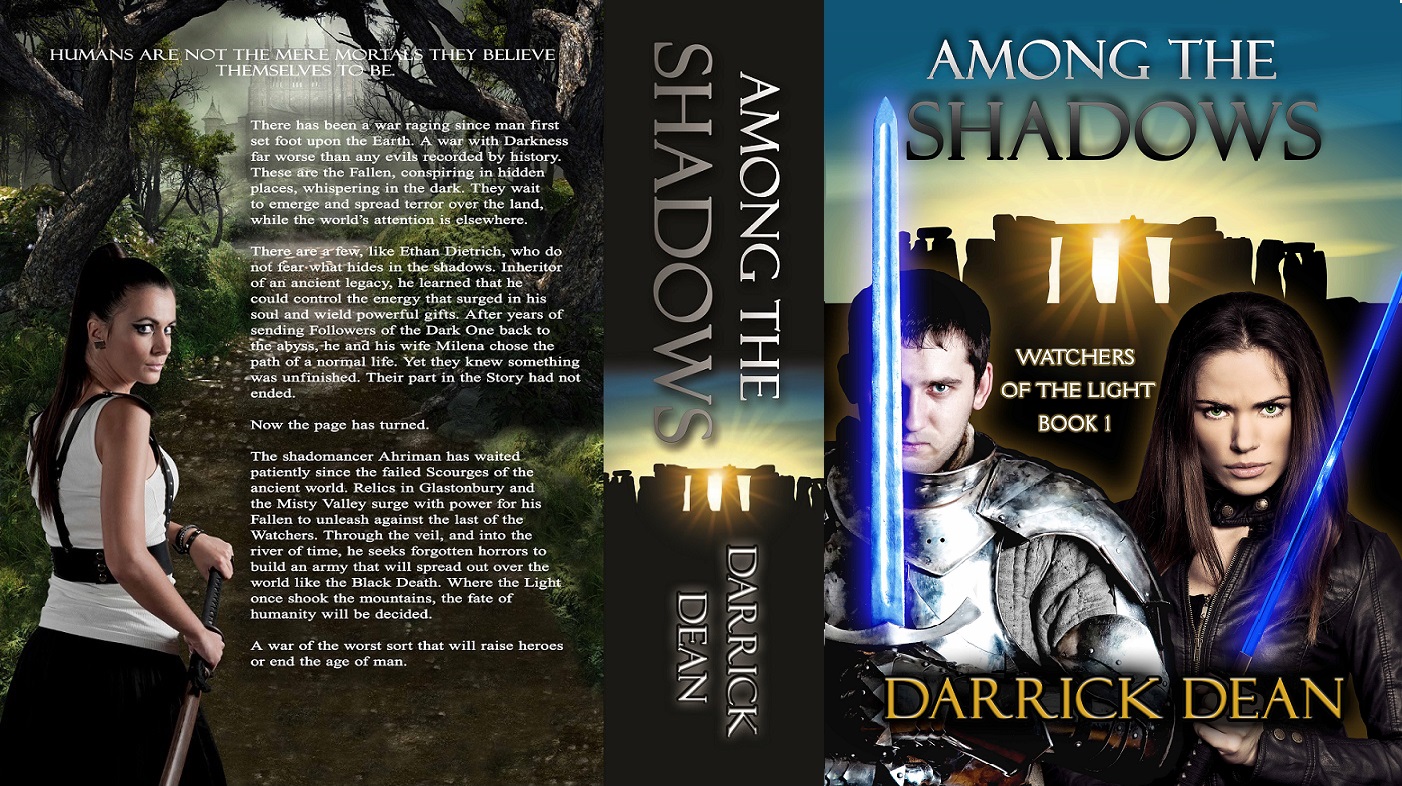
I released the first look at the cover of my book Among the Shadows earlier this month. I thought the copy on the back cover was a little long, so here I have trimmed it back (about 40 words) and made some other adjustments. For many authors, especially indie authors who control the cover design, the cover is an afterthought. This is a mistake. Yes, we are all told not to judge a book by its cover. That isn’t a bad bit of advice, but we live in a visual world. When readers are browsing hundreds of books on-line, a cover should at least make them stop and look. It should be relevant to the story, that is, not just something wild and unrelated to trick them. And just enough plot to let them know about the world they’re about to jump into (without giving away its secrets).

12-27-14-1background-official words3(1)

Categories: Books, Fiction, Writing | Tags: , , | 1 Comment

Pandemics, Elementals and Nuclear Missiles

Receive a few gift cards to your favorite book store for Christmas? Well, here are a few suggestions on spending that money:

In one sense, I hesitated to pick up Steven Konkoly‘s The Jakarata Pandemic. Haven’t pandemics and apocalyptic collapse been overdone? Probably, but apocalyptic books have always been a favorite. That, along with the current Ebola threat, encouraged me to give this book a chance. It didn’t disappoint and ripped a story from headlines that had yet to be written. If you want a realistic look at what happens after a major crisis (no zombies, aliens or Godzilla) and what a pandemic could do, The Jakarta Pandemic will keep you on the edge of your seat. Definitely will be reading more from Konkoly. [Similar: One Second After]

While fantasy has been dominated by reluctant male heroes, that has been changing. In Mary Weber‘s Storm Siren, Nymeria is a slave haunted by her past and her ability. An elemental, her influence of the weather is uncontrollable and deadly. Or can her curse be a gift? Written in the first person, very quickly the reader is drawn in wanting to know what happens to Nym as she is drawn into a war of men and within herself. Listed as a “young adult” fantasy — and it is accessible to that group — but so sophisticated and immersive is the world Weber has created that all fantasy fans will be taken in. [Similar: Daughter of Light]

Want some non-fiction that reads like a Tom Clancy novel? Eric Schlosser’s Command and Control will give you and inside look at the Cold War and the tenuous relationship of man with nuclear weapons. If you grew up in the Cold War, and thought the Cuban Missile Crisis was as close as we got, think again. The rush into nuclear armament was peppered with many close calls. Those who did know are still surprised that no nukes have been used, or gone off, outside of test ranges since 1945. Scholosser recounts the history while threading in the account of an armed Titan II that exploded in its silo in 1980. It is also a tale of the many who served quietly in a supposedly “cold” war. A great book on history that we would be amiss to forget and a telling that honors those who died defending our nation. [Similar: 15 Minutes]

ssbk

Categories: Books, Fiction, History, Modern History | Tags: , , , , , , , , , , | Leave a comment

Need for Adventure

“Adventures?  Nasty disturbing uncomfortable things!” said Bilbo to Gandalf.  If he only knew. The scenes that follow — the arrival of the dwarves who take over his home — did not seem to be a favorite in the films, but was an essential part of the book.  In it we see much of ourselves.

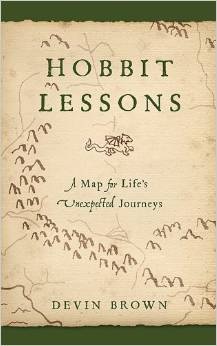
Bilbo was set in his ways, in his little world. Didn’t want to be bothered, nor wanted any deviations from the norm. So imagine the disruption of this rowdy band taking up residence, uninvited. Think about about how people handle disruptions in their life. Poorly. Even good, life-changing ones. We don’t see what goes on around us. Neighbors in need. Corrupt governments.  If the snack bag is full, and the batteries are good in the remote, we’re a-okay.  Devin Brown writes in Hobbit Lessons, “We might also think of someone who can’t bear to be away from their laptop for more than a few minutes. Or someone for whom being out of cell phone range counts as a real hardship.”  Sad.

We see Bilbo’s change in his dwarf encounter. Brown writes that the hobbit senses “he is missing something” and decides to go on a “quest to live more fully” and ultimately becomes a critical part in the history of his world.

Are you going to challenge your status quo? How are you going to handle the next disruption?

Perhaps we all need a quest. An adventure.

hb2

Categories: Books, Fiction | Tags: , , , , , , , | Leave a comment

To Middle-Earth One More Time

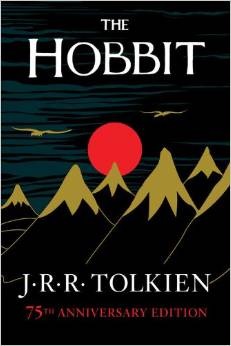
Part three of The Hobbit trilogy has come and, in all likelihood, is the last of Middle-Earth’s time on the big screen. Fans never thought they would have to wait nine years from the original trilogy to revisit this world that became a bit of a December tradition. And so that now ends, but Middle-Earth will never leave us.

It has been over seventy-five years since The Hobbit was first published. How many books endure that long? Few. Fewer still inspire films that don’t quickly fade from history. Fans argued which film trilogy was better. Such arguments usually ignored the fact that you couldn’t expect to compare the two. The books themselves were quite different, Tolkien never changing the style of his first to match the latter volumes. He didn’t feel the need to change it, other than a few details. So the filmmakers had to find a careful balance: Make The Hobbit more in line with the look and feel of the first films without losing its unique, and lighter, traits.

Keeping that in mind, the films largely succeeded. By the end of the latest, you are shown a Middle-Earth that is changing and the future holds darkness. Not the finality of The Return of the King, because it isn’t the end. It is a prologue to what is to come (or what has already passed, depending how you look at it).

Why has Middle-Earth captured readers (and now film lovers) for so long? Why has it inspired so much in the fantasy and other genres?

Because behind all the creatures, the fantastic battles, wizards and elves, it’s about people. People who stand against evil, who never abandon each other even in the darkest times, and risk it all in the process.

It’s the Story about who we all want to be. What we were meant to be.

hb

Categories: Fiction | Tags: , , , , | Leave a comment

Cover Reveal: Among the Shadows

Here it is:

fullcv5

“The Studio” has been making some adjustments over the past few days and I think we got it. When will it be released? Still in editing, so let’s just say 2015 for now. Updates and previews to be forthcoming. Some background on the cover: I took a look at a lot of the great artwork being used on fantasy books, but since this series is rooted in our time, some real people were in order.

So the question is where does myth end and history begin?

Cover Credit: Images and artwork from Shutterstock.com and digital work by K.D.

Categories: Books, Fiction, Writing | Tags: , , | 3 Comments

Shadowlight Saga

I recently started reading two fantasy series. The first was decent, but wasn’t holding my interest. At least not enough to go on to book two. The second series, the Shadowlight Saga by Mande Matthews, is another story.

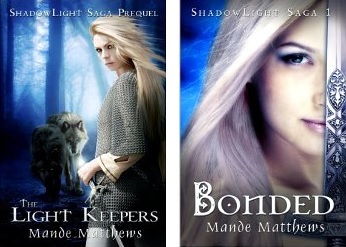
In Bonded, we begin with Hallad and his friends as they happen upon the mysterious mute woman Swan. The encounter in the woods might not have been all that remarkable had not his sister Emma then vanished into the Blackness.

Readers quickly find themselves immersed in a Norse-inspired fantasy world as the quest begins to discover who Swan is, what happened to Emma and Hallad’s family history is not quite what he thought it was. Once you reach the end, you realize this is only Act 1, and there is more to come. To get to the end, of course, will involve encounters with many peoples, beings and obstacles.

While this book is labeled as a “YA fantasy,” I think it’s written with depth and detail that all adults will enjoy. I have found that some authors try to impress us by over-complicating their books with plots, sub-plots, schemes and such that ultimately only bog down their story’s pace and destroy its realism. This isn’t one of those books. Matthews also has a short prequel to Bonded, The Light Keepers, which you don’t have to read first, but I did (and you’ll want to to read it one way or another). So now I look forward to reading part 2 of the trilogy, in what has established itself as a compelling Good vs. Evil fantasy series.

And it’s those kind of stories that are at the heart of the fantasy genre.

mm

Categories: Books, Fiction | Tags: , , , , | Leave a comment

Can Your Book Entertain and be Thoughtful?

Robert Bidinotto recently wrote:

…one cardinal rule, taught by many fiction instructors, is: Avoid expressing your personal views about politics, religion, and other controversial issues in your fiction. Your job as a novelist, they say, is solely to entertain—not to “preach.” If you get up on your soap box, you’ll only alienate many potential fans. To attract a broad readership, you should suppress the desire to push divisive “agendas.”

True art, which writing is, doesn’t shy away from controversy. How it is presented, however, is what sets apart good writers from the not so good. The not so good come off as preachy, overbearing or use drive-by attacks. You know the scenes, Robert does too:

In static scenes on porches, in drawing rooms, and around dinner tables, characters don’t converse; they deliver speeches and soliloquies. Too often, these wooden, one-dimensional “characters” are little more than premises with feet.

It doesn’t have to be way. The trick is to incorporate issues and ideas organically into the story:

I rejected the belief that there’s an inherent contradiction between entertaining fiction and thought-provoking fiction…I think many opinionated writers fail to entertain because they engage in extraneous pontificating, rather than make their ideas integral to the stories themselves. The trick is to weave a provocative theme or premise into the very fabric of your story, making it the thread that connects your characters to each other and to the events of the plot.

So when writing your stories, look for the characters who start speaking like a professor or some sort of activist. Sure, you have stuff rattling in your head you want to tell people. Everyone does. We all have strong beliefs. No one is going to listen if we lecture them. However, if you explore it thoughtfully, making it integral to your story, then even those who disagree with you will not be turned away. Most of them anyway.

You can’t make everyone happy, but you shouldn’t sacrifice your integrity either.

Categories: Books, Fiction, Writing | Tags: | 1 Comment

Orwell and Huxley, Who Was Right?

George Orwell and Aldous Huxley wrote two of the most prophetic warnings in fiction, 1984 and A Brave New World, respectively. Orwell foresaw a world where classic government oppression would erode democracy. In Huxley’s vision, he depicted humanity controlled by pleasure and distraction. It would seem that, to our dismay, they both got it right. Orwell’s Big Brother government is increasingly a reality at the same time Huxley’s populace’s lives are controlled by the trivial and consumerism.

They wrote their books as warnings. Most people weren’t paying attention.

If you are someone who wanders through life day-to-day, driven by wherever the winds blow you, these books are for you. If you are someone who thinks the elite few who run the governments are out there upholding your rights and looking out for you, first, where have you been? Second, these books are for you.

And if you are someone who thinks about the legacy we leave to generations yet to come, unlike our rulers who think election to election, these books are for you as well.

There are always those who look truth straight in the eye and ignore or dismiss it. They don’t want to ask questions or be questioned. Otherwise reasonable people who don’t want to upset their life and the cognitive dissonance they have created. It’s just hysteria or a conspiracy. It can’t happen here.

Until it does happen to them or someone they know. Then it’s a shock. A surprise.

Orwell and Huxley asked us to pay attention to signs. Think like adults. They knew what the corruption of men could lead to, right here, not in some far away place.

Their fiction has become fact. That is an inheritance we don’t want to leave the future.

Categories: Books, Fiction | Tags: , , | Leave a comment

Is the Horror Genre Evil?

I mentioned a book to someone awhile back that was in the horror genre. They were appalled, because they were under the impression that horror was equivalent to Satan making films. I understand where that idea comes from, given the tendency of uncreative horror books and films to be about gore, shock and attacking religion. To say these things are all of what horror is would be a gross stereotype.

Fans of Edgar Allan Poe, H.P. Lovecraft and Alfred Hitchcock all know that these authors explored the fears and dread of man in a more cerebral way. Most people find this approach more frightening than Freddy Part 500. Is there anything wrong with exploring the nature of man? The battle between good and evil? No, and the definition of horror is fluid and can cross into fantasy and sci-fi, and supernatural fiction is often just another name for it.

Christian writers, to the surprise of some, haven’t shied away from the field. Dante’s Inferno is quite hellish. There’s some heavy evil beings in The Lord of the Rings. Authors like Frank Peretti were writing supernatural fiction long before anyone came up with a name for it. Most shocking to all is that horror classics Frankenstein and Dracula were written with biblical worldviews. Gasp! Our perceptions of these two quintessential horror books have been colored by unfaithful adaptations reinterpreted through modern eyes. H. G. Ferguson writes:

It is hard cold fact that the horror story’s mother and father are Mary Shelley (Frankenstein) and Bram Stoker (Dracula), both of whom wrote out of a biblical worldview. Modern attempts by critics to discredit Stoker’s research in particular are significant. They don’t want to discredit Stoker so much as they want to discredit his worldview. They want the vampire amputated from the Judeo-Christian outlook Stoker held. They want Stoker’s vampire, but they do not want Stoker’s God. This is why so many — but not all — most recent treatments of vampires throw out the Cross as a means of dealing with them. The critics understand Dracula was written from a Christian worldview. Why don’t evangelicals?

There’s more to the Dracula story that leaves one wondering how modern versions and their offspring have managed to stray so far. That in of itself is not the point here:

Just like you don’t judge a book by its cover, nor should judge an entire genre by what low-budget movies have defined it as.

fd

Categories: Bible, Fiction | Tags: , , | 3 Comments

Blog at WordPress.com.