Monthly Archives: February 2016

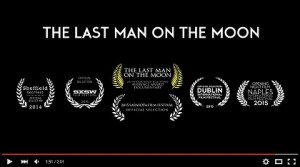
Last Man

When humans first entered the final frontier the very edge of technology was pushed to its limits. The race into space may have been driven by the Cold War, but ultimately there was something even greater behind it.

The human spirit.

That spirit has driven mankind to explore for millennia and space is no different. Every bit as dangerous as the New World, the Amazon and the Wild West, but this frontier has no bounds and is unforgiving. Unfortunately, the powers that be, quickly lost vision and returned to their myopia. In an age where technology is taken for granted, it is hard to believe this happened decades ago. It is also a reminder that we could do so much more than iPhones and smart cars.

There are some who still remain from that first wave; those who were there on the new frontier. This is the story of the last man to walk on another world:

shtv

Categories: History | Tags: , , , , , , | Leave a comment

Not Reading is Not an Option

Shannon A. Thompson writes:

As an author and full-time editor, I’m coming across more and more writers who don’t read their own genre, or — even worse — don’t read at all. There are generally two types of these writers.

1. Writers who claim to read but obviously don’t (and I’ll get to how it is obvious later).

2. Writers who haven’t read anything since they left high school twenty years ago.

Spoiler Alert: Neither of these options is okay.

Writers, please, oh please, you must read—and you must read often, especially in your own genre. As the infamous Stephen King once said, “If you don’t have time to read, you don’t have the time (or the tools) to write.” I adamantly agree with him.

Read the rest here.

Categories: Writing | Tags: , | Leave a comment

Every Generation’s Legacy

Think not forever of yourselves, O chiefs, nor of your own generation. Think of continuing generations of our families, think of our grandchildren and of those yet unborn, whose faces are coming from beneath the ground. – Peacemaker, Founder of the Iroquois Confederacy

In all of your deliberations in the Confederate Council, in your efforts at law making, in all your official acts, self-interest shall be cast into oblivion…Look and listen for the welfare of the whole people and have always in view not only the present but also the coming generations, even those whose faces are yet beneath the surface of the ground – the unborn of the future Nation. – The Constitution of the Iroquois Nations: The Great Binding Law

There are a variety of quotes like these, often rewritten as some variation of, “In every deliberation, we must consider the impact on the seventh generation…” These quotes are often used in discussion of environmental issues, but they are a fundamental concept of foresight that should be applied to much of our thinking. This is something our politicians rarely do — they’re only concerned in what they can say or do (or appear to do) to get them through the next election cycle.

Continue reading

Categories: Critical Thinking, History, Nature, What You Can Do | Tags: , , , , , | Leave a comment

No Ordinary People

“There are no ordinary people. You have never talked to a mere mortal,” wrote C.S. Lewis. Consider that as you consider these:

What if the veil between this world and the next began to break?

What if terrors long thought to be nothing more than myth and legend were not the fiction we thought they were?

What if the worst you saw on the nightly news was not the worst by any measure?

There are those who serve the Darkness, conspiring in the shadows, and those who serve the Light.

None are mere mortals. They are us.

Among the Shadows, Watchers of the Light Book 1, the first in a new fantasy series, coming soon.

Categories: Books, Writing | Tags: , | Leave a comment

3 Whys

Why Does Every Story Have a Villain?

In Waking the Dead, John Eldredge writes:

Little Red Riding Hood is attacked by a wolf. Dorothy must face and bring down the Wicked Witch of the east…Frodo is hunted by the Black Riders…Beowulf kills the monster Grendel…Saint George kills the Dragon. The children who stumbled into Narnia are called upon by Aslan to battle the White Witch and her armies…

So why does every story have a villain?

“…Because yours does.”

What are the villains in your life, your Story? Addictions, vices, work, bad habits, crazy people… As Eldredge writes, we are “born into a world at war.” He is coming from the perspective of Evil that was long ago unleashed in the world and seeks to undermine all that is good.

Our stories have villains because our stories are inspired by life. Fiction is only fact in different clothes.

Why Fantasy Fiction?

Fantasy author R.A. Salvatore answers this in The Guide to Writing Fantasy and Science Fiction:

Perhaps more than any other genre, fantasy is about the hero’s journey. In a world of seven billion people, with wars I can’t stop and legislation I can’t even read, the idea of one person being able to make a difference, the idea of one man or woman grabbing a sword and defeating the dragon and saving the village is quite appealing.

And perhaps it will inspire a hero or two in our own world to rise up.

Why Stories?

Why do people love fictional stories and adventures so much? Because they mirror what is inside us. A desire to do to great things and go beyond the horizon. Do what we were meant to be. There is destiny written on our souls for us to choose or ignore. Jason Clark writes in his book Surrendered and Untamed on this discovery:

I no longer desire to be on the fringe, yet neither will I try to fit the mold. I’ve come to see there’s swimming against the stream just to swim against the stream. And then there’s swimming against the stream like the salmon do — to give others life so others might live — and to get back home. You face predators along the way and the trip is exhausting and you die a thousand deaths, but you do it for the glory and the story.

Categories: Books, Fiction, Writing | Tags: , , , | 1 Comment

“No Desire to Give Up”

There has been consderable discussion on how the Internet and ebooks helped turned self-publishing from a bad word to an industry-changing movement. Authors have started there and moved to traditional publishing; others have done the opposite. Some have gone both routes even as fellow writers have stood firm in one camp or another. It is certain that self-publishing – now often referred to as indie publishing – is not going anywhere. Nor is traditional publishing. Nonetheless, here is author and editor Jaimie Engle‘s self-publishing success story, brought on when everything fell apart:

I self-published my children’s novel, Clifton Chase and the Arrow of Light, in September 2013, after the small press I had been working with breached our contract. Three weeks before my slated release, my publisher bailed and left me stranded. I had no publicist, no idea what to do, and no desire to give up.

Read the rest of her story here.

Categories: Books, Writing | Tags: , , , | 1 Comment

Blog at WordPress.com.