Author Archives: Darrick Dean

The Short of It

Writing short stories is a bit of a lost art. Few authors center their efforts on shorts, instead they are always looking to produce that great novel. There are few Ray Bradburys out there, but not many, who are (or were) defined by their shorter tales. The late master wrote hundreds and combined others into classics like The Martian Chronicles. Short stories may not be what they once were, but they are not dead.

Take Jaimie M. Engle‘s The Dredge. Set in an Orwellian future of oppression, Will Marrok has a gift of sight into the future. He is told what unfolds hinges on his actions. In a novel, one has hundreds of pages to detail an evil dystopian Regime, a reluctant hero and the people in his path. Jaimie manages to impress these into the reader’s mind in 68 pages. The hero always wins in the end, but the question is how will he? It may not be what readers expect, but the best kind of ending.

One worthy of Bradbury.

dredge

Categories: Books, Fiction, Writing | Tags: | Leave a comment

Buckle Up

We love to disappear into our books, but this year the big screen is overloaded with epics tailor-made for the old fashioned, larger-than-life format. Not surprisingly, the most anticipated ones are all existing franchises.

The original apocalyptic series returns after a decades-long absence in Mad Max: Fury Road, which takes place between the second and third films of the original series. One word: Wow.

Ethan Hunt is back in Mission Impossible 5: Rogue Nation. Why is every film about renegade agents and/or the IMF being disbanded? Don’t know, but it works.

That other secret agent, James Bond, faces his worst nemesis in Spectre. Bringing back this old villain solidifies the new series as being among the best of 007.

As he did with Star Trek, it looks like director J.J. Abrams is bringing us back to old-school Star Wars in Episode 7, The Force Awakens.

We may be getting close to super hero burnout, but the reboot of Fantastic Four looks to be a smart move. It has the look and feel of X-Men, so are the filmmakers who missed launching the “shared-universe” boat years ago up to something?

Buckle up and choose your adventure.

Categories: Uncategorized | Tags: , , , , , , , | 1 Comment

Imagination

A few posts ago, I wrote on authors having a little fun with their books. Sure, every genre has its expectations as far as realism, details and plausibility. There will always be those “experts” that catch you on every “mistake” – whether you intended it or not. Most authors don’t mind getting corrections, but being an writer also means knowing when to deviate from the rules. For goodness sake, you’re writing about trolls or mutants or unstoppable heroes. Even when grounding it in some sort of plausibility, there’s still a bit of implausibility built in. Sure, if you’re writing The Hunt for Red October, your submarines cannot suddenly turn invisible or fly. Writing with that level of realism isn’t easy, though authors like Tom Clancy did it all the time. Even writers of techno thrillers and “hard sci-fi” don’t always follow the rules. A.E. van Vogt wrote many years ago (1952):

At the moment I regret none of the liberties I took with science in my science fiction. There was always a wealth of fact, enough, so it seemed to me, to carry the fantasy element. Even then, I rationalized what I did. I told myself whenever I had doubts: “The Story’s the thing.” I still believe that.

So, you see, being a writer is to know when to break the rules and, perhaps, make it seem like you aren’t breaking them. Or you write your story no matter what it takes, because ultimately it’s not realism even in the most realistic books that catch readers.

It’s Imagination.

Categories: Books, Fiction, Writing | Tags: , , , | Leave a comment

“Book Business Booms”

The despised book – that unsalable commodity which had to be forced upon reluctant schoolboys…has suddenly become popular…Americans [are buying] more books than ever before in history…To meet this voracious public appetite the book publishers put out more titles than ever before…

E-books? No, traditional publishing. In 1961, that is.

Ernest Havemann was writing on the boom in the May 12, 1961 issue of Life. Yes, the famous issue with Alan Shepard on the front. Don’t know who Shepard was? Ask for a refund from your school. Anyway, Havemann wrote about the “business that capitalism forgot” and how it was “changing fast” and only 1500 stores selling books couldn’t keep up with demand (compared to 300,000 selling razors). And this:

…the paperbound book was originally regarded as the final death blow to literary publishing. Instead it may prove to be the salvation. Sold everywhere that a rack could be put up…The way things are going this year…books may soon be as available as stereo records…if not razor blades.

Change “paperbound” to e-book and “stereo records” to Blu-ray and this would be 2015.

How things change and how they don’t.

Categories: Books | Tags: | Leave a comment

What is Through the Veil?

Soon the veil will thin and not all beyond is meant to be found…

Tentative sequence and titles of the Watchers of the Light series announced here. More previews coming soon.

Categories: Books, Fiction, Writing | Tags: , , | Leave a comment

Would Tolkien and Lewis Make the Cut?

There’s been much debate among Christian writers on what writing “Christian Fiction” means. The artificial rules of Corporate Christian Publishing would eliminate many of the well-known writers who were Christians. These would include J.R.R. Tolkien and C.S. Lewis, as Donovan M. Neal writes. Many Christian writers – like writers of all beliefs – just want to write their story. A story informed by their beliefs (again, like all writers), but where their beliefs come through organically – not forced or contrived by some sort of formula. I’ve read books from all sorts of authors who want to lecture or preach to their readers. Really, it’s the difference between good and bad writing.

That’s not to say there isn’t anything good on the Christian Fiction shelf. There’s good and bad in all fiction markets and genres. Part of the debate also concerns the pros and cons of having your fiction labeled by your religion. If you are writing for a specific audience, then I suppose it’s fine, though religion is still bit of an unique way to classify fiction. Yes, there are other examples of targeting this or that demographic.

In the end, regardless of a writer’s beliefs, they shouldn’t spend their time figuring out how to be successful in getting certain people to read their books. They should write their story.

Readers should demand it.

Categories: Books, Fiction, Writing | Tags: , , | Leave a comment

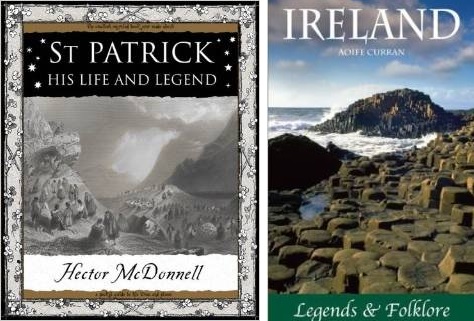
More to Patrick than Being Green

Leprechauns, green beer, parties, Irish heritage. Hard to tell that St. Patrick’s Day started as a religious remembrance of one of Christendom’s most famous missionaries. So here is a little history.

Partick’s early days aren’t well known. His father and grandfather were both members of the clergy. Possibly a wealthy family, but surprising to many, they were British. Yes, the patron saint of Ireland isn’t Irish (reminds me of famed British writer C.S. Lewis who was, well, Irish). Nonetheless, the teenage Patrick was kidnapped and became a slave in Ireland for six years. It is there his faith grew, and he would later write that God told him when to flee to the coast, where he escaped back to Britain. There, he would receive another call to return to the land of his captors to minister to them. After over a decade of training in the priesthood, he did just that.

He wasn’t the first to introduce Christianity to Ireland, but is often credited with influencing its explosive growth there. As with most missionaries, it wasn’t easy. His writings attest to being detained and subject of wrath from local rulers. Mostly likely not the “fire and brimstone” variety of preacher, he would sometimes incorporate — or subvert — some of the old Celtic symbols into his mission. He is said to have superimposed the Christian cross onto the Celtic one, making it a recognized Christian symbol to this day.

Many other legends have grown around Patrick, and quite probably, they are simply legends. Such as his use of the shamrock to explain the Holy Trinity or that he banished all snakes from Ireland. Others are quite fantastic, giving Patrick great powers like a wizard. He brought the Magic Fire the Druids of the great High King Lóegaire could not extinguish. It’s all much more fascinating than green beer.

Even though he’s often referred to as a “saint,” he was never officially canonized, but only declared a saint by popular opinion. Still, the day is observed officially by Catholics, Anglicans, Lutherans and some others. In the long centuries since the Reformation, many churches have abandoned such “feast” or observance days, but in this trend we have lost some of our history. 

Out of billions who have come and gone, when one has been remembered by history, one should be encouraged to find out why. Here’s a man who went back to the land of his enslavement, far from home and with little support, to teach and witness. He worked among the slaves and poor, one of the first to oppose the kind of slavery he himself had experienced. The monastic movement in Ireland would become an important part in coming resurgence of the West during the Middle Ages.

Yes, St. Patrick’s Day can be used to remember Irish heritage and its influence on the world. There’s nothing wrong with that, especially if you are Irish (if you aren’t, don’t you have your own day? Oh, laugh already). St. Patrick’s Day has always been a bit less about its namesake than it should. So take a minute and think about why this man is still known so many centuries later. History remembers only those terrible and those great. Patrick was the latter and we should ask this:

What does it take, whether history notes you or not, to leave a positive mark upon the world?

And perhaps, just perhaps, not all in myth is fiction…

irbks

Categories: History, Legend, Traditions | Tags: , , , | Leave a comment

Treasure Hunting

Sure, your favorite on-line or brick and mortar bookstore have thousands of books to choose from. What about the thousands that came before? Used bookstores, flea markets and especially on-line sellers have given new life to forgotten books. It’s like a treasure hunt: Buy a bag or a “lot” of books and hope to find a couple gems. Maybe a new author, who isn’t so new, that you want to read more from. Or something out of the thousands of reads from the heyday of sci-fi and pulp fiction may grab your interest.

Perhaps an over-the-top adventure with the Swordmen of Vistar, a homage to the works of Edgar Rice Burroughs (unfortunately, the author never continued the series). Travel among the stars to save Earth in Cosmic Engineers or The Way Station from sci-fi master Clifford D. Simak. Live an amazing life throughout the universe in Stardrift. Survive on your own, on the run, in the all too real Rogue Male.

Don’t pass up those books with the yellowed pages and worn covers that are like unearthed scrolls.

A treasure may lay inside.

ppbckbks

Categories: Books, Fiction | Tags: , , , , , | 1 Comment

Don’t Be a Book Snob

Anastasia writes on Reading and Snobbism.

Categories: Books, Fiction | Tags: , | Leave a comment

Realism or Escapist Entertainment?

Ever know someone who can’t just let themselves enjoy a book or movie? “That movie is just completely implausible and unrealistic,” they say. “But it’s about alien robots!” you respond. Not everything has to be dead serious. Can you write purely for entertainment?

We have examined how a writer can be entertaining and thoughtful, about writing with your own voice and readers misunderstanding your book. These are all important considerations to a writer, but can he or she write more for pure entertainment? Sure they can.

Ultimately, an author’s beliefs or views come out somewhere in a book, but they don’t even have to be the central theme – or a theme at all. Think of all the barely plausible thrillers, and the movies that come from them such as 007, and how entertaining they are. Edgar Rice Burroughs nearly invented the swashbuckling “man finds himself in alien world/culture and must survive one peril after another to get the (native) girl in the end” scenario. He used the archetype in nearly every book he wrote, but through changing the details and characters he made each an original, breathless read.

Sure, his books weren’t without comments on society and such, but for the immersive reader they are the perfect escape. An immersive reader disappears into a book and doesn’t analyze or critique or try to figure it out. They want to be pulled in and, if the writer is good, the reader will catch whatever themes and messages work their way into the story. There’s nothing wrong with starting with a message, so long as it is organically delivered. However, most authors are seeking to tell a story first and foremost. Some may be doing so for pure escapism. Robert Adams writes at the start of his Horseclans series:

The following tale is a fantasy, pure and simple. It is a flight of sheer imagination. It contains no hidden meanings and none should be read into it…rather, [this is] intended for the enjoyment of any man or woman who has ever felt a twinge of that atavistic urge to draw a yard of sharp, flashing steel and with a wild war cry recklessly spur a vicious stallion against impossible odds.

It’s your story. Have a little fun.

Categories: Books, Fiction, Writing | Tags: , , , | 1 Comment

Blog at WordPress.com.