Losing History

President Obama has caused quite the controversy by making comparisons of ISIS’s campaign of terror to the Crusades. I will let others debate what, how and why he said everything that he did. Since this site does touch on history time to time, I will discuss his comparison. How do I put this nicely?

It’s absolutely ridiculous.

The Crusades are often brought up primarily by those looking to attack Christians or knock them down a bit. They have fed the perception that the Crusades were all about expanding empires and destroying Islam. The problem is that this perception isn’t history.

It’s revisionist history.

During the early history of Christianity, its population was centered in what we typically refer to as part of the Middle East (technically the Near East and Asia Minor). It’s hard for some to imagine that a country like Egypt was once predominately Christian. What is left out of drive-by comments about the Crusades is the part about the Muslim Conquests that swept through the region, conquering nearly all of it. Princeton scholar Bernard Lewis wrote:

At the present time, the Crusades are often depicted as an early expansionist imperialism — a prefigurement of the modern European countries. To people of the time, both Muslim and Christian, they were no such thing. The Crusade was a delayed response to the jihad, the holy war for Islam, and its purpose was to recover by war what had been lost by war — to free the holy places of Christendom and open them once again, without impediment, to Christian pilgrimage.

Were the Crusades full of tragedies, horrible events and misguided people on both sides? Yes, because all war is a horrible tragedy. That doesn’t mean we rewrite history for our agendas. We let history, the good and the bad, speak for itself. We learn from it, so we don’t repeat it. Or, as George Orwell said, “The most effective way to destroy people is to deny and obliterate their own understanding of their history.”

The revisionism of the Crusades is such an obvious one, it’s sad to see world leaders repeat it. We’ve lost respect for the importance of history. Instead, we have replaced it with superficial study, politics and the tendency of too easily believing everything we hear. We are in danger of losing the messages our ancestors have left for us.

The very messages that can preserve humanity’s future.

crbks

Categories: Critical Thinking, History | Tags: , , , , , , | 2 Comments

How Do Your Characters Speak?

Dialogue seems awfully easy in English class, yet many writers get it wrong. You see, dialogue in novels isn’t supposed to be realistic.

“Huh?” you say.

If you wrote dialogue with all the little extras – the pauses, the unecessary words (um, like…), every variation from accent or region – it would be very tedious. In everyday speech, the brain processes out these things. When a writer tries to include all of them in the name of “realism,” they only annoy the reader. One has to be very selective in where such items are included, a specific purpose for each.

It’s also easy to drift too far into unrealistic speech.  Characters (rarely anyway) launch into paragraphs long commentary. People don’t talk this way and this is usually a sign of author intrusion. That is, the author wants to teach the reader something , lecture them or impart some wonderful piece of knowledge to them. These “info dumps” are just telling instead of showing. Find a more organic way to include the information in your story. Very often you’ll find that the delete button is in order. Make sure it sounds like your character is talking and not you.

Many writers abhor short sentences, believing if it’s short that it must be grammatically incorrect. This is not true. Shortened dialogue can signify tempo, or change of it, of the scene. This is very popular in television scripts. Do people really talk like this? Rarely, but in writing it imparts necessary information to the reader (or viewer).

How should people talk in your books? There’s a great line in the film National Treasure that gives us insight. Nicholas Cage’s character says something profound to his female friend. She replies that people really don’t talk like that, to which he says, “No, but they think like that.”  People’s thoughts are usually clearer, more reasoned and more detailed than what comes out of their mouths. So dialogue, out of necessity, must project a bit more than normal speech, but not too much more.

Who said writing was easy?

Categories: Writing | Tags: , , | 2 Comments

Allure of Islands

Islands.

Something about them has always drawn people to them, in real life and in fiction, for a variety of reasons. They are disconnected from the world and hideaways from life. Some are marooned on them. Pirates love them. They harbor lost worlds and indecipherable mysteries. Film and television has a constant stream of island adventure, but many of those tales, and our fascination with them, originated in books. Treasure Island, Robinson Crusoe, The Island of Doctor Moreau, The Land That Time Forgot and others set the precedent.

Perhaps it takes going to the island to learn more about ourselves. Or, at times, just to have fun.

bkspir

Categories: Books, Fiction, Forgotten Places, History | Tags: , , , , , | Leave a comment

How Did People Survive Before the Internet?

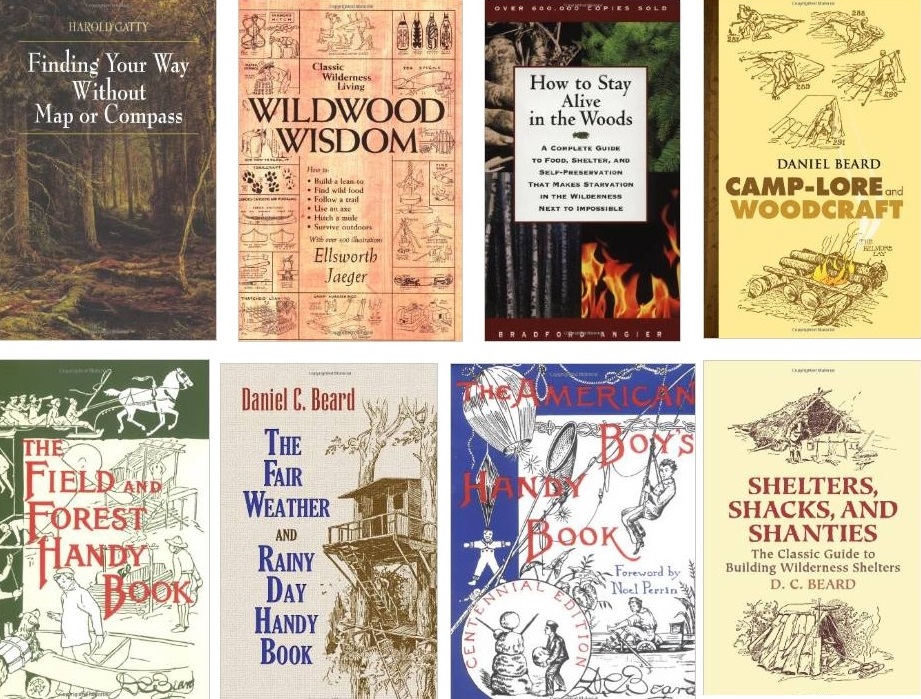
Unfortunately, they weren’t reading this website. They were, however, just as capable of us of finding something to do. Kids weren’t wondering aimlessly without their tablets and phones. In fact, we aren’t all that far removed from the days when kids played outside all day and had to practically be forced back home for meals and bedtime. Nor did folks pull up the internet every time they needed to learn how to make, fix or craft something.  Someone at sometime taught them in person.

The books below embody some of that old time knowledge and know-how for outdoor projects, skills and survival. Many of these books have been in print, in one form another, for decades. They are for collectors of nostalgia, those who would like to get their hands dirty or people who want to learn their way through the woods without a GPS and survive without a grocery store.

Someday we may all wish we had taken the time to preserve the wisdom of those who came before us.

udl

Categories: Books, Nature | Tags: , , , , , , , , | Leave a comment

Write With Your Voice, Not Someone Else’s

Too often authors write what they think people want to read. Or they try to conform to the established expectations of a genre. The problem with these things are that the writer isn’t being true to themselves. Their writing suffers in the process. Author Morgan Busse writes in “Surprised by My Own Voice:”

I write fantasy. When most people think of fantasy, they think of J.R.R. Tolkien. His voice is eloquent, lengthy, lyrical, and full of description. Many fantasy writers share a similar kind of voice…

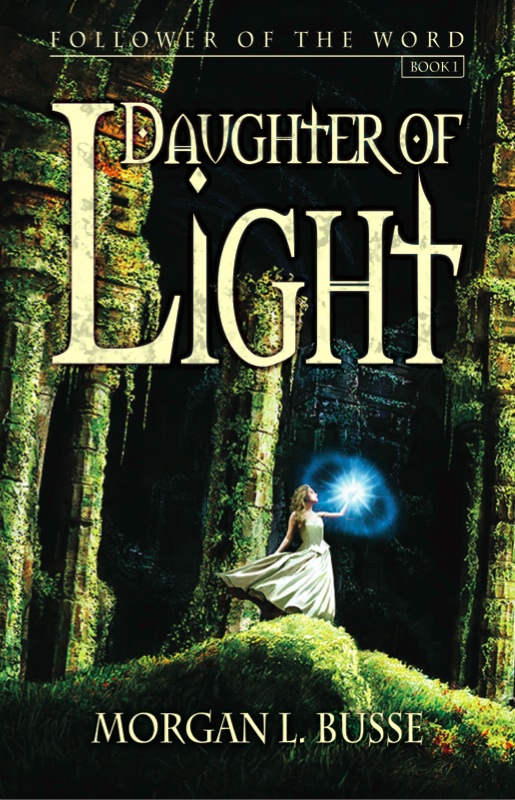
However, my voice is different. I discovered my voice after writing Daughter of Light, the first book in my epic fantasy series. My writing voice is blunt, short, and to the point. I tell the story in a strong, quick tempo, moving along at a clip pace. Not the style usually employed by the average fantasy writer.

A couple reviews reflected the fact that some readers did not like my voice. They wanted the poetic sound usually found in fantasy.

I didn’t know what to do, so I decided to try and change my voice. I believed I needed to write in a certain way in order to be a fantasy writer. It was like trying to write a square word into a round story. It didn’t work. In fact, those scenes stuck out so bad that my editor called me on it. He gave me the freedom to be me, and to write like me.

Don’t let others define you. Find your voice and let it be heard.

Or read.

Categories: Fiction, Writing | Tags: , | 2 Comments

Will Readers “Misunderstand” Your Book?

I wonder how much authors worry about how readers misunderstanding what their book is about. Its meanings, themes and intentions. Some authors might overcompensate by entering the story and explaining too much. This “author intrusion” often makes a character sound out of character or exposition sound like a lecture. Authors should realize not every reader is going to get, or like, everything you have written and that’s okay. A mature reader isn’t going throw down your book if he or she doesn’t agree with every sentence you write. They might do so if your book isn’t entertaining or is unreadable.

I mentioned in an earlier post on how modern readers like to reinterpret older books (in that case Dracula) through modern eyes. When an author is still living, or wrote about their books, it’s always best to default to their explanations. After all, they wrote the book. J.R.R. Tolkien’s The Lord of the Rings is brimming with themes and meaning, but it was no allegory. The author wrote:

There is no ‘symbolism’ or conscious allegory in my story…To ask if the Orcs ‘are’ communists is to me as sensible as asking if Communists are Orcs.

Devin Brown continues by asking, “Don’t they share a number of similarities? [along with Sauron/Hitler, etc.] Of course they do.” But he adds what Tolkien explained, “I think many confuse ‘applicability’ with ‘allegory.'”

Of course, “everyone knows” C.S. Lewis’ The Lion, the Witch and the Wardrobe was an allegory. Everyone forgot to tell C.S. Lewis. He said he never intended to write an allegory, the story unfolded as it did. He also wrote:

As we know, almost anything can be read into any book if you are determined enough…[the author] will find reviewers, both favorable and hostile, reading into his stories all manner of allegories which he never intended. (Some of the allegories thus imposed on my own books have been so ingenious and interesting that I often wish I has thought of them myself.)

So focus on writing your story. Understand not everyone will like it or get all the wonderful things you are trying to get across. Nor should you attempt to appease everyone or your story will most likely end up not being very interesting. Make your tale organic and entertaining. Use the tools you have to improve your craft.

Because ultimately the mythos you create is yours and someone out there wants to enter it.

Categories: Books, Writing | Tags: , , , , , , , | 2 Comments

Book Price Wars: 2015’s Publishing Battleground?

There’s concern that the price wars started by indie writers may come back to haunt them. Here’s the scoop: Indie authors are able to sell their books for at a much lower price than traditional publishing. You’re basically buying right from the source with minimal overhead. The issue is that if traditional publishers lower prices, more competition for indies. Maybe not.

For one, there is always competition, traditional or otherwise. Just walk into a bookstore or browse Amazon. Millions. It’s about — regardless of how you publish — connecting with audiences with a strong, quality product. Two, I’ve seen many of these “low” prices jump back up. Perhaps not as high as retail, but still up. Holiday pricing, perhaps? The idea of having a sale seems to be a new thing for some publishers. How low can traditional publishers really go? Sure, on a super runaway bestseller they can afford some sales or lower prices. Or they can say, “This is a bestseller, people are going to buy it regardless.” And, of course, the lower the traditional publishers go with pricing, the less their authors get.

That’s why indie authors still have an advantage when it comes to revenue (not that writing books is a get-rich scheme). There are other factors at work here, but ultimately I think indies, e-books and technology will continue to transform the industry. Where the equilibrium will occur, I’m not sure. There’s room for all publishing models, but we are seeing a settling of which is good for whom.

Categories: Books, Writing | Tags: , , , | 2 Comments

If a Book Doesn’t Make You Think, What Good is it?

Controversial quotes from controversial books. Why would some see them disappear? Because they encourage people to think and question. They seek to remind people to not to blindly follow those who self-appointed greatness. And they tell us to pay attention who is behind the curtain.

All Quiet On The Western Front on cautioning us on what reasons we use to go to war:

At the next war let all the Kaisers, presidents and generals and diplomats go into a big field and fight it out first among themselves. That will satisfy us and keep us at home.

You still think it’s beautiful to die for your country. The first bombardment taught us better. When it comes to dying for country, it’s better not to die at all.

1984 on blindly giving away power and letting them win:

He who controls the past controls the future. He who controls the present controls the past.

The choice for mankind lies between freedom and happiness and for the great bulk of mankind, happiness is better.

Fahrenheit 451 on being engaged in the world and freedom of access to knowledge:

We need not to be let alone. We need to be really bothered once in a while. How long is it since you were really bothered? About something important, about something real?

A book is a loaded gun in the house next door. Who knows who might be the target of the well-read man.

Atlas Shrugged on finding your Role in the Story of this life:

Do not let the hero in your soul parish, in lonely frustration, for the life you deserved but never have been able to reach. Check your road and the nature of your battle. The world you desired can be won. It exists, it is real, it is possible, it is yours.

Fighting Slave of Gor (Book 14 of the Counter Earth Saga) on people allowing others define who they are and how to think:

Earthings…are manipulated organisms, helpless in the flow of social forces, slobbering to slogans and rhetoric. They will be the first to celebrate their own downfall. They will not discover what has been done to them until it is too late.

“A sexist is a sexist,” she said. “That is the logical truth,” I said. “An apple is an apple. This argument is not much advanced…[it] is a ‘signal word,’ a word selected for its emotive connotation, not its cognitive meaning. It is to be used as a slander tool to discourage questioning and discourage questioning and enforce verbal agreement…One of the great utilities of these words, long since evacuated of most of their cognitive content, is that they make thought unnecessary…”

Categories: Books, Critical Thinking, Fiction | Tags: , , , , , , , , | 3 Comments

Humans Are Not The Mere Mortals They Believe Themselves to Be…

I released the first look at the cover of my book Among the Shadows earlier this month. I thought the copy on the back cover was a little long, so here I have trimmed it back (about 40 words) and made some other adjustments. For many authors, especially indie authors who control the cover design, the cover is an afterthought. This is a mistake. Yes, we are all told not to judge a book by its cover. That isn’t a bad bit of advice, but we live in a visual world. When readers are browsing hundreds of books on-line, a cover should at least make them stop and look. It should be relevant to the story, that is, not just something wild and unrelated to trick them. And just enough plot to let them know about the world they’re about to jump into (without giving away its secrets).

12-27-14-1background-official words3(1)

Categories: Books, Fiction, Writing | Tags: , , | 1 Comment

Pandemics, Elementals and Nuclear Missiles

Receive a few gift cards to your favorite book store for Christmas? Well, here are a few suggestions on spending that money:

In one sense, I hesitated to pick up Steven Konkoly‘s The Jakarata Pandemic. Haven’t pandemics and apocalyptic collapse been overdone? Probably, but apocalyptic books have always been a favorite. That, along with the current Ebola threat, encouraged me to give this book a chance. It didn’t disappoint and ripped a story from headlines that had yet to be written. If you want a realistic look at what happens after a major crisis (no zombies, aliens or Godzilla) and what a pandemic could do, The Jakarta Pandemic will keep you on the edge of your seat. Definitely will be reading more from Konkoly. [Similar: One Second After]

While fantasy has been dominated by reluctant male heroes, that has been changing. In Mary Weber‘s Storm Siren, Nymeria is a slave haunted by her past and her ability. An elemental, her influence of the weather is uncontrollable and deadly. Or can her curse be a gift? Written in the first person, very quickly the reader is drawn in wanting to know what happens to Nym as she is drawn into a war of men and within herself. Listed as a “young adult” fantasy — and it is accessible to that group — but so sophisticated and immersive is the world Weber has created that all fantasy fans will be taken in. [Similar: Daughter of Light]

Want some non-fiction that reads like a Tom Clancy novel? Eric Schlosser’s Command and Control will give you and inside look at the Cold War and the tenuous relationship of man with nuclear weapons. If you grew up in the Cold War, and thought the Cuban Missile Crisis was as close as we got, think again. The rush into nuclear armament was peppered with many close calls. Those who did know are still surprised that no nukes have been used, or gone off, outside of test ranges since 1945. Scholosser recounts the history while threading in the account of an armed Titan II that exploded in its silo in 1980. It is also a tale of the many who served quietly in a supposedly “cold” war. A great book on history that we would be amiss to forget and a telling that honors those who died defending our nation. [Similar: 15 Minutes]

ssbk

Categories: Books, Fiction, History, Modern History | Tags: , , , , , , , , , , | Leave a comment

Blog at WordPress.com.