Rethinking the Nativity

Time for our yearly Christmas history post that I’m sure you’ve been waiting for. It’s always interesting to track down the origins of holiday traditions. Now that Christmas is upon us, many have displayed their Nativity scenes with the usual stable, wise men and donkey. Some interesting facts:

  • The Bible doesn’t state how many wise men there were. Three is divined from the number of gifts. Some traditions list many more Magi.
  • We Three Kings tells us they are from the Orient. Some people may think this means the Far East, i.e. Japan and its neighbors. True today, but not back then. These terms referred to Persia (centered in modern-day Iran).
  • Nowhere does the Bible record Mary riding a donkey, as many images depict. That comes from the Protevangelium of James 17:2: “He [Joseph] saddled the donkey and seated her [Mary] on it; and his son led it along, while Joseph followed behind.”
  • While the “no room in the inn” and Christ being humbled by being born in a barn account is an inseparable part of Christian culture, is it correct? Would Joseph find no relatives and friends in the town of his origin? Did not Mary know people nearby as well? In fact, Luke doesn’t use the Greek word for a “commercial inn,” but the word katalyma, which means “a place to stay.” Luke also defines this as “guest room” in Luke 22:10-12. So they very well may have been with friends or family.
  • The Bible simply reads “manger” as to where Jesus was placed. Assumed to mean that he was in a stable, but very early traditions state that a cave was being used. The mother of Constantine, Helena, had a church built over a cave, the Church of the Nativity. This is all probably wrong. Consider that a “manger” in Middle Eastern homes was in the home itself. This gives us an entirely different Nativity story. We have one where Joseph wasn’t irresponsible in getting his pregnant wife somewhere safe in time (Technically Luke doesn’t state Christ was born the night of arrival in Bethlehem, as commonly misconstrued).
Categories: Bible, Traditions | Tags: , , , , , , | 1 Comment

Need for Adventure

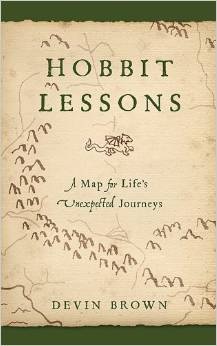
“Adventures?  Nasty disturbing uncomfortable things!” said Bilbo to Gandalf.  If he only knew. The scenes that follow — the arrival of the dwarves who take over his home — did not seem to be a favorite in the films, but was an essential part of the book.  In it we see much of ourselves.

Bilbo was set in his ways, in his little world. Didn’t want to be bothered, nor wanted any deviations from the norm. So imagine the disruption of this rowdy band taking up residence, uninvited. Think about about how people handle disruptions in their life. Poorly. Even good, life-changing ones. We don’t see what goes on around us. Neighbors in need. Corrupt governments.  If the snack bag is full, and the batteries are good in the remote, we’re a-okay.  Devin Brown writes in Hobbit Lessons, “We might also think of someone who can’t bear to be away from their laptop for more than a few minutes. Or someone for whom being out of cell phone range counts as a real hardship.”  Sad.

We see Bilbo’s change in his dwarf encounter. Brown writes that the hobbit senses “he is missing something” and decides to go on a “quest to live more fully” and ultimately becomes a critical part in the history of his world.

Are you going to challenge your status quo? How are you going to handle the next disruption?

Perhaps we all need a quest. An adventure.

hb2

Categories: Books, Fiction | Tags: , , , , , , , | Leave a comment

Making the Pitch

I’m always surprised what I find on a back cover. Sometimes no description, the giving away of plot points or it tells you how great the book is. That’s why I found Maria Murnane‘s post right on target. After spending so much time on your book, shouldn’t the cover copy be right?

Nor should you forget how important your Elevator Pitch is to explaining what your book is about to people, in an elevator or otherwise. This is also known as your Quick Pitch. Don’t neglect the little things that will sell your book. Very rarely is someone going to do it for you. Think Guerrilla Marketing. It can be work, but finding work you enjoy, rather than just having a “job,” is part of why you do this. As Rose Robbins writes:

But when you find work that actually makes you happy, work that makes you wake up in the morning excited at the prospect of getting back at it, HOLD ON TO THAT…focus on it, make the most of it, do your very best at it.

Categories: Writing | Tags: , , , | Leave a comment

To Middle-Earth One More Time

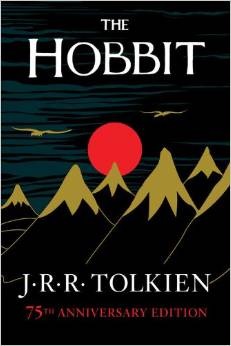
Part three of The Hobbit trilogy has come and, in all likelihood, is the last of Middle-Earth’s time on the big screen. Fans never thought they would have to wait nine years from the original trilogy to revisit this world that became a bit of a December tradition. And so that now ends, but Middle-Earth will never leave us.

It has been over seventy-five years since The Hobbit was first published. How many books endure that long? Few. Fewer still inspire films that don’t quickly fade from history. Fans argued which film trilogy was better. Such arguments usually ignored the fact that you couldn’t expect to compare the two. The books themselves were quite different, Tolkien never changing the style of his first to match the latter volumes. He didn’t feel the need to change it, other than a few details. So the filmmakers had to find a careful balance: Make The Hobbit more in line with the look and feel of the first films without losing its unique, and lighter, traits.

Keeping that in mind, the films largely succeeded. By the end of the latest, you are shown a Middle-Earth that is changing and the future holds darkness. Not the finality of The Return of the King, because it isn’t the end. It is a prologue to what is to come (or what has already passed, depending how you look at it).

Why has Middle-Earth captured readers (and now film lovers) for so long? Why has it inspired so much in the fantasy and other genres?

Because behind all the creatures, the fantastic battles, wizards and elves, it’s about people. People who stand against evil, who never abandon each other even in the darkest times, and risk it all in the process.

It’s the Story about who we all want to be. What we were meant to be.

hb

Categories: Fiction | Tags: , , , , | Leave a comment

Writing 101

Many of you just finished National Novel Writing Month, and if you finished, now it’s time to buckle down and start editing. So here’s a collection of my favorite writing posts: Outlining, Flashbacks, Storytelling vs. Writing, Being Entertaining & Thoughtful and Showing & Telling.

Share your own or from other sites and then get to work!

P.S. And if you haven’t seen it yet, click here, or just scroll down, for the cover reveal of Among the Shadows.

Categories: Writing | Tags: , , , | Leave a comment

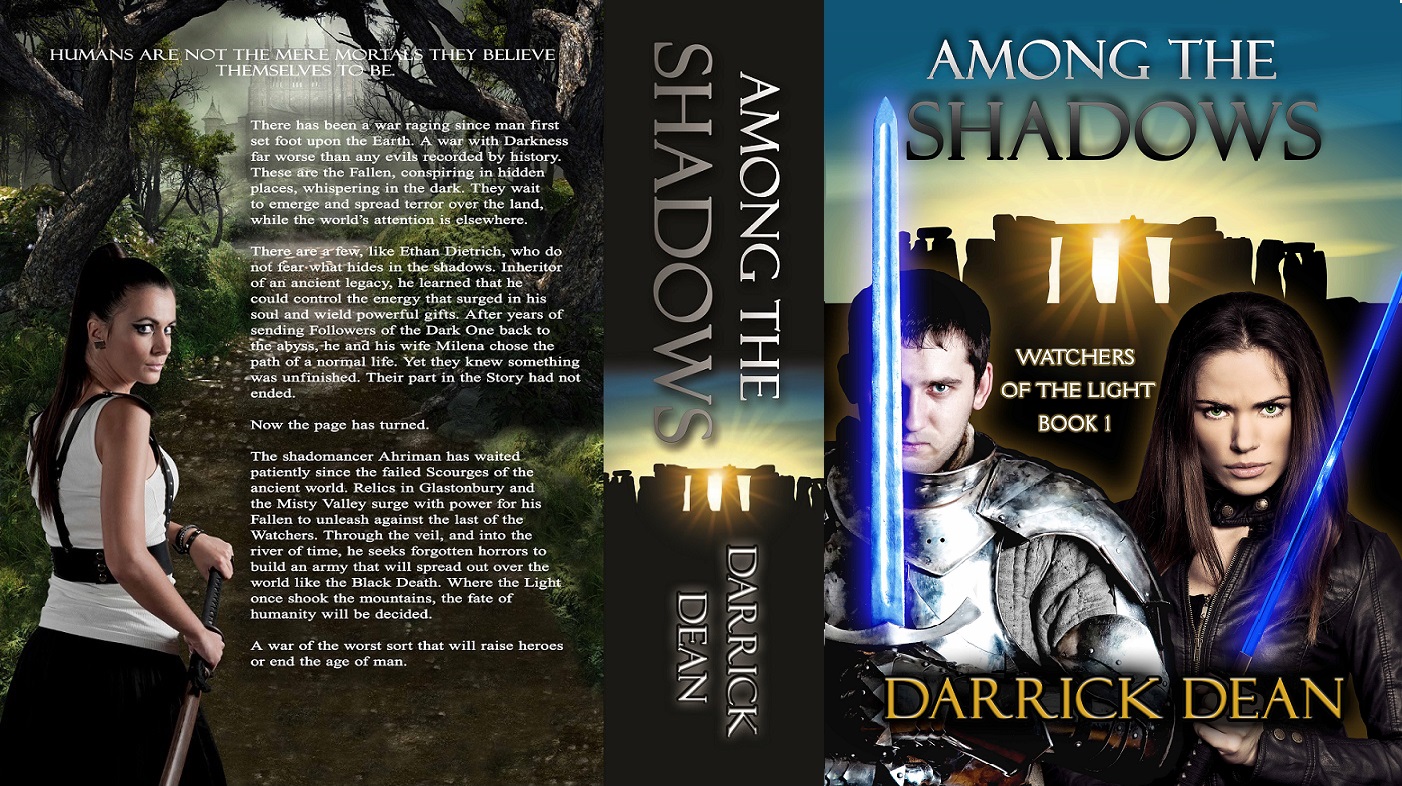
Cover Reveal: Among the Shadows

Here it is:

fullcv5

“The Studio” has been making some adjustments over the past few days and I think we got it. When will it be released? Still in editing, so let’s just say 2015 for now. Updates and previews to be forthcoming. Some background on the cover: I took a look at a lot of the great artwork being used on fantasy books, but since this series is rooted in our time, some real people were in order.

So the question is where does myth end and history begin?

Cover Credit: Images and artwork from Shutterstock.com and digital work by K.D.

Categories: Books, Fiction, Writing | Tags: , , | 3 Comments

Should I Show or Should I Tell?

This is the dilemma that most all fiction writers face. Many readers, unless they are writers or editors, probably wonder what the big fuss is all about. “Why are writers always arguing over this?” they ask. What is the big deal, anyway? James Scott Bell defines the issue for us:

Showing is like watching a scene in a movie. All you have is what’s on the screen before you. What the characters do or say reveals who they are and what they’re feeling. Telling, on the other hand, is just like you are recounting the movie to a friend. Which renders a more memorable experience?

Easy enough. Sort of. Some telling is obvious, such as when you describe a character in a grocery list fashion:

Kelly was 5’2″, had long blond hair, blue eyes and always wore black boots.

Try this instead:

When Kelly sat to pull on her black boots, her blond hair fell around her. What a mess it is today. She loved her boots, they made it easy for her to pretend she wasn’t short. Hopefully, she would run into Kane again at work. Yeah, that comment about her blue eyes was a little corny, but hey, at least he noticed.

Both are grammatically correct (though not necessarily high literature), but which sounds more interesting? Which is more like something you would write in second grade? And maybe the second attempt isn’t perfect showing, but it gets you into the head of the character and tells the reader a thing or two about her.

That is one of the keys to show vs. tell: Is the author intruding into the story? Whereas brief telling can transition you quickly from one scene to the next, or can be used to describe a new world, does the latter sound like the author is launching into a documentary? Or does it sound like you are seeing, or possibly seeing, everything through the character’s eyes?

You may have a lot of cool things to tell your reader, but make sure it doesn’t sound like a PBS special. Your character (or the author), even if he is (or you are) a professor, shouldn’t suddenly launch into a chapter length discussion on whales. Wait, didn’t Melville do that in Moby Dick? Telling wasn’t always so taboo, but there is a reason why the whale chapter is the most skipped in that otherwise classic tome. And then there is they way Edgar Rice Burroughs ended his last Pellucidar novel. After all that adventure, we’re going to end it like that?

Here’s something that will help writers: Jeff Gerke has a handy tool for determining if your writing is telling too much. Ask yourself if a camera can see the scene. Could this appear on the screen? If the answers are no, then you have too much telling.

There are writers who argue telling is fine. Others say it’s all a matter of when, where, why and how. Certain genres tend to have more exposition than others. Some telling certainly can come off as poor or lazy writing, especially once you learn to spot it. You’ll be surprised how often you notice it.

One should always try to hone what ever their craft may be, but part of being is writer is deciding what you want to write and how to do it. Not every one will like your work — and you shouldn’t set out to make everyone happy — but immersive books are the ones that stay with people long after the cover is closed.

They’re also ones that readers don’t skip or skim chapters.

Categories: Writing | 1 Comment

Shadowlight Saga

I recently started reading two fantasy series. The first was decent, but wasn’t holding my interest. At least not enough to go on to book two. The second series, the Shadowlight Saga by Mande Matthews, is another story.

In Bonded, we begin with Hallad and his friends as they happen upon the mysterious mute woman Swan. The encounter in the woods might not have been all that remarkable had not his sister Emma then vanished into the Blackness.

Readers quickly find themselves immersed in a Norse-inspired fantasy world as the quest begins to discover who Swan is, what happened to Emma and Hallad’s family history is not quite what he thought it was. Once you reach the end, you realize this is only Act 1, and there is more to come. To get to the end, of course, will involve encounters with many peoples, beings and obstacles.

While this book is labeled as a “YA fantasy,” I think it’s written with depth and detail that all adults will enjoy. I have found that some authors try to impress us by over-complicating their books with plots, sub-plots, schemes and such that ultimately only bog down their story’s pace and destroy its realism. This isn’t one of those books. Matthews also has a short prequel to Bonded, The Light Keepers, which you don’t have to read first, but I did (and you’ll want to to read it one way or another). So now I look forward to reading part 2 of the trilogy, in what has established itself as a compelling Good vs. Evil fantasy series.

And it’s those kind of stories that are at the heart of the fantasy genre.

mm

Categories: Books, Fiction | Tags: , , , , | Leave a comment

Warnings From the Third Reich

During the 1990s, as 50th year anniversaries of World War II began to come around, accounts of the war filled bookstores, television and film. Veterans who had said little for decades were now telling their stories. Some have wondered why in the years since so much attention has focused on studying Hitler. His motivations. His past. Attempt after attempt to figure out why and how he rose to power. Some think the attention is overdone.

The focus on Hitler isn’t entirely about him. It is also very much about the place. In 1945, as the Germans looked around them at their destroyed nation, more than one had to ask, “How did it come to this?”

Indeed, that is why Hitler and his Reich are studied so much. It all unfolded in nation made up of people very much like us.

Sure World War I, social chaos and the wild economies of the 1930s set the stage for Hitler’s rise. But Germany wasn’t a backwater, tribal nation ripe for a dictator. Germany was a sophisticated western nation with a deep history and a society of technology, intellect and culture.

Yet Hitler still led them down a path of ruin where tens of millions would die. He led a Reich that excelled in horror, destruction and death.

This is why the story of Hitler must be studied and remembered. Evil just doesn’t rise in nations of radicals and extremists. Do yourself a favor and check out the course, History of Hitler’s Empire or this classic volume.

And here look at the philosophies that gave rise to the Reich, which are growing again in our world:

More on those troubling times can be read here. Be vigilant, because wherever you live in this world, do not think evil cannot arise there and take hold. Make sure you don’t ever find yourself in the position to ask, “How did it come to this?”

Categories: History, Modern History | Tags: , , , | 2 Comments

Will You Let Society Define your Humantity?

Exponentially growth in allergies. ADD. Autism. A very short time ago, these conditions were rare. No, they weren’t going completely undiagnosed. They were rare compared to now. Add to that other chronic conditions which make up the bulk of our healthcare costs and it seems our increasing lifespan may head in the other direction (if it hasn’t already, hidden by the science that heals many of these issues that would otherwise be deadly).

Sadly, many of our health problems are preventable or, at the very least, reducible in severity and frequency.

Worse, in spite of all the angst spent on health and disease, it doesn’t seem many want to change.

Or has there been a slowly growing movement in which many are taking their health in the own hands?

Based on my own observations (growth in healthy food options, availability of information, more people abandoning fad diets for healthy lifestyles…), I think there is, but what percentage of the population this involves, I do not know. I do known, more are waking up to the reality that the government is not going to do it for them. They work for whomever flashes the most money in front of them. Companies produce what you want: Prefer junk food? That’s what they will make.

This is Important Point #1: Every cent spent is like a vote. Want better food? Buy it and support it.

This is Important Point #2: Knowledge is power. Knowing what’s in foods, what they do to your body (good and bad), what the difference is between dieting and a healthy lifestyle and so on is half the battle. So is knowing the shady ways many ingredients have been declared safe. Knowledge lets you walk past the junk and know that you are responsible for yourself.

This is Important Point #3: You have time for fitness. It’s not a fad. It’s part of your life. Don’t have time? You made time for hours of television, surfing the internet and other things you can live without. Priorities. Don’t let others define you. That’s a do-it-yourself job.

This is Important Point #4: Nutrition is the other side of the fitness coin. Go back to #2.

This is Important Point #5 and the Most Important Point: Our bodies aren’t design to be inactive, couch potatoes. They aren’t designed to process frankenfood or run on it in any optimal manner. They are designed for movement and action. Adventure and work. The world is full of custom-made food for our bodies.

Perhaps one of the many reasons people have such trouble finding their part of the Story in life — what they are meant to be — is because the very biology they are born with has been ignored, abused and refashioned.

The next time someone tells, “It’s okay to have that once in awhile,” or tries to convince bad food is a “treat” or to keep your “health stuff” to yourself or it’s all “good in moderation” or “I’ll do whatever I want,” say to them this:

“I’d rather live to the full potential that my humanity has innately endowed me with. I won’t let society define for me, or redefine, what humanity is or should be. I was designed for something better than they want for me.”

Be unshackled. Find your Story. Be human again.

hlt

Categories: Books | Tags: , , , , | Leave a comment

Blog at WordPress.com.