Author Archives: Darrick Dean

Write With Your Voice, Not Someone Else’s

Too often authors write what they think people want to read. Or they try to conform to the established expectations of a genre. The problem with these things are that the writer isn’t being true to themselves. Their writing suffers in the process. Author Morgan Busse writes in “Surprised by My Own Voice:”

I write fantasy. When most people think of fantasy, they think of J.R.R. Tolkien. His voice is eloquent, lengthy, lyrical, and full of description. Many fantasy writers share a similar kind of voice…

However, my voice is different. I discovered my voice after writing Daughter of Light, the first book in my epic fantasy series. My writing voice is blunt, short, and to the point. I tell the story in a strong, quick tempo, moving along at a clip pace. Not the style usually employed by the average fantasy writer.

A couple reviews reflected the fact that some readers did not like my voice. They wanted the poetic sound usually found in fantasy.

I didn’t know what to do, so I decided to try and change my voice. I believed I needed to write in a certain way in order to be a fantasy writer. It was like trying to write a square word into a round story. It didn’t work. In fact, those scenes stuck out so bad that my editor called me on it. He gave me the freedom to be me, and to write like me.

Don’t let others define you. Find your voice and let it be heard.

Or read.

Categories: Fiction, Writing | Tags: , | 2 Comments

Will Readers “Misunderstand” Your Book?

I wonder how much authors worry about how readers misunderstanding what their book is about. Its meanings, themes and intentions. Some authors might overcompensate by entering the story and explaining too much. This “author intrusion” often makes a character sound out of character or exposition sound like a lecture. Authors should realize not every reader is going to get, or like, everything you have written and that’s okay. A mature reader isn’t going throw down your book if he or she doesn’t agree with every sentence you write. They might do so if your book isn’t entertaining or is unreadable.

I mentioned in an earlier post on how modern readers like to reinterpret older books (in that case Dracula) through modern eyes. When an author is still living, or wrote about their books, it’s always best to default to their explanations. After all, they wrote the book. J.R.R. Tolkien’s The Lord of the Rings is brimming with themes and meaning, but it was no allegory. The author wrote:

There is no ‘symbolism’ or conscious allegory in my story…To ask if the Orcs ‘are’ communists is to me as sensible as asking if Communists are Orcs.

Devin Brown continues by asking, “Don’t they share a number of similarities? [along with Sauron/Hitler, etc.] Of course they do.” But he adds what Tolkien explained, “I think many confuse ‘applicability’ with ‘allegory.'”

Of course, “everyone knows” C.S. Lewis’ The Lion, the Witch and the Wardrobe was an allegory. Everyone forgot to tell C.S. Lewis. He said he never intended to write an allegory, the story unfolded as it did. He also wrote:

As we know, almost anything can be read into any book if you are determined enough…[the author] will find reviewers, both favorable and hostile, reading into his stories all manner of allegories which he never intended. (Some of the allegories thus imposed on my own books have been so ingenious and interesting that I often wish I has thought of them myself.)

So focus on writing your story. Understand not everyone will like it or get all the wonderful things you are trying to get across. Nor should you attempt to appease everyone or your story will most likely end up not being very interesting. Make your tale organic and entertaining. Use the tools you have to improve your craft.

Because ultimately the mythos you create is yours and someone out there wants to enter it.

Categories: Books, Writing | Tags: , , , , , , , | 2 Comments

Book Price Wars: 2015’s Publishing Battleground?

There’s concern that the price wars started by indie writers may come back to haunt them. Here’s the scoop: Indie authors are able to sell their books for at a much lower price than traditional publishing. You’re basically buying right from the source with minimal overhead. The issue is that if traditional publishers lower prices, more competition for indies. Maybe not.

For one, there is always competition, traditional or otherwise. Just walk into a bookstore or browse Amazon. Millions. It’s about — regardless of how you publish — connecting with audiences with a strong, quality product. Two, I’ve seen many of these “low” prices jump back up. Perhaps not as high as retail, but still up. Holiday pricing, perhaps? The idea of having a sale seems to be a new thing for some publishers. How low can traditional publishers really go? Sure, on a super runaway bestseller they can afford some sales or lower prices. Or they can say, “This is a bestseller, people are going to buy it regardless.” And, of course, the lower the traditional publishers go with pricing, the less their authors get.

That’s why indie authors still have an advantage when it comes to revenue (not that writing books is a get-rich scheme). There are other factors at work here, but ultimately I think indies, e-books and technology will continue to transform the industry. Where the equilibrium will occur, I’m not sure. There’s room for all publishing models, but we are seeing a settling of which is good for whom.

Categories: Books, Writing | Tags: , , , | 2 Comments

If a Book Doesn’t Make You Think, What Good is it?

Controversial quotes from controversial books. Why would some see them disappear? Because they encourage people to think and question. They seek to remind people to not to blindly follow those who self-appointed greatness. And they tell us to pay attention who is behind the curtain.

All Quiet On The Western Front on cautioning us on what reasons we use to go to war:

At the next war let all the Kaisers, presidents and generals and diplomats go into a big field and fight it out first among themselves. That will satisfy us and keep us at home.

You still think it’s beautiful to die for your country. The first bombardment taught us better. When it comes to dying for country, it’s better not to die at all.

1984 on blindly giving away power and letting them win:

He who controls the past controls the future. He who controls the present controls the past.

The choice for mankind lies between freedom and happiness and for the great bulk of mankind, happiness is better.

Fahrenheit 451 on being engaged in the world and freedom of access to knowledge:

We need not to be let alone. We need to be really bothered once in a while. How long is it since you were really bothered? About something important, about something real?

A book is a loaded gun in the house next door. Who knows who might be the target of the well-read man.

Atlas Shrugged on finding your Role in the Story of this life:

Do not let the hero in your soul parish, in lonely frustration, for the life you deserved but never have been able to reach. Check your road and the nature of your battle. The world you desired can be won. It exists, it is real, it is possible, it is yours.

Fighting Slave of Gor (Book 14 of the Counter Earth Saga) on people allowing others define who they are and how to think:

Earthings…are manipulated organisms, helpless in the flow of social forces, slobbering to slogans and rhetoric. They will be the first to celebrate their own downfall. They will not discover what has been done to them until it is too late.

“A sexist is a sexist,” she said. “That is the logical truth,” I said. “An apple is an apple. This argument is not much advanced…[it] is a ‘signal word,’ a word selected for its emotive connotation, not its cognitive meaning. It is to be used as a slander tool to discourage questioning and discourage questioning and enforce verbal agreement…One of the great utilities of these words, long since evacuated of most of their cognitive content, is that they make thought unnecessary…”

Categories: Books, Critical Thinking, Fiction | Tags: , , , , , , , , | 3 Comments

Humans Are Not The Mere Mortals They Believe Themselves to Be…

I released the first look at the cover of my book Among the Shadows earlier this month. I thought the copy on the back cover was a little long, so here I have trimmed it back (about 40 words) and made some other adjustments. For many authors, especially indie authors who control the cover design, the cover is an afterthought. This is a mistake. Yes, we are all told not to judge a book by its cover. That isn’t a bad bit of advice, but we live in a visual world. When readers are browsing hundreds of books on-line, a cover should at least make them stop and look. It should be relevant to the story, that is, not just something wild and unrelated to trick them. And just enough plot to let them know about the world they’re about to jump into (without giving away its secrets).

12-27-14-1background-official words3(1)

Categories: Books, Fiction, Writing | Tags: , , | 1 Comment

Pandemics, Elementals and Nuclear Missiles

Receive a few gift cards to your favorite book store for Christmas? Well, here are a few suggestions on spending that money:

In one sense, I hesitated to pick up Steven Konkoly‘s The Jakarata Pandemic. Haven’t pandemics and apocalyptic collapse been overdone? Probably, but apocalyptic books have always been a favorite. That, along with the current Ebola threat, encouraged me to give this book a chance. It didn’t disappoint and ripped a story from headlines that had yet to be written. If you want a realistic look at what happens after a major crisis (no zombies, aliens or Godzilla) and what a pandemic could do, The Jakarta Pandemic will keep you on the edge of your seat. Definitely will be reading more from Konkoly. [Similar: One Second After]

While fantasy has been dominated by reluctant male heroes, that has been changing. In Mary Weber‘s Storm Siren, Nymeria is a slave haunted by her past and her ability. An elemental, her influence of the weather is uncontrollable and deadly. Or can her curse be a gift? Written in the first person, very quickly the reader is drawn in wanting to know what happens to Nym as she is drawn into a war of men and within herself. Listed as a “young adult” fantasy — and it is accessible to that group — but so sophisticated and immersive is the world Weber has created that all fantasy fans will be taken in. [Similar: Daughter of Light]

Want some non-fiction that reads like a Tom Clancy novel? Eric Schlosser’s Command and Control will give you and inside look at the Cold War and the tenuous relationship of man with nuclear weapons. If you grew up in the Cold War, and thought the Cuban Missile Crisis was as close as we got, think again. The rush into nuclear armament was peppered with many close calls. Those who did know are still surprised that no nukes have been used, or gone off, outside of test ranges since 1945. Scholosser recounts the history while threading in the account of an armed Titan II that exploded in its silo in 1980. It is also a tale of the many who served quietly in a supposedly “cold” war. A great book on history that we would be amiss to forget and a telling that honors those who died defending our nation. [Similar: 15 Minutes]

ssbk

Categories: Books, Fiction, History, Modern History | Tags: , , , , , , , , , , | Leave a comment

Rethinking the Nativity

Time for our yearly Christmas history post that I’m sure you’ve been waiting for. It’s always interesting to track down the origins of holiday traditions. Now that Christmas is upon us, many have displayed their Nativity scenes with the usual stable, wise men and donkey. Some interesting facts:

  • The Bible doesn’t state how many wise men there were. Three is divined from the number of gifts. Some traditions list many more Magi.
  • We Three Kings tells us they are from the Orient. Some people may think this means the Far East, i.e. Japan and its neighbors. True today, but not back then. These terms referred to Persia (centered in modern-day Iran).
  • Nowhere does the Bible record Mary riding a donkey, as many images depict. That comes from the Protevangelium of James 17:2: “He [Joseph] saddled the donkey and seated her [Mary] on it; and his son led it along, while Joseph followed behind.”
  • While the “no room in the inn” and Christ being humbled by being born in a barn account is an inseparable part of Christian culture, is it correct? Would Joseph find no relatives and friends in the town of his origin? Did not Mary know people nearby as well? In fact, Luke doesn’t use the Greek word for a “commercial inn,” but the word katalyma, which means “a place to stay.” Luke also defines this as “guest room” in Luke 22:10-12. So they very well may have been with friends or family.
  • The Bible simply reads “manger” as to where Jesus was placed. Assumed to mean that he was in a stable, but very early traditions state that a cave was being used. The mother of Constantine, Helena, had a church built over a cave, the Church of the Nativity. This is all probably wrong. Consider that a “manger” in Middle Eastern homes was in the home itself. This gives us an entirely different Nativity story. We have one where Joseph wasn’t irresponsible in getting his pregnant wife somewhere safe in time (Technically Luke doesn’t state Christ was born the night of arrival in Bethlehem, as commonly misconstrued).
Categories: Bible, Traditions | Tags: , , , , , , | 1 Comment

Need for Adventure

“Adventures?  Nasty disturbing uncomfortable things!” said Bilbo to Gandalf.  If he only knew. The scenes that follow — the arrival of the dwarves who take over his home — did not seem to be a favorite in the films, but was an essential part of the book.  In it we see much of ourselves.

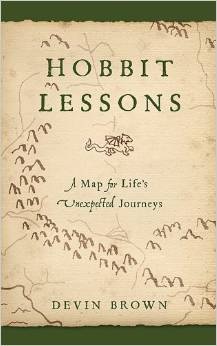
Bilbo was set in his ways, in his little world. Didn’t want to be bothered, nor wanted any deviations from the norm. So imagine the disruption of this rowdy band taking up residence, uninvited. Think about about how people handle disruptions in their life. Poorly. Even good, life-changing ones. We don’t see what goes on around us. Neighbors in need. Corrupt governments.  If the snack bag is full, and the batteries are good in the remote, we’re a-okay.  Devin Brown writes in Hobbit Lessons, “We might also think of someone who can’t bear to be away from their laptop for more than a few minutes. Or someone for whom being out of cell phone range counts as a real hardship.”  Sad.

We see Bilbo’s change in his dwarf encounter. Brown writes that the hobbit senses “he is missing something” and decides to go on a “quest to live more fully” and ultimately becomes a critical part in the history of his world.

Are you going to challenge your status quo? How are you going to handle the next disruption?

Perhaps we all need a quest. An adventure.

hb2

Categories: Books, Fiction | Tags: , , , , , , , | Leave a comment

Making the Pitch

I’m always surprised what I find on a back cover. Sometimes no description, the giving away of plot points or it tells you how great the book is. That’s why I found Maria Murnane‘s post right on target. After spending so much time on your book, shouldn’t the cover copy be right?

Nor should you forget how important your Elevator Pitch is to explaining what your book is about to people, in an elevator or otherwise. This is also known as your Quick Pitch. Don’t neglect the little things that will sell your book. Very rarely is someone going to do it for you. Think Guerrilla Marketing. It can be work, but finding work you enjoy, rather than just having a “job,” is part of why you do this. As Rose Robbins writes:

But when you find work that actually makes you happy, work that makes you wake up in the morning excited at the prospect of getting back at it, HOLD ON TO THAT…focus on it, make the most of it, do your very best at it.

Categories: Writing | Tags: , , , | Leave a comment

To Middle-Earth One More Time

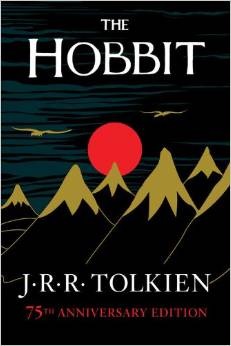
Part three of The Hobbit trilogy has come and, in all likelihood, is the last of Middle-Earth’s time on the big screen. Fans never thought they would have to wait nine years from the original trilogy to revisit this world that became a bit of a December tradition. And so that now ends, but Middle-Earth will never leave us.

It has been over seventy-five years since The Hobbit was first published. How many books endure that long? Few. Fewer still inspire films that don’t quickly fade from history. Fans argued which film trilogy was better. Such arguments usually ignored the fact that you couldn’t expect to compare the two. The books themselves were quite different, Tolkien never changing the style of his first to match the latter volumes. He didn’t feel the need to change it, other than a few details. So the filmmakers had to find a careful balance: Make The Hobbit more in line with the look and feel of the first films without losing its unique, and lighter, traits.

Keeping that in mind, the films largely succeeded. By the end of the latest, you are shown a Middle-Earth that is changing and the future holds darkness. Not the finality of The Return of the King, because it isn’t the end. It is a prologue to what is to come (or what has already passed, depending how you look at it).

Why has Middle-Earth captured readers (and now film lovers) for so long? Why has it inspired so much in the fantasy and other genres?

Because behind all the creatures, the fantastic battles, wizards and elves, it’s about people. People who stand against evil, who never abandon each other even in the darkest times, and risk it all in the process.

It’s the Story about who we all want to be. What we were meant to be.

hb

Categories: Fiction | Tags: , , , , | Leave a comment

Create a free website or blog at WordPress.com.